
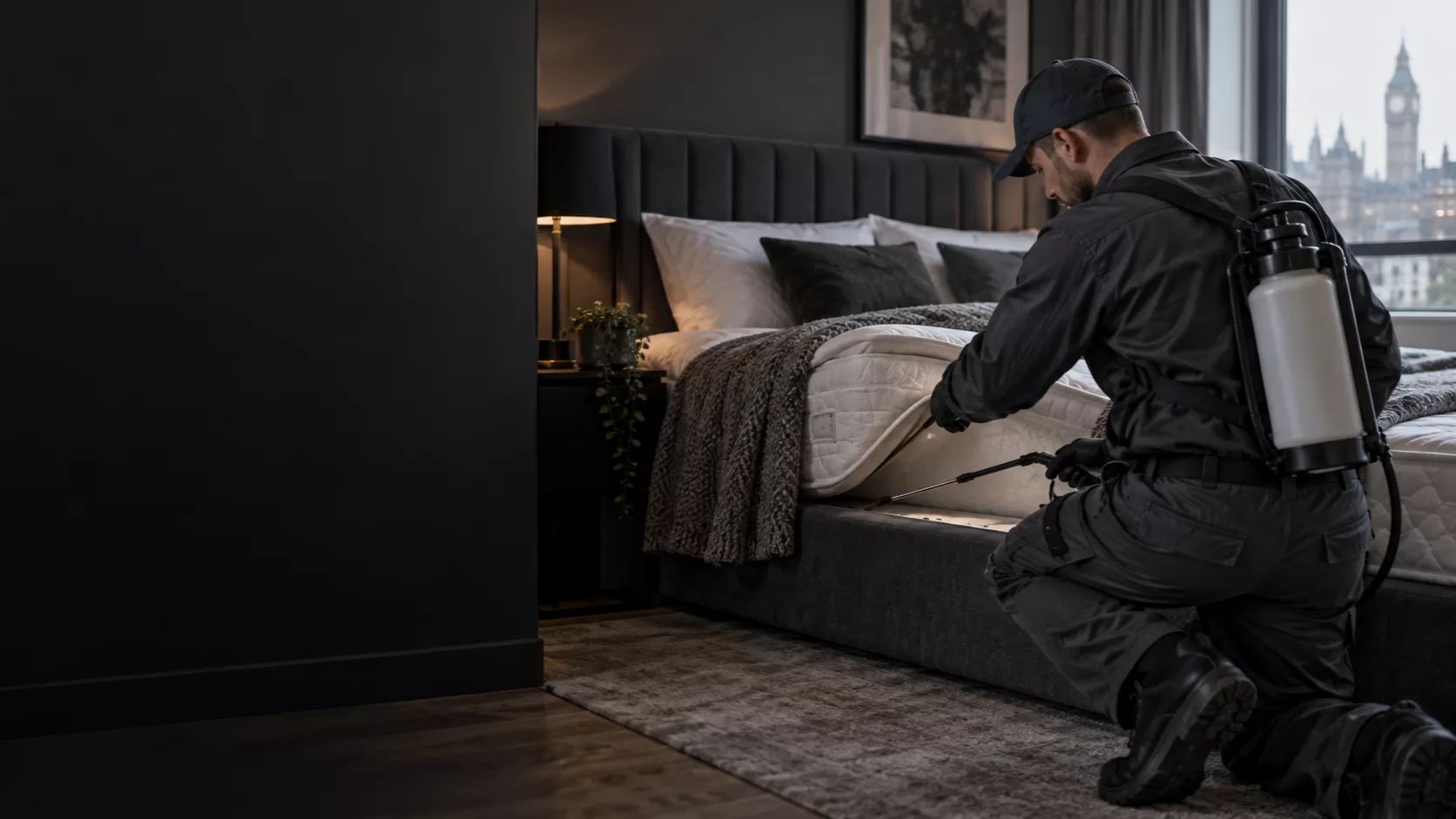
Bed Bugs Treatments
Understanding how heat treatment works is key to choosing the right solution for bed bug infestations. Bed Bug Finder uses a controlled, step-by-step process to raise temperatures across the entire room, ensuring bed bugs are eliminated at every stage — including eggs.
✔ Full room heat coverage, not just surface treatment
✔ Controlled temperature build-up for effective results
✔ Monitored process to eliminate cold spots
✔ Designed for homes, flats and commercial properties
✔ One-visit solution when applied correctly
Learn how the process works or request a quote for your property
👉 Get a Free Quote
"*" indicates required fields
I was really worried about using chemicals because of my kids, so heat treatment made more sense. The process was straightforward and we were able to return later the same day. Haven’t seen any signs of bed bugs since.
Heat treatment for bed bugs is not simply about making a room hot. It is a controlled process designed to ensure that heat reaches every area where bed bugs may be hiding, including places that are not immediately visible.
The process begins with an initial assessment of the room or property. This helps determine how far the infestation has spread and which areas need to be treated. In many London homes, bed bugs are found not only in beds but also in sofas, carpets, skirting boards and small structural gaps.
Once the space has been assessed, the setup stage begins. Industrial heaters and airflow equipment are placed strategically around the room to allow even heat distribution. Furniture is slightly repositioned to improve airflow, and temperature sensors are installed in different locations. These sensors are used to monitor how heat moves throughout the space during the treatment.
The heating phase is gradual and controlled. Temperatures are increased step by step rather than all at once. This is important because a rapid increase can cause bed bugs to move into cooler areas, making the treatment less effective. By controlling the rate of heat build-up, the process allows heat to penetrate deeply into furniture, fabrics and hidden voids.
As the temperature reaches the required level, it is maintained for a specific period of time. This stage is critical, as bed bugs at all life stages — including eggs — are eliminated through sustained exposure to heat. Simply reaching a high temperature is not enough; maintaining it consistently is what ensures full eradication.
Throughout the process, temperature readings are checked to confirm that all areas of the room have reached the necessary level. Any potential cold spots are identified and addressed to prevent survival in hidden areas.
Once the treatment is complete, the room is allowed to cool down gradually. In most cases, the space can be used again on the same day after temperatures return to a comfortable level.
This structured approach is what makes heat treatment a reliable solution when carried out correctly.
Heat treatment is often described in technical terms, but for most people the main concern is what actually happens inside their property and how it affects their space.
In practical terms, the process is designed to treat the entire room as a controlled environment. Instead of focusing on individual areas, the aim is to ensure that every part of the space is exposed to conditions that bed bugs cannot survive. This is particularly important in London properties, where infestations are rarely limited to just one visible spot.
For homeowners and businesses, this means there is no need to rely on repeated visits or partial treatments. When carried out properly, the process is intended to deal with the problem in one session, reducing disruption and avoiding the uncertainty that often comes with other methods.
Another key aspect is how the treatment interacts with everyday items. Furniture, fabrics and personal belongings remain part of the process, as the heat is designed to move through these materials rather than around them. This allows hidden areas — such as inside sofas, bed frames and small structural gaps — to be treated at the same time as visible surfaces.
From a practical point of view, preparation is usually minimal but important. Creating space for airflow and ensuring key areas are accessible allows the treatment to work more effectively. This is why clear preparation guidance is always part of the process.
For many properties, the biggest advantage is the ability to return to normal use quickly. Once the treatment is complete and the space has cooled down, rooms can typically be used again without the need for extensive cleaning or follow-up applications.
Overall, the heat treatment process is designed to be controlled, efficient and complete — focusing not just on removing visible activity, but on addressing the problem at its source.
19+
Years of Pest Control Expertise
Trusted by London homeowners and businesses for fast, effective pest control.
What our clients sayBed Bug Finder responded quickly and solved our bed bug problem in just one visit. Their team was professional, discreet, and very knowledgeable. I highly recommend their services to anyone in London looking for reliable pest control.
We specialise in professional heat treatment services across London, designed to eliminate bed bugs and similar infestations quickly and reliably. Unlike traditional pest control, our approach focuses on high-temperature treatment that reaches deep into furniture, fabrics and hidden areas where pests tend to survive. This allows us to resolve infestations in a single visit in most cases. We cover bed bugs, fleas, moths and carpet beetles — all treated using controlled heat and monitored equipment to ensure no areas are missed. If you’re dealing with an infestation, the priority is to stop it spreading. Our services are built around fast response, clear process and complete eradication.
One of the main reasons people turn to heat treatment is because other methods have not fully resolved the problem. In many cases, this is not due to a lack of effort, but because bed bugs behave in ways that make partial or surface-level treatments ineffective.
Bed bugs are highly adapted to hiding. They avoid light, remain inactive for long periods and often stay deep inside furniture, fabrics and structural gaps. This makes it difficult for traditional treatments to reach them, especially when only visible areas are targeted.
Another factor is resistance. Over time, bed bugs have developed a tolerance to many commonly used insecticides. This means that even when chemical treatments reduce activity, they may not eliminate the infestation completely. Eggs in particular are often unaffected, allowing the cycle to continue after the treatment appears to be successful.
Heat treatment works differently because it changes the entire environment rather than targeting individual insects. By raising the temperature across the room, it removes the conditions bed bugs rely on to survive. This includes hidden spaces where they would normally remain protected from sprays or contact-based treatments.
The effectiveness of this approach depends on consistency. Bed bugs can survive short bursts of heat if conditions are uneven or not maintained long enough. This is why professional heat treatment focuses on both reaching and sustaining the required temperature across all areas.
Another advantage is that the method does not rely on behaviour. Bed bugs do not need to come into contact with a treated surface or be active at a certain time. As long as they are within the treated environment, they are affected by the conditions created during the process.
For many properties, this makes heat treatment a more predictable solution. Instead of relying on multiple applications or waiting for activity to decrease over time, the process is designed to resolve the issue in a single, controlled step when applied correctly.
Choosing the right treatment often comes down to understanding how it works in practice. Heat treatment is not a quick or surface-level solution — it is a controlled process designed to address the entire environment rather than just visible activity.
For many properties, the difference is in how thoroughly the treatment is carried out. A properly applied heat treatment focuses on full coverage, consistent conditions and enough exposure time to deal with the problem completely. This is what separates a reliable solution from a temporary fix.
If you’re dealing with a bed bug issue, knowing how the process works can help you decide when to act and what to expect. In most cases, early intervention makes the treatment more straightforward and reduces the risk of the infestation spreading further.
Understanding the process also makes preparation easier. Knowing why airflow, access and setup matter helps ensure that everything is ready on the day, allowing the treatment to be carried out effectively.
For both residential and commercial properties, the goal is the same — to resolve the issue in a controlled and predictable way, without relying on repeated applications or ongoing disruption.
If you’re unsure whether heat treatment is the right option for your property, you can speak directly with Bed Bug Finder for clear advice based on your situation.
📞 020 4586 8488
👉 Request a Free Quote