
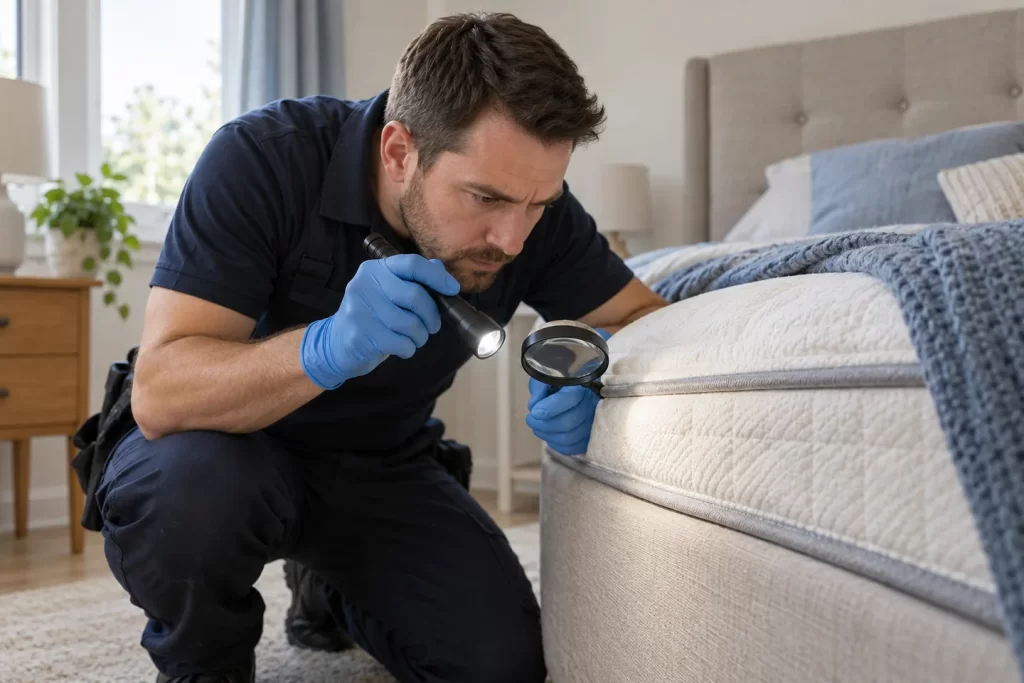
Bed bug eggs are very small, pale and easy to miss. A typical egg is about 1 mm long, roughly the size of a pinhead, and may look white or pearl coloured against a dark surface. Finding one pale speck on a mattress does not confirm bed bugs: lint, crumbs and other insect material can be mistaken for eggs. The most useful response is to inspect the surrounding area for several kinds of evidence, photograph what you find and seek an identification before arranging treatment.
Eggs matter because they can indicate breeding activity, but they are seldom the easiest sign for a homeowner to recognise. A live insect, a convincing cast skin or a pattern of dark faecal spots may provide a clearer starting point. If you have only skin marks after sleeping, look for physical evidence before deciding what caused them. The bed bug treatment service can help when an inspection or treatment assessment is needed.
The appearance of a bed bug egg
The egg is elongated rather than perfectly round, with a smooth outer surface. Newly laid eggs generally appear pale. As development progresses, a dark eye spot may become visible under magnification. In practice, lighting, the surface beneath the egg and the quality of your photograph affect what you can see. An image taken on a phone may show little more than a white dot.
Size is the most helpful first check. The US Environmental Protection Agency describes eggs as approximately 1 mm long and pearl white. An adult bed bug, by contrast, is several millimetres long, flat and brown when unfed. Young bed bugs are small and much lighter than adults, so a moving pale speck is not necessarily an egg. An egg will not crawl; a newly hatched nymph can.
Eggs may be attached to the surface on which they were laid. That is one reason they are sometimes found within a seam or a narrow joint rather than scattered freely across an open sheet. A loose white flake on bedding could be many things. Its shape and location deserve attention, but the surrounding evidence matters more than a single visual resemblance.
Eggs, shells and shed skins are different
An intact egg contains a developing insect. An empty eggshell remains after hatching and can be harder to see. A cast skin is different again: a young bed bug sheds its outer covering as it grows. Cast skins are generally larger and preserve the outline of the insect, including legs. Someone who calls every pale fragment an “egg” may miss the more useful distinction between these signs.
If you find a possible egg, avoid crushing it immediately. A clear photograph with a ruler or a coin nearby gives an inspector useful scale. Keep any loose specimen in a small sealed container if you can collect it without spreading material around the room. Label the container with the location and date. For material firmly attached in a seam, photograph it in place first so the hiding location is recorded.
Where to look first
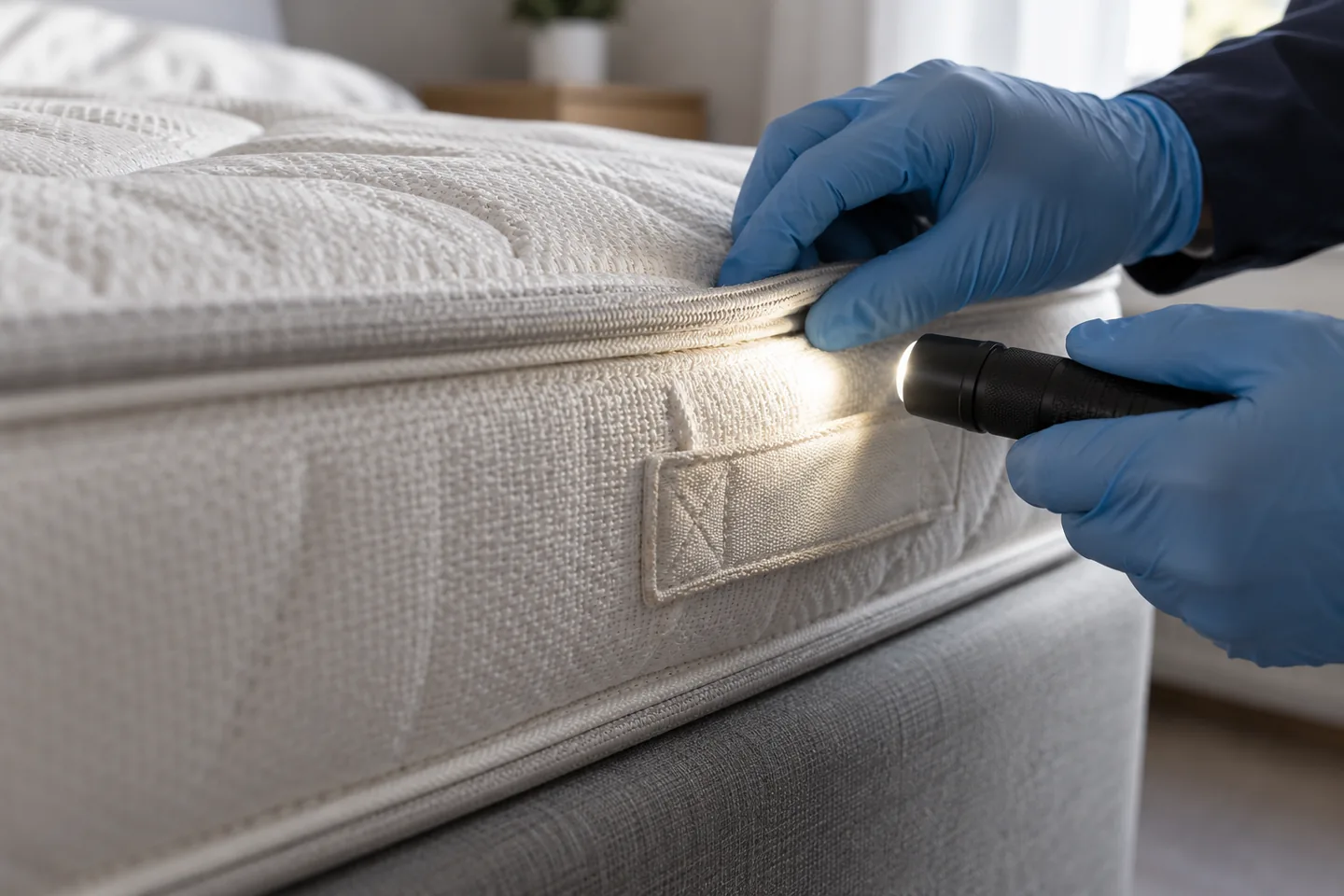
Begin close to the place where someone sleeps or spends long periods resting. Bed bugs tend to hide in protected cracks and folds. The edge piping and seams of a mattress, the mattress label, the headboard and joints in the bed frame are sensible inspection points. Lift bedding carefully and use a bright torch. Look along the seam from more than one angle: tiny pale objects can disappear against white fabric and stand out against a darker fold.
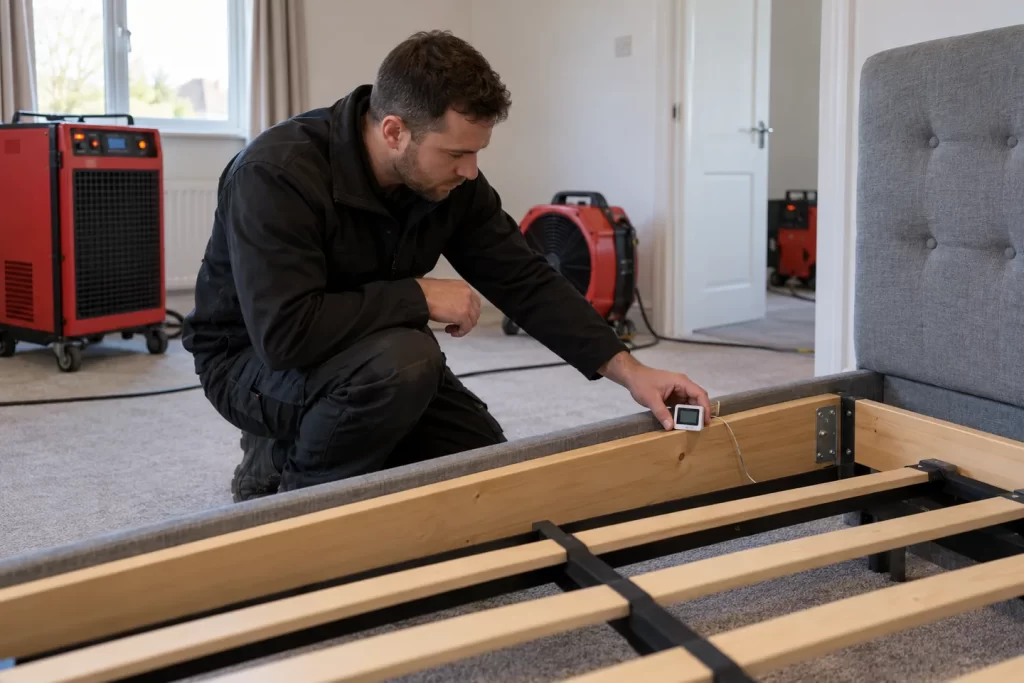
Inspect the bed structure as well as the mattress. A loose headboard, screw hole or joint between timber pieces offers more shelter than the centre of an exposed sheet. Where a divan base or upholstered frame is present, check accessible edges and folds without tearing the material. Do not dismantle electrical fittings or reach into a socket in an attempt to find eggs. That creates a different hazard and is a job to discuss with a professional if there is credible evidence nearby.
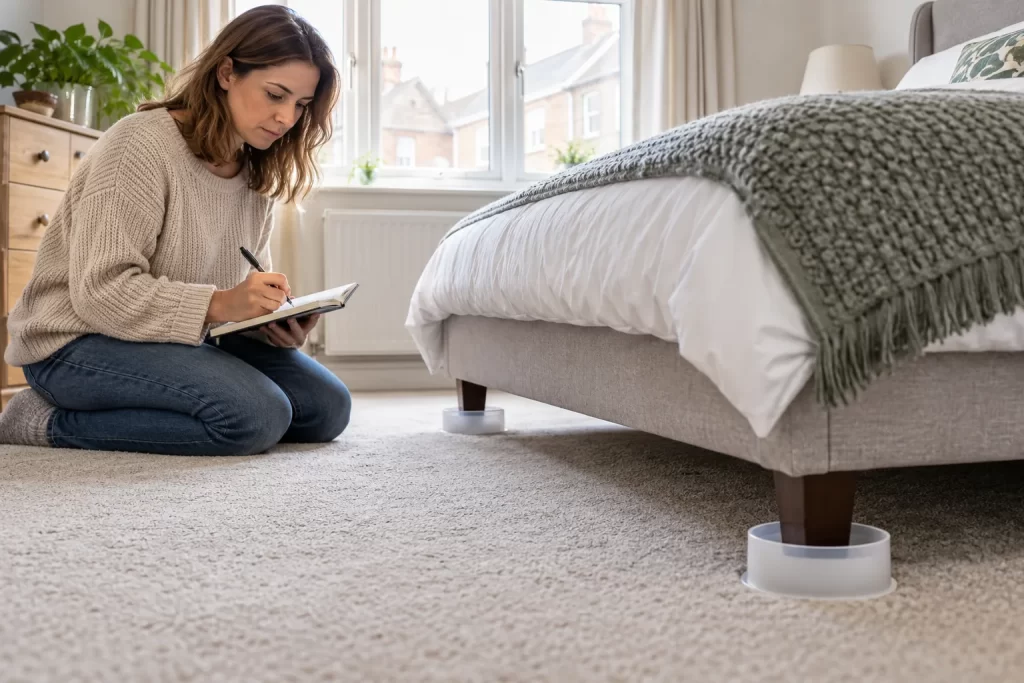
The search can expand to bedside furniture, the seams of an upholstered chair and luggage stored near the bed. A severe or long-standing infestation can have hiding places farther from the mattress, but searching every room at once can make evidence harder to interpret. Work methodically: note the room, inspect one item at a time and keep a record of what was checked. The aim is to locate a pattern, not to prove a theory from the first suspicious speck.
If travel is the concern, keep the suitcase away from beds and soft furnishings while you inspect it. Check seams, zips and pockets in good light. The business has a separate clothes and luggage heat-treatment service; ask what items are suitable before putting belongings through any treatment process.
What other evidence should you seek?
Look for live insects, cast skins and dark spotting around likely hiding places. Bed bug faecal marks can appear as small dark dots and may bleed into fabric. Rusty or reddish marks on bedding are another possible clue, though they have many possible causes. A cluster of several different signs near a bed carries more weight than a lone pale speck on an otherwise clean surface.
Take photographs in good light before cleaning the area. Capture one close-up and one wider view that shows exactly where the sign was found. The wider photograph matters: an object on a mattress seam has a different context from the same-looking object on a window ledge. If you find a moving insect, a clear specimen is often more useful for identification than a blurred photograph. Keep notes on dates and rooms, especially in shared accommodation.
Do not rely on bites to confirm the source. People react differently, and marks on skin can have many explanations. Equally, the absence of bites does not prove that a room has no bed bugs. Physical evidence and identification should guide the next decision. If you are unsure, a professional bed bug assessment is a more reliable step than buying a treatment on the strength of an online image match.
Common lookalikes
Lint, grains of dust, dried skin and crumbs can resemble eggs at a glance. Other insects may leave pale eggs or fragments in a home. The surrounding surface offers clues: material repeatedly appearing near a food cupboard may have a different source from material lodged deep in a mattress seam. An apparent egg that rolls freely across a sheet may simply be debris. None of these observations is conclusive by itself; they help you decide what to inspect next.
Do not scrape away every suspected egg before photographing it. Repeated cleaning can remove the evidence needed to identify the pest. There is also little value in keeping a household item indefinitely because of one unconfirmed mark. Document the finding, search the nearby hiding points and then decide whether the evidence warrants specialist help.
What to do while you wait for identification
Try to keep belongings in their usual rooms until you understand the problem. Moving bedding, clothing or furniture between rooms can complicate an inspection and, if bed bugs are present, may spread them. Do not discard a bed or sofa as an immediate response to a possible egg. The item may not be infested, and moving it through communal areas can create unnecessary disruption.
Vacuuming and laundering may be part of a control plan, but the correct preparation depends on the proposed treatment. Follow the instructions given for your property rather than combining several improvised methods. Avoid spraying unknown chemicals onto mattresses or electrical areas. Some products are unsuitable for those uses, and treating before identification can obscure the evidence without resolving the cause.
If a professional recommends heat treatment, ask how the property and possessions should be prepared. The bed bug heat-treatment preparation guide explains the service's approach; the provider's current instructions for your appointment should take precedence because furnishings and sensitive items differ between homes.
When the finding calls for a closer inspection
One ambiguous object is a reason to look carefully, not a reason to panic. Several egg-like objects fixed inside a mattress seam, especially alongside live insects, cast skins or dark spots, justify prompt identification. The same applies if similar evidence appears in more than one sleeping area. In a hotel, shared house or block of flats, tell the responsible person what you found and where, so that any inspection can be coordinated without moving possibly affected items through the building.
Give the inspector your photographs and notes, including negative observations. Knowing that the bed frame, adjacent chair and suitcase were checked and appeared clear can save time. Ask what was identified, which rooms and items were inspected, whether any samples were collected and what evidence supports the recommended next step. An inspection may confirm bed bugs, identify another insect or conclude that more monitoring is needed.
The key is to move from a possible sign to a reliable identification. Bed bug eggs are small enough to be missed and easy enough to misidentify. A careful search around sleeping areas, supported by photographs and other physical signs, gives you a much stronger basis for deciding whether treatment is needed. If the evidence remains uncertain, contact the Bed Bug Finder team to discuss an inspection rather than treating a guess as a confirmed infestation.

Leave a Reply
You must be logged in to post a comment.