

A few dark dots on a sheet can be unsettling. Bed bug droppings are one possible explanation, particularly when spotting occurs in sheltered places near a bed. Yet a mark is not an insect, and a photograph of a stain seldom establishes its cause. Ink, fabric dye, dirt and other household sources can leave similar-looking traces. The useful response is to record the marks, inspect their surroundings and look for independent physical evidence before deciding what action is needed.
Bed bugs feed on blood, and their waste can leave small dark marks. On absorbent fabric, those marks may spread slightly into the fibres rather than remaining as a neat raised pellet. The US Environmental Protection Agency describes dark spots that can bleed on fabric like a marker. That description is a clue to investigate, not a home test that proves an infestation. A stain on its own does not tell you when it appeared or which creature made it. If you need an assessment of possible activity, the bed bug treatment service is a starting point for arranging professional advice.
What do suspected bed bug droppings look like?
People commonly describe tiny black or dark brown dots, sometimes grouped along a seam or tucked into a crevice. On a hard, non-porous surface the mark may appear more distinct. On pale woven fabric it may soak in and look blurred. Lighting, the age of the mark and the material underneath all affect its appearance. A close-up photograph can show detail, but include a wider photograph too: the exact position of a mark often matters more than its colour alone.
There is no trustworthy rule that every bed bug mark has one precise size or shape. A single speck on an exposed sheet has little context. Repeated spotting inside mattress piping, beside a frame joint or behind a headboard deserves closer attention because those locations can provide shelter. Even there, you need to establish whether other signs are present. Resist online advice that claims a particular pattern of dots always confirms bed bugs; households produce many dark marks for ordinary reasons.
Do not rub, wet or bleach a suspicious mark before documenting it. Wetting a stain may change its shape, and aggressive cleaning removes the location evidence an inspector needs. You can clean once you have a useful record and know whether a specimen needs collecting. There is no need to leave a whole room untouched indefinitely, but take a few minutes to preserve what you first saw.
Stains, pellets and blood spots are different clues
An ink-like spot is different from a loose pellet that can be brushed away. Rodent droppings, for example, are physical pieces of material rather than stains absorbed into a mattress seam. Rust-coloured or reddish smears on bedding may have several causes and are not interchangeable with dark faecal spotting. Likewise, a skin reaction does not turn an uncertain stain into proof. The aim is to describe the evidence accurately, not to make every mark fit one diagnosis.
If you are unsure whether the finding is a mark on fabric or a small object resting on it, photograph it before touching it. Use a ruler or coin for scale without placing anything directly on the mark. A torch held from the side can reveal whether material is raised. If there is a loose insect or cast skin nearby, keep it in a sealed clear container for identification. Do not scrape stained material into a bag and expect it to be recognisable later.
Where should you look next?
Begin with the area closest to where people sleep or rest. Look along mattress seams, piping, labels and accessible bed-frame joints. Inspect the reverse of an accessible headboard and the creases of nearby upholstered furniture. Use a torch and work around the bed in a consistent order. Record where you looked, including places where you found nothing. This is more useful than a hurried search through every cupboard followed by uncertainty about which surfaces were checked.
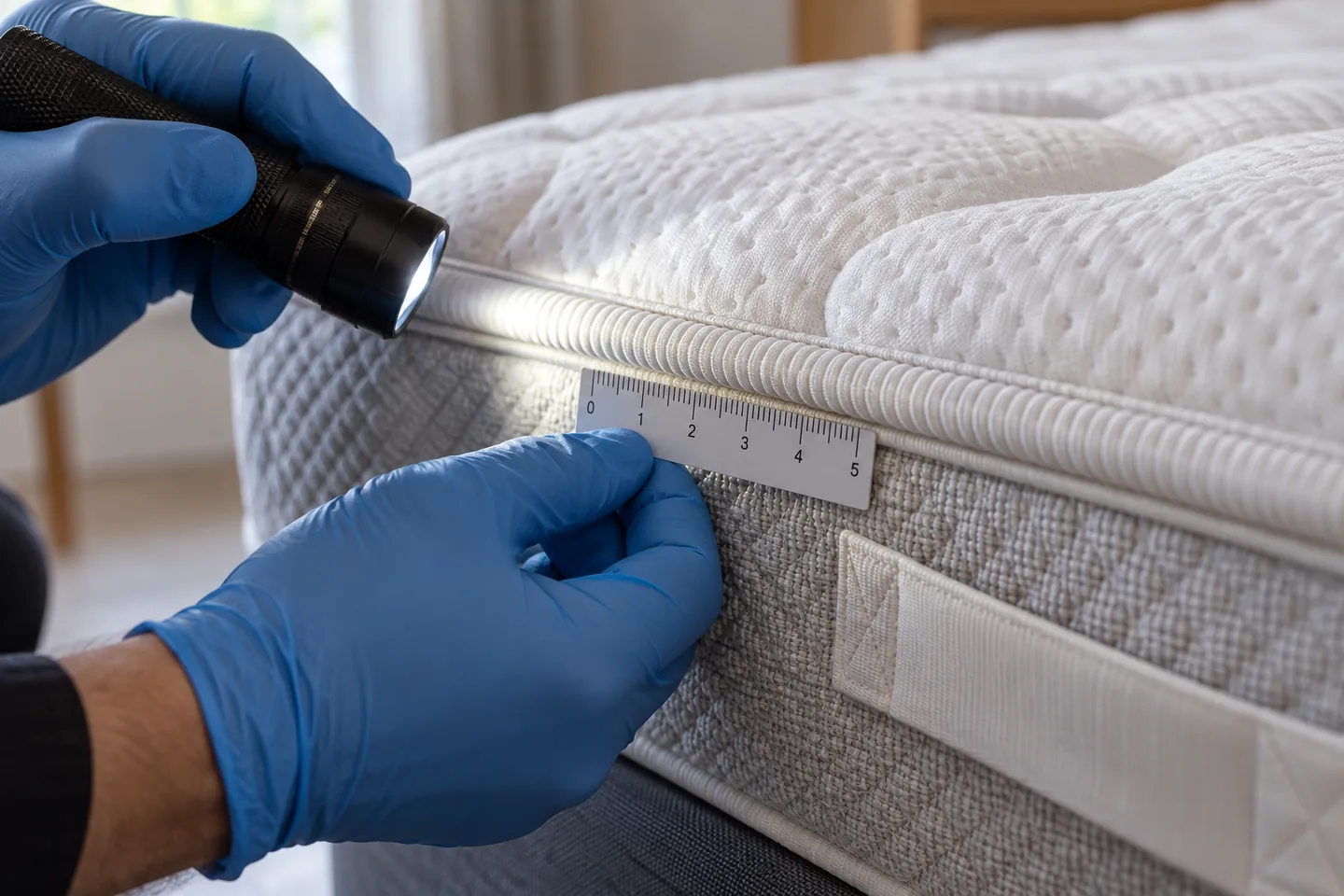
Look for several types of physical sign. These can include a live insect, a pale egg, an empty cast skin and further dark spotting in likely hiding places. A suspected egg is small and easy to confuse with lint or other debris; shape and location matter. An empty skin also needs identification because other household insects leave cast skins. If you can collect an intact specimen, that usually gives an inspector more to work with than a stain alone.
Search carefully rather than dismantling the room. Avoid opening electrical sockets, removing fixed fittings or pulling apart furniture beyond what you can safely reassemble. An invasive search can create damage and may still miss a protected hiding place. If several areas or rooms have plausible signs, a professional inspection can bring a consistent method to the assessment. The heat monitoring service also describes one part of the company's wider approach to treatment verification, but finding a stain does not mean any particular treatment is required.
What if the marks are on a sofa or away from the bedroom?
Bed bugs can shelter near places where people sit for extended periods, so a sofa deserves a location-based check. Look at accessible seams, folds and the underside without dragging the item through the house. A mark on luggage after a trip may warrant an inspection of the bag and the room where it was opened. It cannot, by itself, show where the mark originated. Note recent travel or second-hand furniture only as context; do not infer a definite source without supporting evidence.
In a shared property, communicate the finding without presenting it as a confirmed infestation. A clear message might say: “I found several dark spots on the mattress seam, photographed them today and am arranging identification.” This helps a landlord, manager or neighbouring occupant respond proportionately. Speculation about who introduced insects is rarely useful and can delay a coordinated inspection.
How to preserve useful evidence
Take a close photograph with reasonable focus, then one wider view that shows the exact seam or piece of furniture. Note the date, room and whether the item has recently been moved or cleaned. If you find an actual insect, use a small rigid container or sealed bag and label it. A professional can often identify a specimen more reliably than an indistinct picture. Keep your record short and factual; a timeline of dated observations is better than an estimated infestation history based on stains.
An inexpensive passive monitor may help record later activity, but a clear monitor does not always exclude bed bugs. Placement and duration matter, and a monitor is only one source of evidence. Ask an inspector whether monitoring is appropriate if the signs remain ambiguous. Meanwhile, avoid moving bedding and furniture between rooms without a plan, since unnecessary movement can complicate the search and potentially spread insects if they are present.
Do not spray a stain to “test” it. Chemicals cannot identify the source of a mark, and products used on the wrong surface may create other problems. The same applies to throwing away a mattress: a few uncertain dots do not justify an expensive disposal decision. If bed bugs are confirmed, discuss the extent of the problem, preparation steps and follow-up checks with a competent provider. The bed bug heat treatment page explains one possible service; treatment choice should follow identification and assessment.
When is professional identification sensible?
Seek help promptly if you find a live suspect insect, several types of physical sign, or repeated spotting in sheltered locations. A professional can inspect likely harbourages, identify specimens and explain what the evidence supports. If the only finding is one unexplained mark, preserve the record and monitor for further signs; that is still a reasonable reason to ask for advice if you remain concerned. Avoid waiting for skin reactions: some people have no visible reaction, while many other causes of skin marks are possible.
Ask the inspector what was seen, where it was seen and whether the conclusion is confirmed or provisional. A useful report should distinguish confirmed bed bugs from conditions that merely justify further checking. If treatment is proposed, ask which rooms or items are included, what preparation is required and how results will be assessed afterwards. You can contact Bed Bug Finder with clear photographs and the location of any marks to discuss the next inspection step.
The practical rule is simple: dark spotting near a bed is a clue, not a verdict. Photograph it in place, inspect nearby seams and joints, preserve any actual specimen and make decisions from the combined evidence. That approach protects you from ignoring a genuine problem and from treating an ordinary stain as proof of one.



Leave a Reply
You must be logged in to post a comment.