
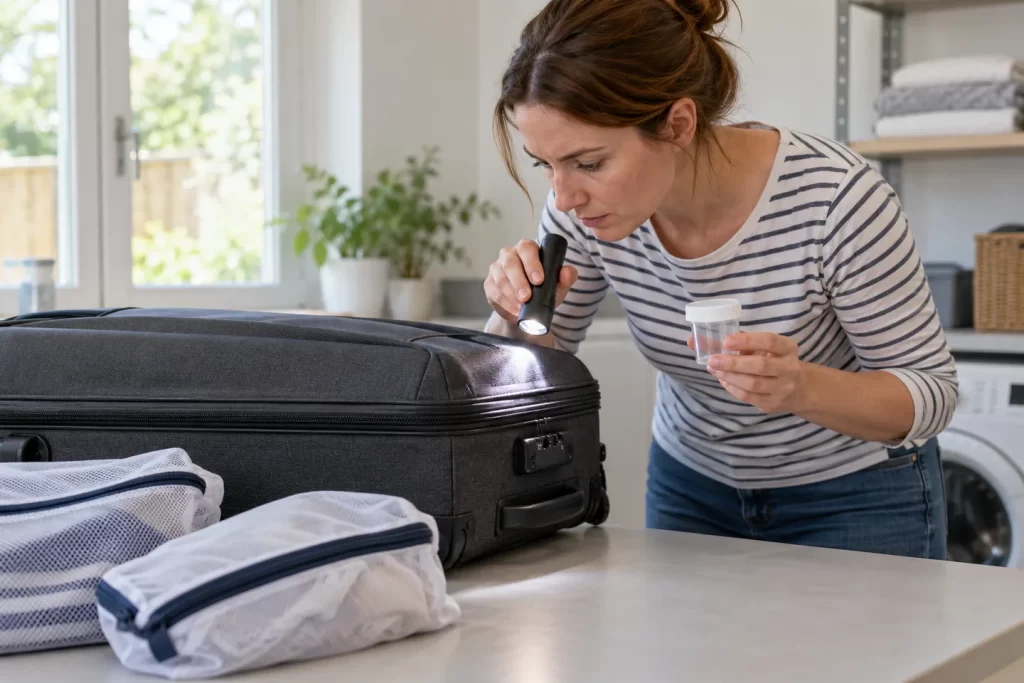
Finding a small insect on or inside a suitcase after a journey can make you want to empty everything at once. Pause before bringing the case into a bedroom. Keep it closed, move it to a clear hard surface where you can inspect it, and preserve the insect if you can. One suspect insect calls for identification and a controlled check of your belongings. It does not automatically mean your whole home is infested, and it does not justify spraying or throwing away the case.
Bed bugs can travel in luggage, clothing and other belongings. The US Environmental Protection Agency advises travellers to inspect luggage carefully on returning home and unpack clothes directly into a washing machine or dryer. The order of your actions matters: a neat, contained unpacking process makes it easier to find evidence and limits unnecessary movement between rooms. Use the checklist below as a practical way to organise that process while you establish what you have found.
Before you open the suitcase at home
Choose a place with good light and a hard, easy-to-clean surface. A utility room, tiled bathroom or other clear area can work. Keep the case away from beds, sofas and stored clothing. If you have not yet entered the property, leave the case closed while you prepare the area. If it is already inside, avoid carrying it from room to room in search of the perfect spot. Move it once, carefully, and keep track of any bags or coats that travelled with it.
Have a torch, a few sealable bags, a small clear container and a phone for photographs ready. You do not need to buy a pesticide or special gadget before inspecting. Ask other household members not to open packing cubes or lay travel clothes on beds until you have finished sorting. If children or pets are present, keep the inspection area clear so a specimen is not lost or disturbed.
If the insect is still visible, photograph it where you found it and then contain it if possible. A small rigid pot or clear sealed bag is useful. Add the date and the exact location, such as “inside front pocket of cabin case”. Avoid crushing the insect or covering it with tape if an intact specimen can be collected. Many indoor insects are mistaken for bed bugs; the bed bug treatment page is relevant after identification, not simply because you saw an unfamiliar insect.
Was it really a bed bug?
A clear close photograph can help, but a physical specimen is more reliable. Note the insect's size, shape and whether it has wings or can jump. Bed bugs are flattened, oval insects and do not fly or jump. A pale immature insect may look quite different from a reddish brown adult. Do not identify one from a skin reaction, a dark speck or a blurred photo of a moving dot. If the identification remains uncertain, ask a competent pest professional to examine it before deciding on treatment.
The location also needs interpretation. An insect on the outside of a case at an airport or station could have come from a number of places. A bed bug confirmed inside a case is a stronger reason to inspect its contents and the places where you stored the case. Neither observation proves precisely where it entered your belongings. Record your recent accommodation and transport as context, but avoid making an unsupported claim about a particular hotel or person.
Inspect the outside first
With the case closed, follow the full zip line, piping and stitched edges using a torch. Check the area behind the handle, around wheels and in recesses near feet or plastic guards. A hard-shell suitcase has fewer fabric folds than some soft cases, but wheel housings and fittings still create sheltered gaps. A soft case may also have seams around external pockets. Do not pull components apart or damage the case; inspect what is accessible.
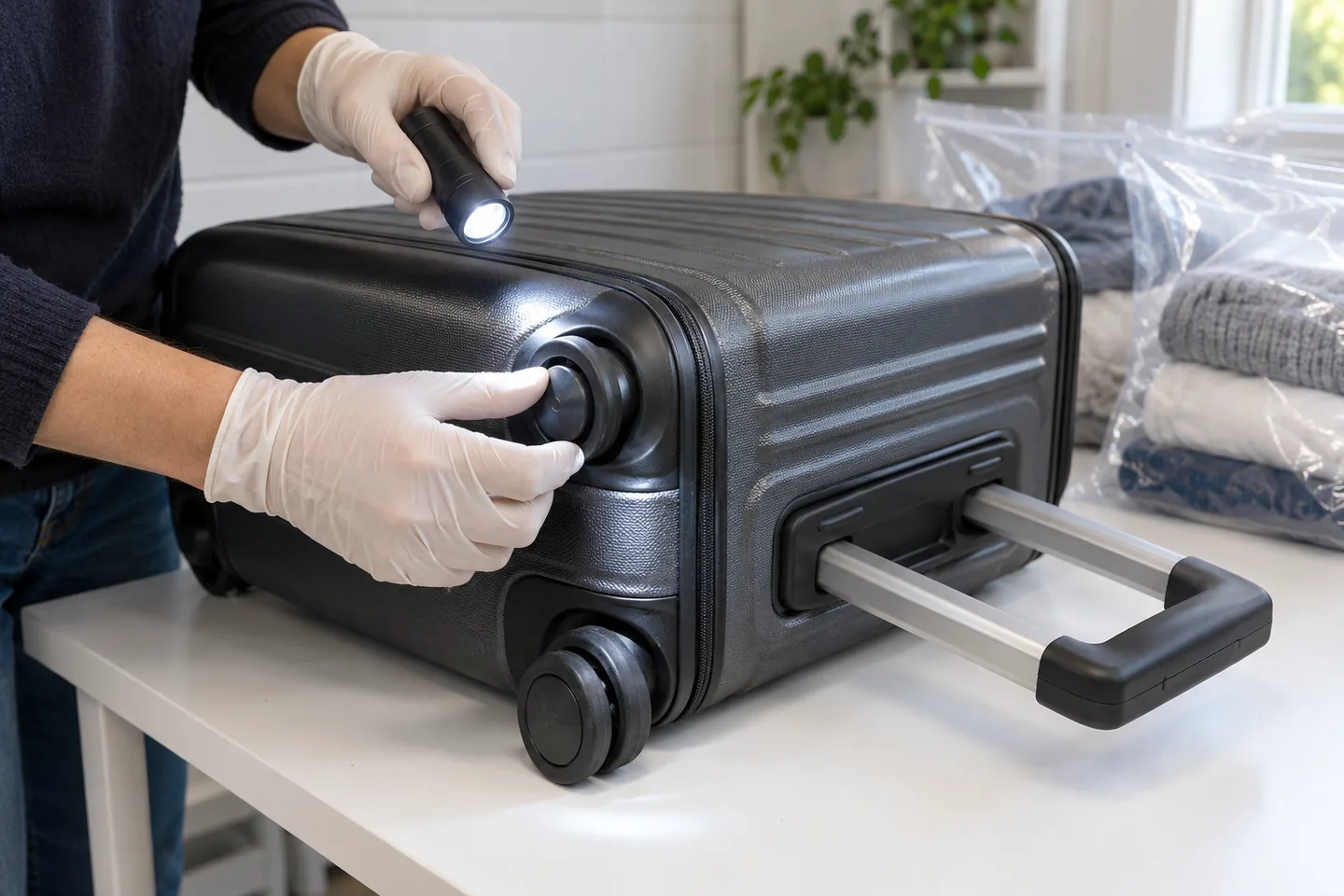
If you find another insect or a cast skin, photograph its location and contain it. Dark marks can be caused by ordinary dirt, grease or scuffs, so note them without treating them as proof. A group of signs in a protected seam is more informative than one mark on a wheel. If you need to pause, put the case in a large sealed bag or covered rigid container where practical until you can continue. Label it so nobody opens it casually.
Sort the contents without spreading them
Open one compartment at a time. Transfer clothing into sealable bags or directly into an appropriate laundry container rather than shaking it out across the room. Keep clearly clean items separate from items you suspect may be affected. Check internal seams, pocket edges, removable liners, packing cubes and toiletry bags as you remove them. Photograph any physical evidence before moving it. This is a methodical sort, not a reason to treat every object as contaminated without assessment.
For washable and dryer-safe fabrics, follow the care label. A sufficiently hot tumble-dryer cycle can kill bed bugs when heat reaches the items for the required time; washing alone is not a reliable kill step. Do not put items in a dryer if their labels prohibit it, and avoid overfilling a drum so heat cannot circulate. The EPA gives high-heat tumble-drying guidance for suitable fabrics, but machine settings and fabric tolerance vary. If the items are valuable, delicate or heat sensitive, ask a professional about an appropriate method. The clothes and luggage heat treatment service may be relevant for possessions that need a controlled treatment plan.
Shoes, books, electronics and toiletries need separate thought. Do not put electronics or aerosol containers in a dryer, oven or makeshift heating box. A freezer without verified temperature and duration is not a dependable shortcut. Inspect what you can safely see, keep uncertain items contained, and ask for item-specific advice rather than improvising heat or chemicals. A professional may recommend different handling for different materials.
Clean the case only after recording the evidence
Once the inspection is complete, vacuum accessible seams, pockets and folds if doing so is appropriate for the case. Use a crevice attachment slowly. Contain and dispose of the vacuum contents according to the cleaner's design without scattering debris indoors. Wipe hard surfaces as allowed by the manufacturer. Cleaning can remove visible insects or debris, but it is not proof that every sheltered gap has been treated. Keep the case apart from stored bedroom items until you are confident about the outcome.
Avoid saturating the case with an insecticide or fogging a room. Products can damage materials, expose you to chemicals and fail to reach hidden insects. Likewise, leaving a suitcase in a car on a sunny day does not provide a controlled, verified temperature throughout its contents. A professional heat process uses monitoring to address cold spots and item suitability; a closed vehicle or household hairdryer cannot be assumed to do the same.
Check the places the case has already touched
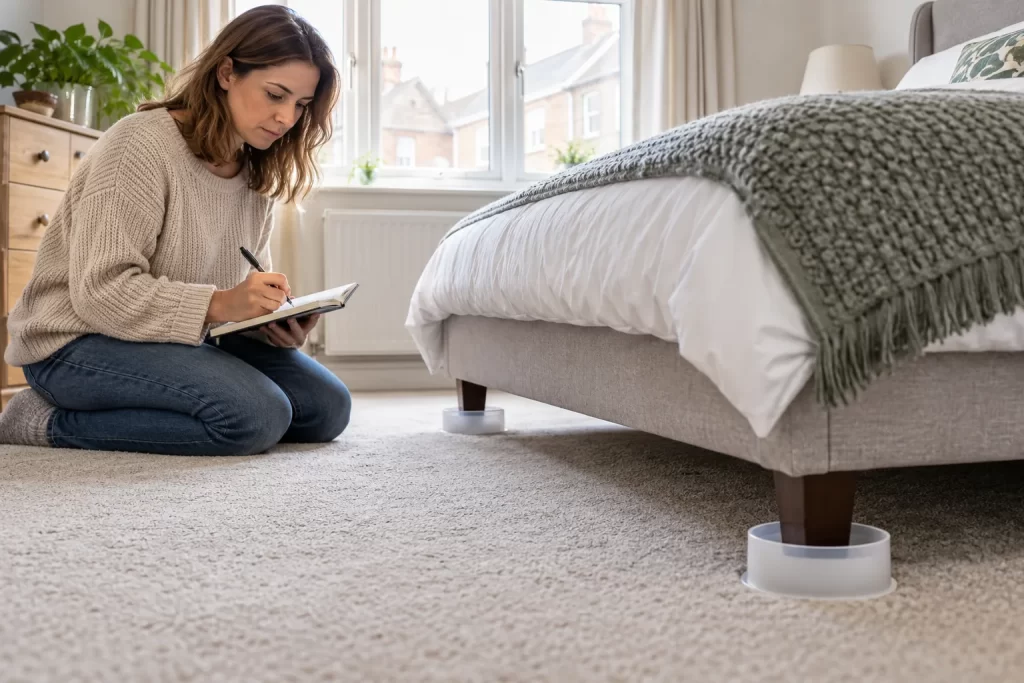
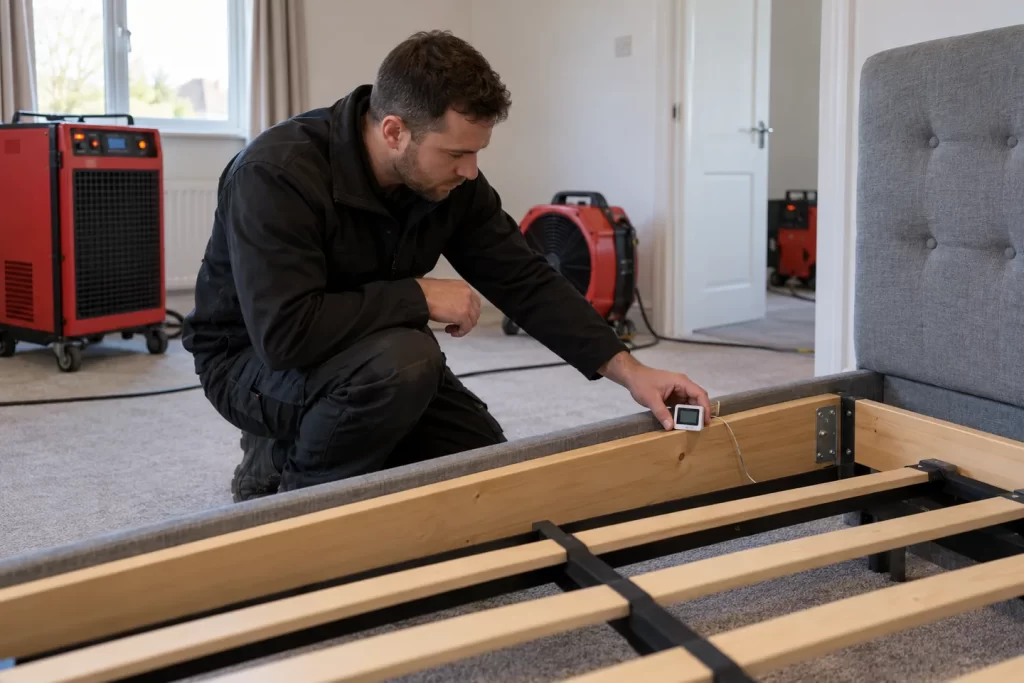
If you unpacked before noticing the insect, note where the case stood and which items were placed on beds or furniture. Inspect those specific areas rather than emptying every room. Use a torch at the nearest mattress seams, bed-frame joints and upholstery folds. A brief record of what you checked and when will help if more signs appear later. The heat monitoring page explains one service related to verifying a heat process, though finding a bed bug in luggage alone does not establish that a room treatment is necessary.
Do not move an uninspected case into a cupboard with other luggage or under a bed. If a specimen has been confirmed as a bed bug, ask a pest professional whether an inspection or monitoring of the home is warranted. The answer may depend on whether the case was opened indoors, whether multiple insects were found and whether there are physical signs near sleeping areas. A single sighting requires careful assessment, not a guaranteed infestation estimate.
When to ask for professional help
Seek identification promptly if you have an intact suspect insect. Ask for advice if you find repeated signs in the case, if belongings cannot be treated safely at home, or if you see activity in the property after travel. Explain the sequence clearly: when you returned, where the case went, what you found and how you handled the contents. Photos of original locations and an intact specimen make that conversation much easier. To discuss the finding and suitable next steps, contact Bed Bug Finder.
The return-home routine is straightforward: contain the case, identify the insect, inspect outside and inside seams, sort fabrics into suitable treatment routes, and check only the areas the luggage has touched. Keep a record rather than guessing at the source or scale. That lets you respond promptly if bed bugs are confirmed while avoiding disruptive action based on an uncertain sighting.
Leave a Reply
You must be logged in to post a comment.