

Finding a possible bed bug in a shared house creates a practical problem before it creates a treatment plan: several people use the same building, but each may know only what is happening in their own room. One housemate may have a specimen; another may have unexplained marks on bedding; a third may have seen nothing. A coordinated inspection helps establish what is actually present, where evidence was found and which rooms need attention. It also reduces the temptation to move belongings around in a hurry.
Bed bugs can travel between rooms. The British Pest Control Association's advice notes that they may move from one room to another, while the US Environmental Protection Agency describes cooperation between residents, property managers and pest professionals as central to pest control in shared buildings. A shared house is not identical to a block of flats, but the operational lesson is useful: evidence, access and preparation have to be discussed together. This guide focuses on that coordination without assuming every occupant has an infestation.
Confirm the observation before making a house-wide announcement
Start with what someone can show. A clear photograph of a live insect, a sealed specimen or a cluster of characteristic signs at a bed is stronger evidence than a bite or a rumour. Record the date, room and exact location: for example, “one insect in the seam of the bedroom headboard on Tuesday evening”. A mark on skin alone does not identify the cause. Do not promise housemates that an insect is a bed bug unless it has been identified reliably.
Photograph signs where they were found before cleaning. If a loose insect can be collected without risk, place it in a small closed container. Do not carry an unsealed item from room to room for everyone to inspect. Share the photo and location instead. If the image is unclear, seek identification through a competent pest professional. The bed bug treatment service offers a route to professional assessment.
Be specific in the first message to housemates. “I found a possible bed bug in my bed frame and have kept a sample; please avoid moving bedding between rooms while we arrange identification” is useful. “The whole house is infested” may be wrong and can lead to needless panic or disposal of belongings. Give people a chance to report observations privately if they feel embarrassed. An infestation is not a judgement about housekeeping.
Identify who can arrange access
Check who manages the tenancy and who can book an inspection. In a house share, that might be one lead tenant, a landlord, a letting agent or a property manager. Send them the factual record promptly and ask how access to each relevant room will be coordinated. Keep a copy of the message and any reply. Do not presume that one housemate can give permission for an inspector to enter every private bedroom.
Agree on one person to collect availability and pass confirmed information to the professional. That person should not diagnose other rooms or make treatment decisions alone. List room names clearly: front first-floor bedroom, rear bedroom, lounge sofa, hallway storage cupboard. A simple plan can prevent confusion when several people refer to “my room”. Note who sleeps or rests in each space, as well as shared seating where people spend long periods.
Ask the inspection provider what areas they need to see and how long access will take. If a housemate works nights, has a disability or needs another accommodation for the visit, communicate that in advance. A missed room can leave uncertainty about the distribution of activity. Equally, inspecting every cupboard without evidence or a professional rationale may waste time. Agree the scope after the first findings are reviewed.
Inspect rooms consistently
In each occupied bedroom, start close to the bed: mattress seams, bed-frame joints, headboard, bedside furniture and nearby skirting. Note physical signs and photographs separately for each room. A person who sees no signs after a careful check should record that too, with the date and the areas reached. An absence of visible signs is useful context, not a guarantee that the room is clear.
Shared spaces deserve attention according to how they are used. A lounge sofa where people regularly nap may be relevant; a hallway where only coats pass through may need a different level of inspection. Ask the professional whether neighbouring rooms or other parts of the building should be checked. The answer depends on the location and extent of confirmed evidence, not simply on the number of occupants.
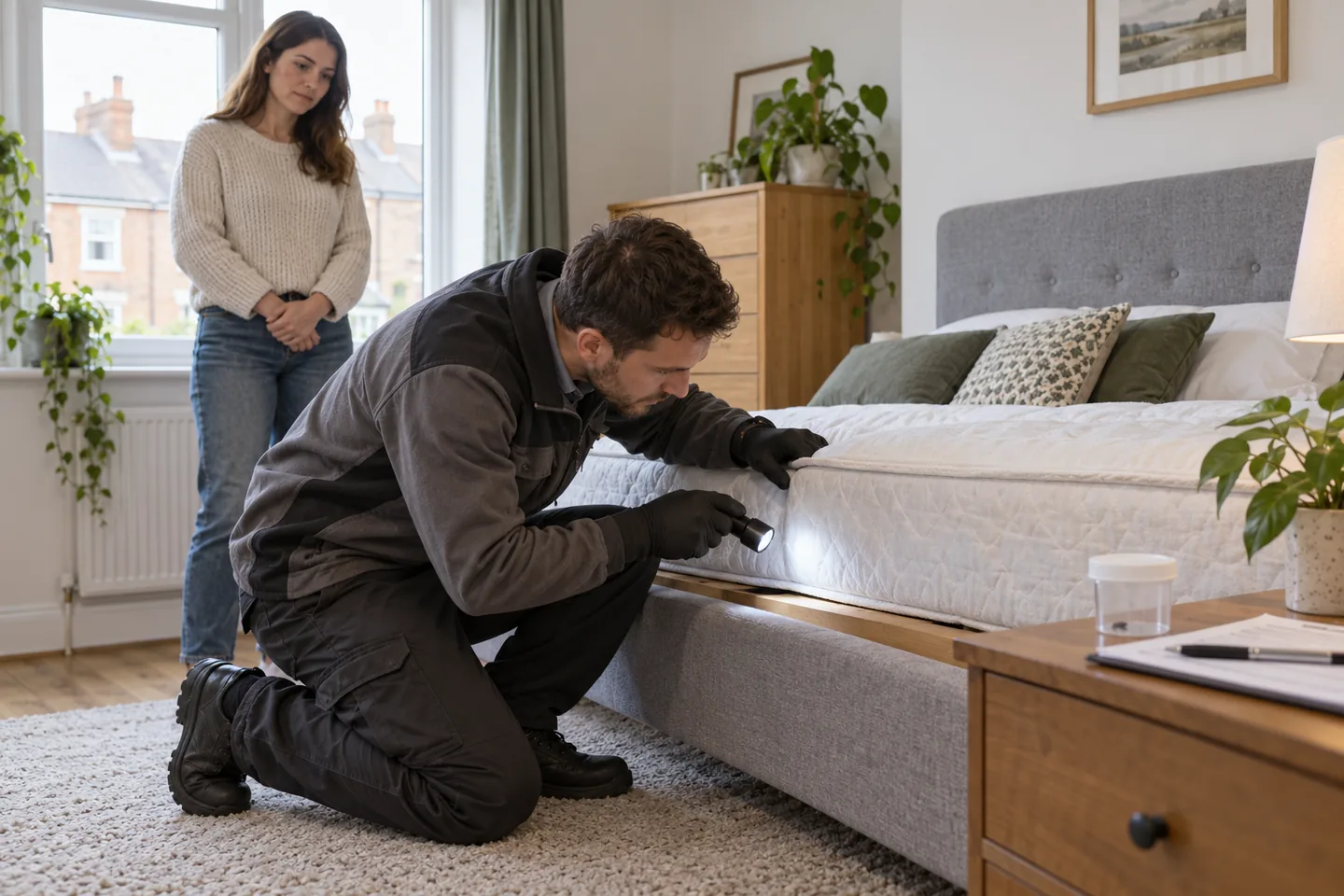
The EPA's bed bug strategy notes that insects can move between housing units and that adjacent areas may need inspection. In a shared house, rooms connected by a wall, floor or repeated movement of belongings may warrant consideration. This is a reason to discuss a wider assessment with the provider, not a reason for occupants to open wall fittings or dismantle one another's furniture. The bed bug heat treatment page describes a possible service, but the actual treatment area should follow the inspection findings.
Stop accidental movement of belongings
Until a plan is agreed, keep bedding, cushions and bags in their usual rooms. Avoid taking a suspected item to the lounge for a second opinion. Do not relocate to another housemate's bed because one room feels uncomfortable: moving sleeping locations can make the pattern of evidence harder to interpret. If someone needs to leave the property, discuss a practical way to handle clothing and luggage with the professional rather than improvising a room-to-room transfer.
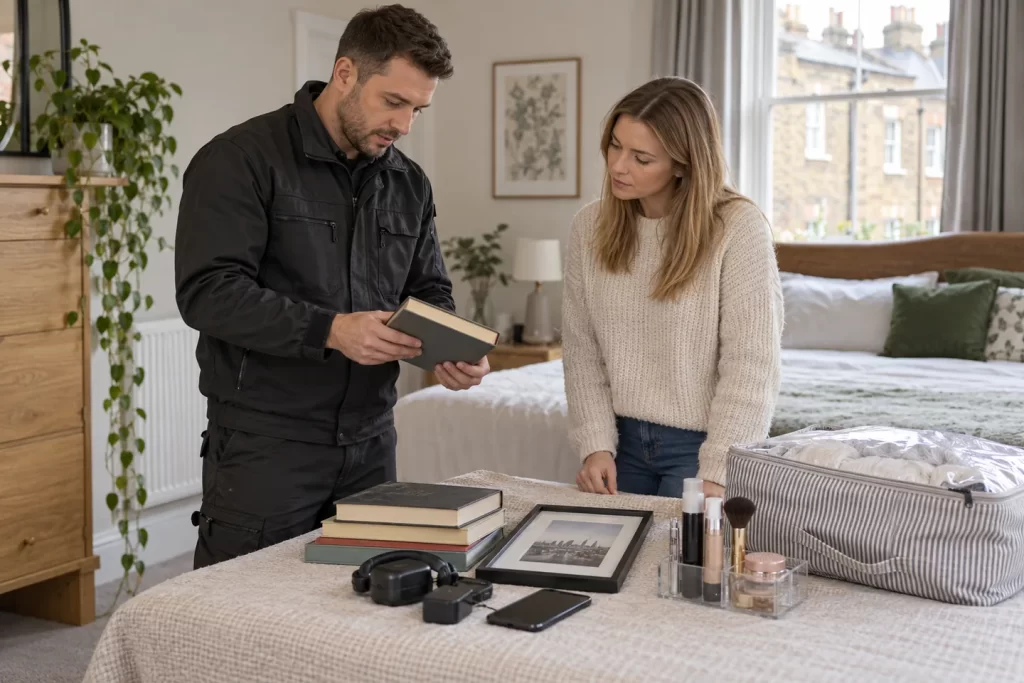
Do not set aside a communal pile of bedding or clothing. If items need laundering, use closed bags to carry them and keep cleaned and uncleaned items separate. Follow fabric labels and the provider's instructions for treatment and storage. The clothes and luggage heat-treatment service is relevant if belongings cannot be managed through ordinary laundering, but item suitability must be checked before booking.
Throwing away a bed or sofa without a plan may spread insects in corridors or onto other property and can remove useful evidence. A visible insect on an item does not establish that the whole item must be discarded. Ask the inspector whether it can be treated, what preparation is needed and how to move it if disposal is eventually advised. Keep a record of any belongings already removed so the scope of the inspection remains clear.
Share a concise evidence log
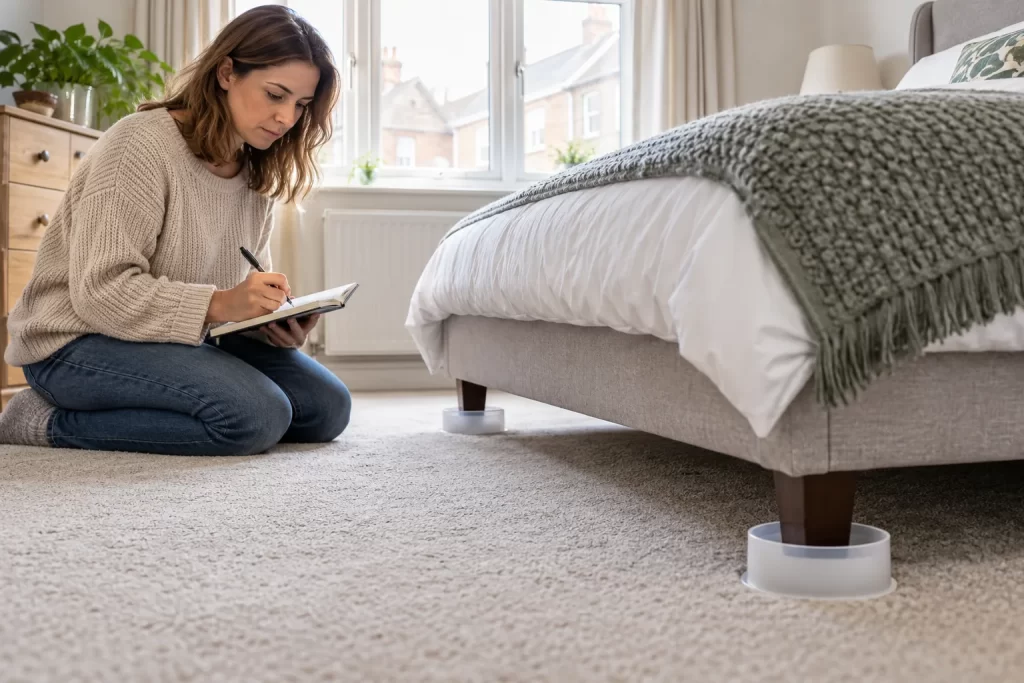
A shared document or message thread can hold dates, room labels, photographs and professional instructions. Restrict it to people who need the information. For each observation, record whether it was a live insect, a cast skin, an egg-like object, spotting or a bite report. Label uncertain findings as uncertain. Note when a professional identified a specimen and who received the result. That avoids rumours turning into “confirmed” infestations through repetition.
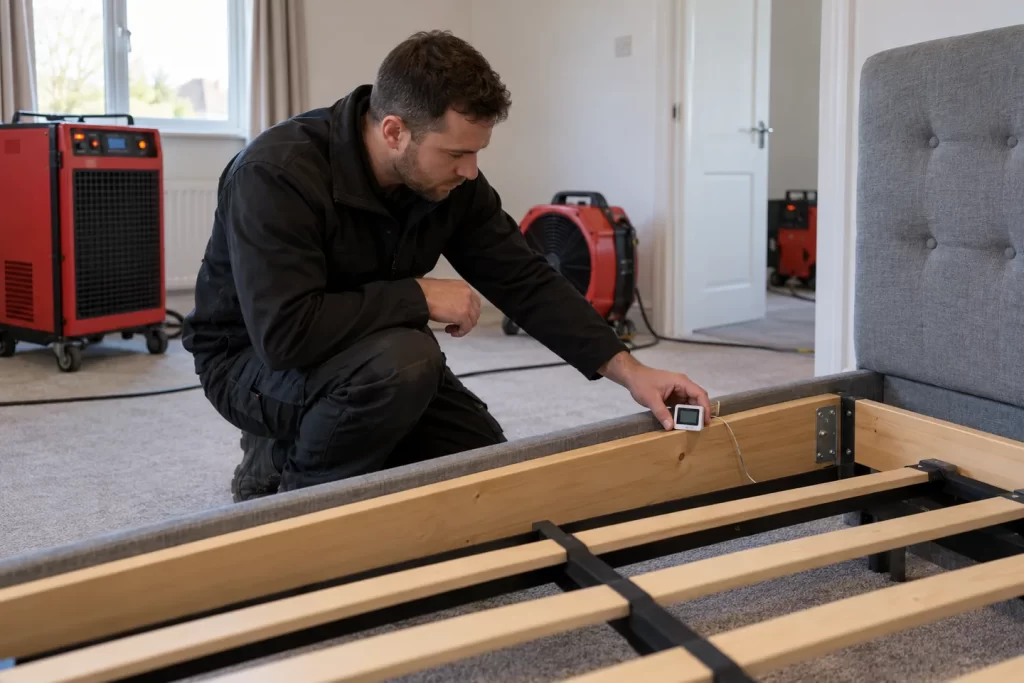
Keep inspection notes separate from treatment notes. The first might say that the inspector found signs behind the rear bedroom headboard and none in two other accessible beds. The second might say which rooms were treated, which belongings were excluded and what follow-up was recommended. Ask for the written scope of work rather than relying on a verbal summary passed along by one housemate. The heat monitoring service explains one form of treatment verification if heat is selected.
If a room cannot be inspected on the agreed day, document that limit. A statement that “the whole house was checked” would be misleading if a bedroom was locked. Plan a return visit or a monitoring approach with the provider. When tenants change, pass on relevant factual records through the property manager without circulating another person's private details unnecessarily.
Agree on one preparation plan
Different people may find conflicting advice online. One person may want to spray, another to vacuum everything, and another to dispose of the mattress. Uncoordinated action can obscure evidence, expose occupants to products they did not agree to and interfere with professional work. Ask the provider for one written preparation list that states what each room should do, by when, and which items should remain in place.
Tell the professional about previous sprays, steam cleaning or other attempts, including the product and where it was used. Do not apply pesticides in shared rooms without a plan and without following the product label. Ask how pets, vulnerable occupants and valuable or heat-sensitive items will be handled. If someone cannot complete a preparation step, raise it early rather than hiding it on the day of treatment. A realistic plan is more useful than a checklist that nobody can follow.
Coordinate access for any follow-up visit as carefully as the first. Bed bug control may require reassessment, and a single quiet night is not proof of success. Agree which physical signs should be reported and whether monitoring devices will be used. Record new sightings with dates and locations so the professional can distinguish continuing activity from a fresh introduction.
Keep the response fair and practical
No housemate should be blamed solely because the first insect was found in their room. Bed bugs can arrive in luggage, furniture or other belongings, and the point of inspection is to identify the current distribution, not to assign fault. Listen to each occupant's constraints around privacy, work schedules and the handling of possessions. Communicate the same confirmed information to everyone who must prepare a room, while avoiding speculation about a neighbour's health or habits.
The most useful next step is usually small and concrete: preserve the specimen, send a factual report to the property contact, agree access to the relevant rooms, and obtain a professional scope. Once evidence is confirmed, the household can follow one coordinated preparation and follow-up plan. That gives each occupant a clear role and avoids turning one uncertain sighting into disorder across the whole house.
Leave a Reply
You must be logged in to post a comment.