
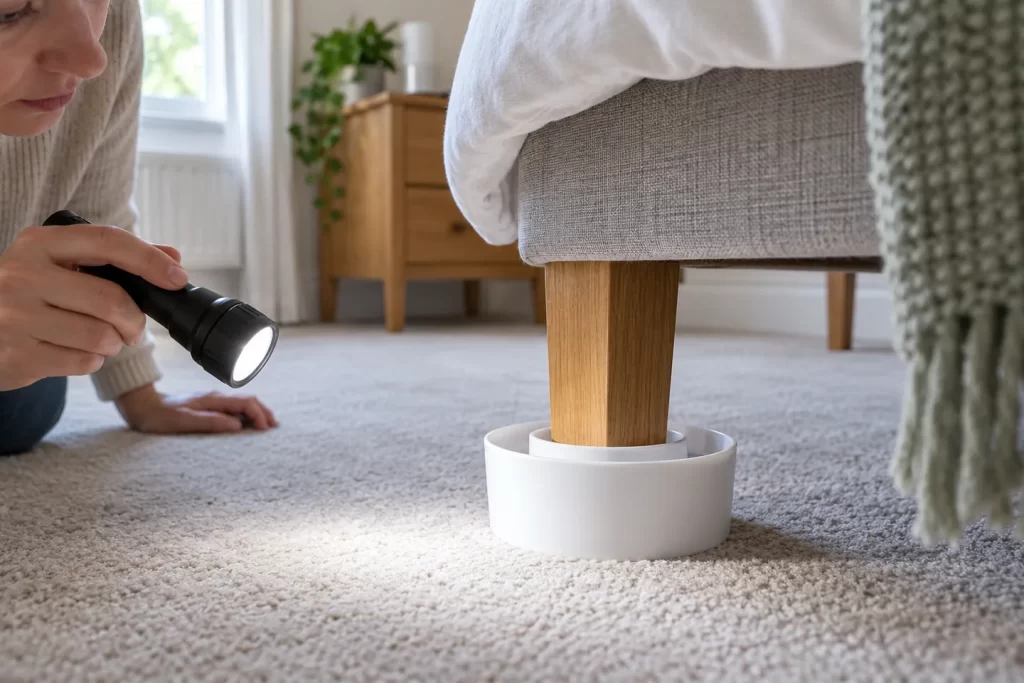
A bed bug monitor can turn an uncertain suspicion into a useful observation, but it cannot answer every question on its own. A trapped, identifiable insect is evidence worth investigating. An empty device is only a record that nothing was captured there during that period. The result depends on where the monitor was placed, whether a person was using the room, how the bed and furniture were arranged and whether insects were active. Understanding those limits prevents both false reassurance and unnecessary alarm.
The US Environmental Protection Agency includes interceptors and other monitoring methods in a broader bed bug control programme. The British Pest Control Association has discussed the possibility of false negatives when a room is unoccupied. This guide explains common monitor types, how to keep a useful record and when a visual inspection or professional advice is still needed. It is about detecting insects in rooms; temperature sensors used during a heat treatment serve a different purpose.
What a passive interceptor does
A common interceptor is a small cup-like device placed beneath a bed or furniture leg. It is designed to trap insects trying to climb or descend the leg. Because it has no powered lure, it relies on normal movement around the furniture. The EPA describes interceptors as one way to monitor bed bug activity during control and afterwards. A captured insect can be photographed and identified, while its location and date help an inspector understand where it was found.
Placement matters. If a bed leg does not sit securely inside the device, the monitor may not work as intended. Bedding that drapes onto the floor or a headboard touching a wall can provide another route to the bed, bypassing a leg cup. Some beds have broad bases, castors or other designs that do not suit a standard interceptor. Follow the manufacturer's instructions and ask a professional about a suitable alternative rather than improvising a precarious support for the bed.
An interceptor is neither a treatment for an established infestation nor a guarantee that insects cannot reach a sleeper. It is one component of a systematic assessment. The bed bug treatment service can evaluate physical evidence and the room layout if your monitor yields a suspect insect or concerns continue despite empty devices.
Other devices and their different claims
Some passive monitors provide a textured hiding place for insects to use; others catch them on an adhesive surface. Active devices may use heat, carbon dioxide or other cues to attract insects. Their designs, placement requirements and maintenance differ, so there is no single “monitor result” that can be interpreted without knowing the device. Check exactly what a product is intended to capture, where the manufacturer recommends placing it, how often it must be checked and whether the captured specimen can be examined intact.
Avoid assuming that a high price, a digital display or an advertised detection percentage guarantees performance in your room. Marketing claims may be based on particular conditions that do not match a lightly occupied bedroom or a complex bed frame. Ask the supplier what a negative result means, and look for evidence beyond sales copy. If a professional chooses a device, ask why it suits the room and how its results will affect the next decision.
Sticky traps can catch many small insects that are not bed bugs. A dark speck seen through plastic may be lint or a different arthropod. Do not report a confirmed bed bug solely from a distant phone image of the trap. Take a clear photograph, keep the device or specimen safely and seek identification. Record the exact position of the monitor so a later reviewer can interpret the finding.
Set a clear baseline
Before installing a monitor, note why you are using it. Are you trying to investigate an unexplained insect, follow up after a professional treatment or watch a room with no confirmed history? Each situation has a different threshold for action. If you already have a recognisable live bed bug or a cluster of characteristic signs in a bed frame, a clear monitor should not delay an inspection. In that case, the physical evidence is more informative than waiting for a trap to capture another insect.
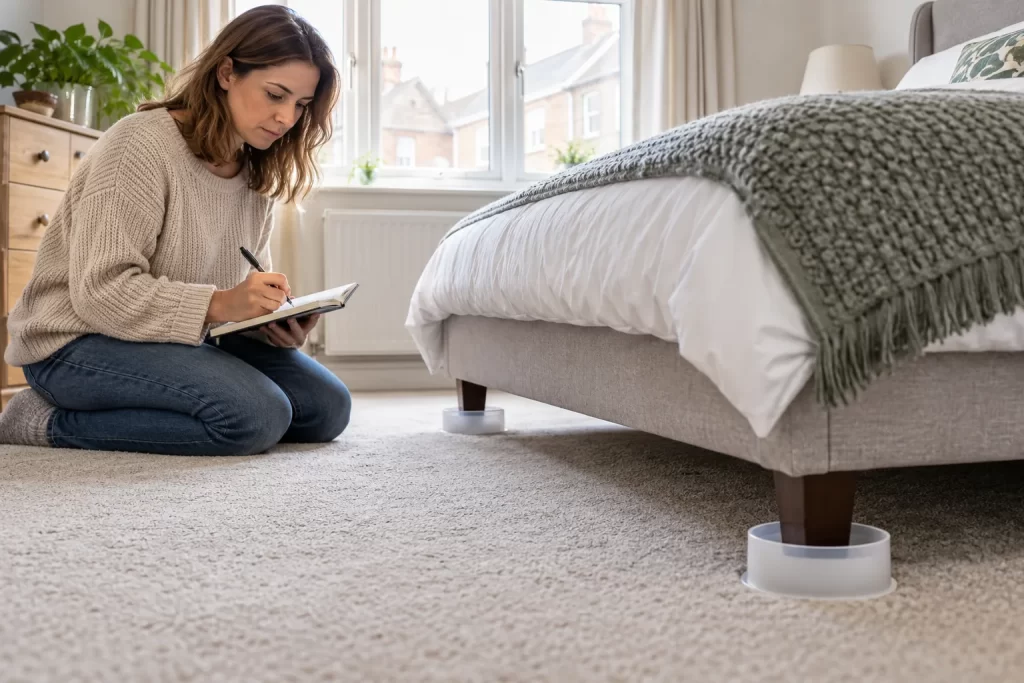
Make a short map of where each device sits. Label it “front bedroom, left rear bed leg” rather than “under the bed”. Photograph the installed monitor and note the start date. If furniture is moved, record the change. Do not swap devices between rooms without cleaning or a professional plan, because that confuses the location record and may transfer debris or insects. Keep the instructions with the log so another occupant can check the device consistently.
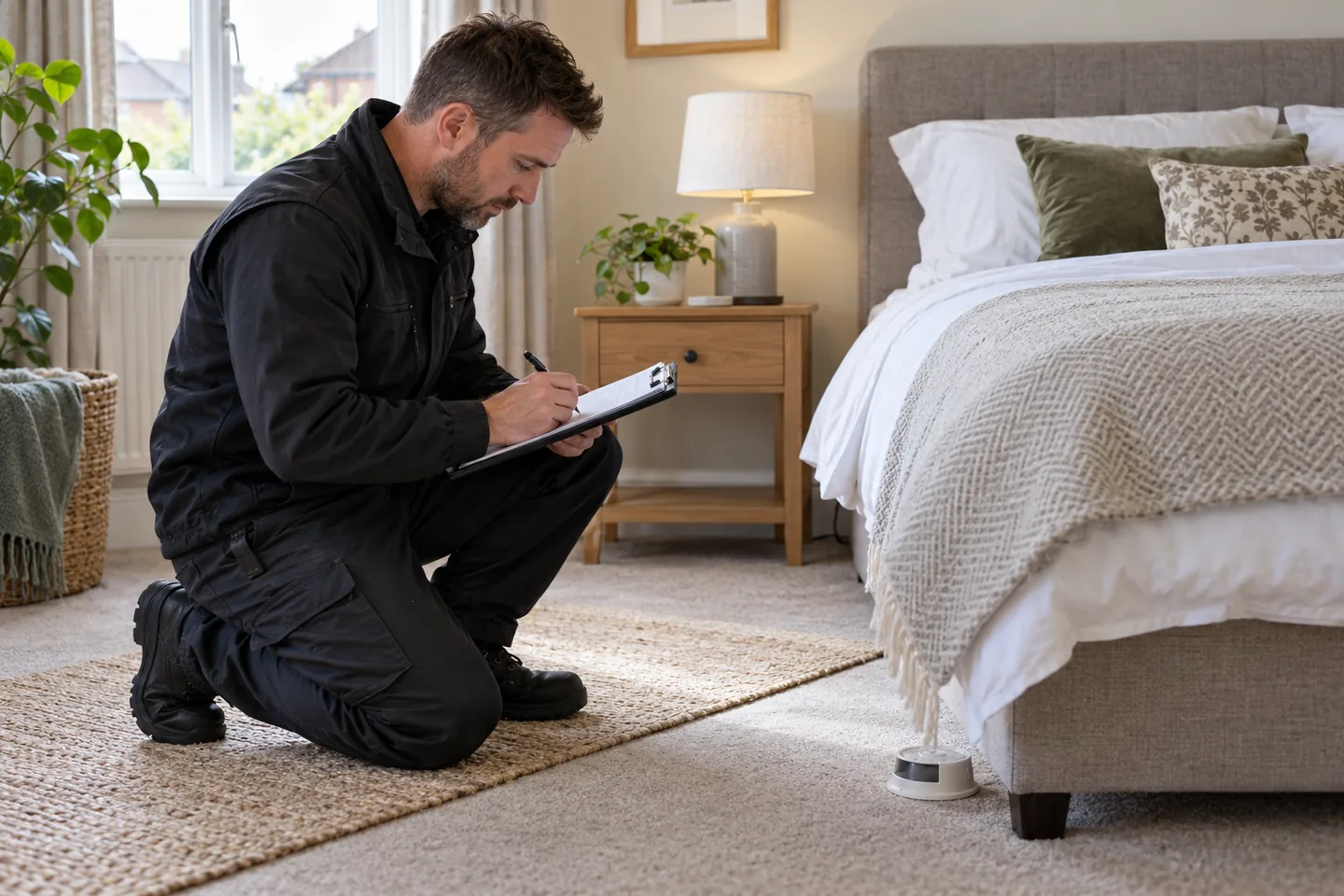
Inspect the monitor at the interval recommended by its maker or your pest professional. The EPA suggests continuing to look for evidence after control work, including checking interceptors. A routine check should be brief and orderly: look for insects, photograph anything suspicious and record the result even when nothing is present. If you need to handle a device, follow its instructions to avoid releasing a captured insect or contaminating a neighbouring room.
What a positive result can establish
A trapped insect that is reliably identified as a bed bug confirms that one bed bug reached that particular monitor. It does not reveal how many more are present, whether every room is affected or exactly where the insect came from. A series of catches at one bed may point an inspector towards that area, but the direction of travel can be ambiguous. A monitor beneath a leg may intercept an insect moving towards or away from the bed, depending on its design.
Keep dates and counts. A sequence of catches can help a professional assess whether activity appears to continue after treatment, though counts can change for reasons other than population size. If you find several insects, avoid emptying them into household rubbish before identification. Photograph the device in place and ask how to retain a sample. The provider may inspect the bed, furniture and nearby hiding places, then determine the treatment scope. The bed bug heat treatment page describes one treatment option, but monitor catches alone do not decide whether heat is appropriate.
A positive result should be communicated in factual terms. “One confirmed bed bug in the interceptor beneath the left bed leg on 21 October” is precise. “The house is full of bed bugs” is an unsupported leap. In a shared property, pass the evidence to the person coordinating access so a professional can decide whether adjoining rooms need checking.
What an empty monitor cannot establish
No catch does not prove that a room is clear. The device may be outside a movement route, insects may remain in a nearby harbourage, or the room may not have been occupied. The BPCA has highlighted that monitoring can produce false negatives in an unoccupied room. A short period without a catch is therefore particularly weak evidence in a spare bedroom. Conversely, repeated checks in a normally occupied room, combined with a careful visual inspection and no new physical signs, provide more useful context.
This is why a monitor should not replace looking at mattress seams, bed-frame joints, headboards and bedside furniture. An inspector may find a cast skin or live insect in a crevice even while all floor devices remain empty. If you are still seeing convincing signs, seek assessment rather than extending a negative monitoring period indefinitely. Skin marks alone remain uncertain; an empty trap neither explains them nor rules out every pest.
Do not move sleeping positions solely to “test” a monitor. Occupancy changes can alter insect movement and make the result harder to interpret, while moving bedding or furniture may spread items. Ask for a plan if the room must be vacant for another reason. Record the absence so the professional understands the monitoring conditions.
Monitoring after treatment
Post-treatment monitoring is about checking for continuing activity and detecting a possible new introduction. Agree with the provider which devices will remain, when they will be checked and what finding should trigger a call. Keep a dated log and photographs. A single empty check immediately after treatment is not a complete outcome measure. Equally, one unexplained speck in a cup should be identified before concluding that the treatment failed.
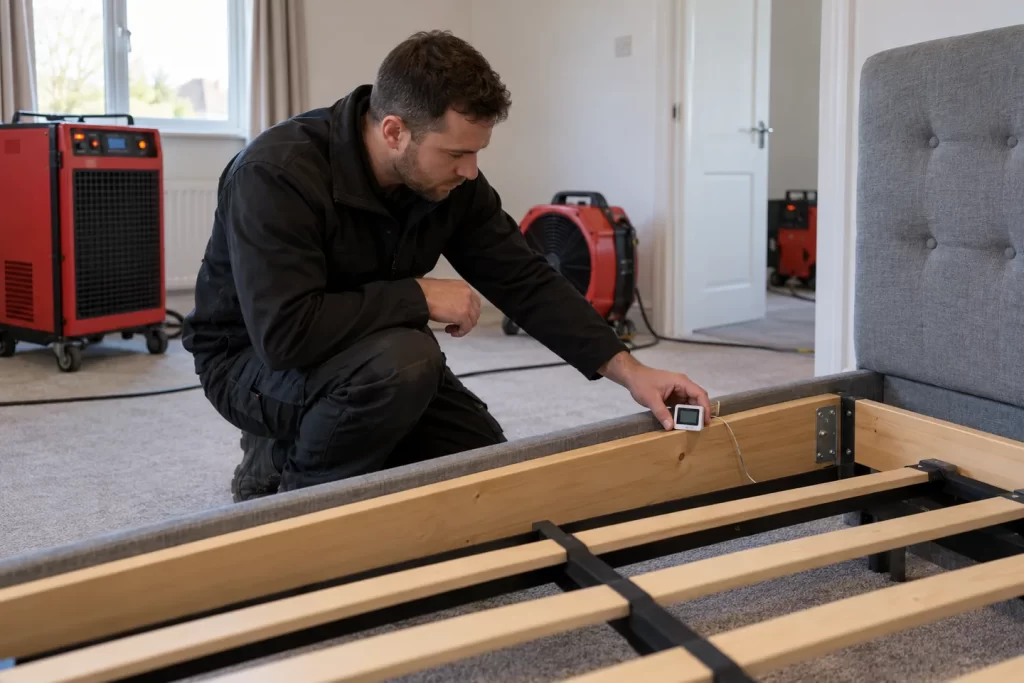
The provider may combine monitor results with a follow-up inspection, resident reports and treatment records. Ask which rooms were treated and whether any areas were inaccessible. If heat was used, temperature measurements during the work are a separate form of process evidence. The heat monitoring service concerns verifying heat distribution; it should not be confused with a bedside insect trap. Both kinds of record can matter, but they answer different questions.
If a confirmed bed bug appears after treatment, send the location, date and image to the provider. Do not spray the monitor or dismantle nearby fittings before the follow-up assessment. The insect may reflect surviving activity, incomplete coverage or a fresh introduction; a professional needs the context to distinguish these possibilities. Keep monitoring instructions consistent among occupants so the record remains comparable over time.
A useful result is a well-documented result
Choose a device that suits the furniture and the question you are trying to answer. Install it as directed, keep a record of placement and occupancy, and identify any captured insect. Treat an empty device as limited evidence, especially after a short or unoccupied monitoring period. When physical signs appear or uncertainty persists, combine the monitor log with a visual inspection and professional advice. That turns a plastic cup or other device into evidence you can act on rather than a false promise of certainty.
Leave a Reply
You must be logged in to post a comment.