
KNOW WHAT THE BOOKING WILL DO—AND WHAT COMES NEXT

Pest Control Battersea

A useful pest-control plan should tell you what the first visit covers, which decisions follow it and how further evidence will be reviewed.

  • Inspection and treatment stages explained separately
  • Follow-up expectations checked against the quote
  • Practical reporting after the appointment
Clarify your Battersea service plan020 3404 4091 →
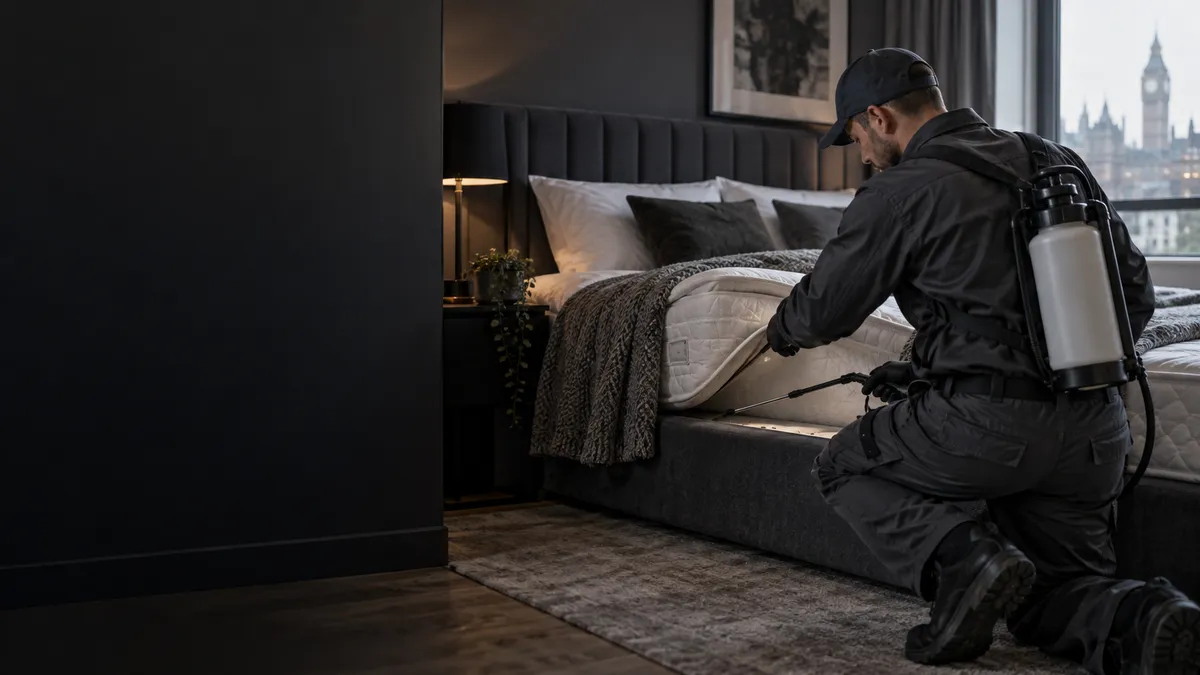
Illustrative specialist treatment equipment in a room
Illustrative image — not a customer case study

Start by defining the stage you need

For pest control in Battersea, you may be seeking an initial assessment, treatment of an identified pest or review after earlier work. Tell the team which stage applies. A previous appointment does not automatically establish the cause of a current sighting, while an uncertain first enquiry should not be described as a confirmed treatment requirement. Keep earlier records where they help explain the sequence.

Our approach combines professional services, bed bug knowledge and community information. The company approach page explains that wider identity. A clear service plan should distinguish evidence, recommendations and agreed work. Ask what information is needed to move from one stage to the next rather than assuming that an appointment title answers every question.

Which pest route fits the observations?

We discuss mice, rats, bed bugs, cockroaches, fleas, moths, ants, carpet beetles, wasps and the other services available in the menu. The range is not a claim about Battersea pest prevalence. Describe sightings, damage or other evidence and say where it occurs. If you do not know the pest, explain that before requesting a named treatment.

The mouse control information provides a route for relevant rodent concerns, while moth treatment details address a different service. Bed bug concerns remain a specialist enquiry. These pages explain methods more fully; this local page helps establish who to contact and how the visit stages can be discussed for your premises.

A household record and a business record serve different people

An occupier needs accessible instructions about preparation and the spaces involved. A business contact may also need to pass findings to staff or a maintenance manager. Tell the team who will receive the handover and who is responsible for acting on it. There is no assumption that the district determines a standard residential or commercial building type.

If another person takes over the enquiry after a visit, give them the actual findings and agreed scope rather than only a verbal summary. They should be able to distinguish an inaccessible area from one that was inspected, and a proposed action from completed work. That makes follow-up more useful than starting again from conflicting accounts.

Discuss the method alongside the review arrangements

A treatment proposal should say which pest and areas it addresses and what preparation is required. Monitoring, targeted work and specialist heat are different discussions. Ask how the team will assess later observations and whether a return visit is included. The heat process information is available where that specialist method is relevant, with its own contents and access considerations.

Before approving the quote, clarify any work that remains outside it. Building repairs, inaccessible spaces and newly reported evidence may need another decision. Following the appointment, use the instructions issued for the actual service. An internet checklist for a different pest should not replace the reporting and aftercare arrangements supplied with your booking.

A review needs observations, not only a conclusion

Write down when and where further evidence appears, including whether it resembles the original finding. Note relevant changes to access or use of the rooms. The purpose is to give the team something it can compare with the earlier assessment. Do not describe every later sighting as proof of failure or every quiet period as a guaranteed resolution.

Where the plan includes recommendations for the occupier or manager, record what was actually completed and when. A task still awaiting permission is different from one already carried out. This helps the next conversation identify unresolved actions and decide whether the appropriate step is monitoring, further assessment or additional agreed work.

STARTING RATES · CONFIRM THE FINAL QUOTATION

Ask how many stages the price includes

Inspection starts from £62, mice and many insect services from £184, bed bug control from £204 and specialist heat from £504. Confirm whether your quotation covers assessment, treatment, monitoring or particular review visits. Ask about the number and purpose of visits, room boundaries, VAT and extra charges. Identical starting rates do not mean every booking has identical included work.

InspectionFrom £62
Bed bug controlFrom £204
Rodent controlFrom £184
Specialist heatFrom £504

Battersea and neighbouring service enquiries

Share the exact postcode, access contact and stage of help required. The team confirms service availability for the address. Nearby local pages offer additional routes for surrounding district enquiries, without promising a universal arrival time.

LOCAL ANSWERS

A record that supports the next decision

Label the appointment stage

Keep inspection findings, treatment records and review notes distinct. Combining them into one undated account can make it difficult to tell which evidence prompted each recommendation.

Record the purpose of a return visit

Ask whether a visit is intended to monitor, review evidence or carry out additional work. The word follow-up alone should not leave you guessing about its scope or inclusion in the quote.

Make unfinished actions visible

If a recommended repair or access arrangement is still pending, say so. The team needs the current situation, not a record that treats every recommendation as already completed.

Battersea booking-stage and follow-up questions

Can an enquiry focus only on reviewing earlier work?

Explain that review is the immediate concern and provide the earlier findings if available. The team can discuss what assessment is needed without assuming the original diagnosis or scope remains correct.

Does the term follow-up always mean more treatment?

No inclusion or purpose should be assumed from the label. Ask what the planned visit will do, which observations it will review and whether additional work requires a separate approval.

What belongs in a post-visit observation record?

Include date, location, the evidence and any relevant change to the space. Keep the account factual enough for the team to compare it with the original assessment and treatment boundaries.

Can my building manager take over after the first appointment?

Discuss the handover and permission to share information. Give the manager the findings, scope and outstanding actions so they do not have to reconstruct the enquiry from a brief verbal account.

Will a quotation automatically cover newly affected rooms?

Do not assume that. Report new evidence and ask whether further assessment or a revised scope is needed. The original booking should retain clear boundaries rather than silently expanding.

How should I report a recommendation that has not been completed?

State the action, why it is still pending and who can resolve it. That information helps a review distinguish an unresolved practical issue from a change in the pest evidence itself.

Leave the first conversation knowing the next decision

Call with the Battersea address and explain whether you need assessment, treatment or review. We can discuss a plan whose stages are understandable before booking, with a clear route for the evidence and questions that may follow.

Ask what the next visit will cover020 3404 4091 →

Local design pilot. Booking availability and final service scope require confirmation.

☎