
When a professional bed bug heat treatment ends, the room may look much as it did before the equipment arrived. That does not make the first hours afterwards unimportant. A careful handover should explain which rooms and belongings were treated, what could not be reached, how the provider monitored conditions, when the room can be used again and what signs would justify a follow-up inspection. Those details give you a practical way to assess the work without trying to judge it from the warmth of the room or a single insect sighting.
Heat treatment has no lasting residual effect. It addresses the agreed treatment area during the operation; it does not leave a protective barrier against bed bugs that arrive later in luggage, furniture or another item. The US Environmental Protection Agency notes both that heat does not provide residual control and that monitoring after treatment is useful. Your next steps should therefore combine the treatment record with sensible monitoring and a plan for interpreting new evidence. A later mark on skin alone cannot establish that treatment failed.
Start with the handover and treatment scope
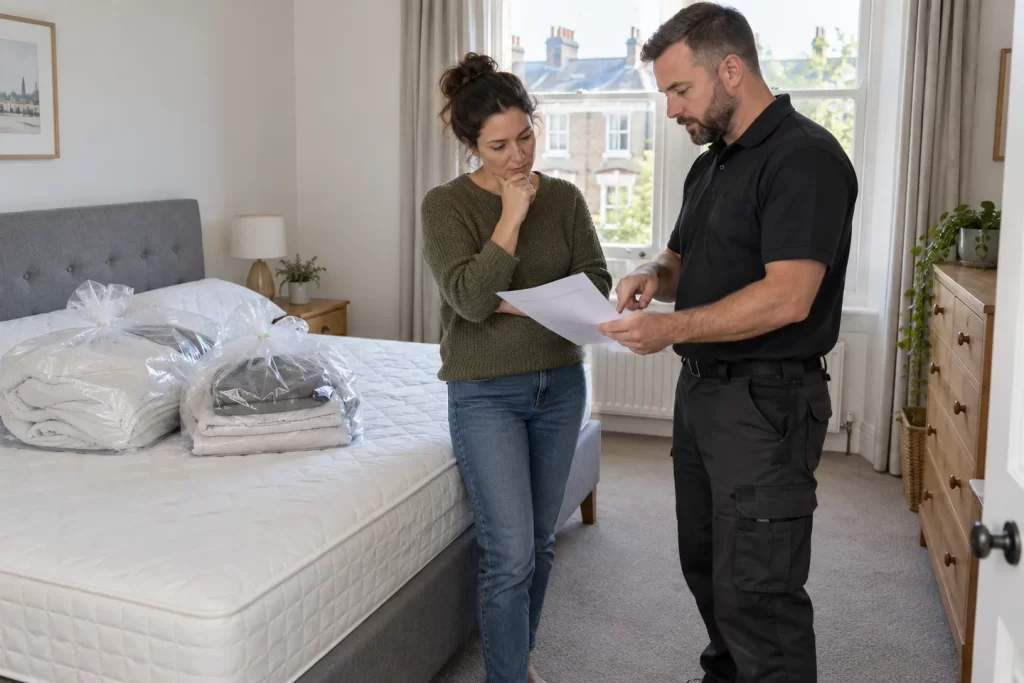
Before putting the room back into normal use, ask the technician to walk through the work. Confirm the rooms included, the principal furniture or belongings addressed and any exclusions. An item left outside the treatment area may need a separate decision; it should not quietly return to the bedroom as though it had been treated. Note whether access was restricted by a built-in unit, heavy furniture, a locked cupboard or a heat-sensitive possession.
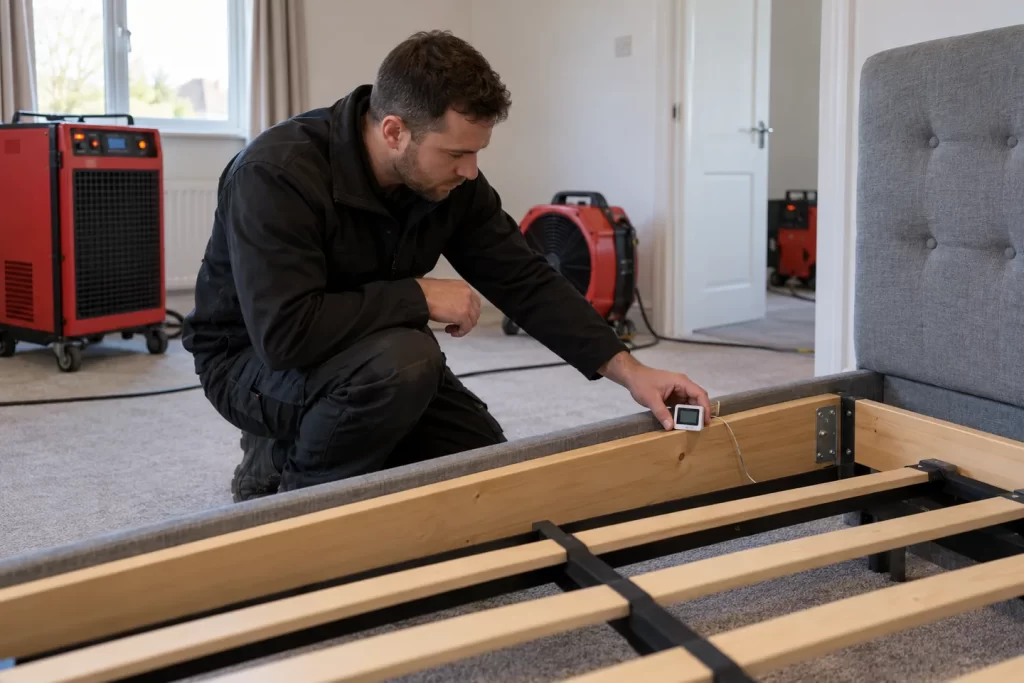
Ask for a written record. It should identify the date, the treatment area, any significant limitations, and the monitoring approach or readings the provider normally supplies. The aim is not to audit a specialist with equipment you do not operate. It is to understand what the company did and what the readings can and cannot establish. Our guide to temperature monitoring during heat treatment explains why a room-air reading cannot represent every concealed location.
Clarify when you may re-enter and when the room may be slept in. Follow the company's instructions on ventilation, equipment removal and reoccupation. Keep children and pets away until the provider says the area is safe to use. If you are uncertain about a specific object, ask before moving or plugging it back in; the technician knows which precautions applied to the equipment and treatment method used.
Inspect in a calm, repeatable way
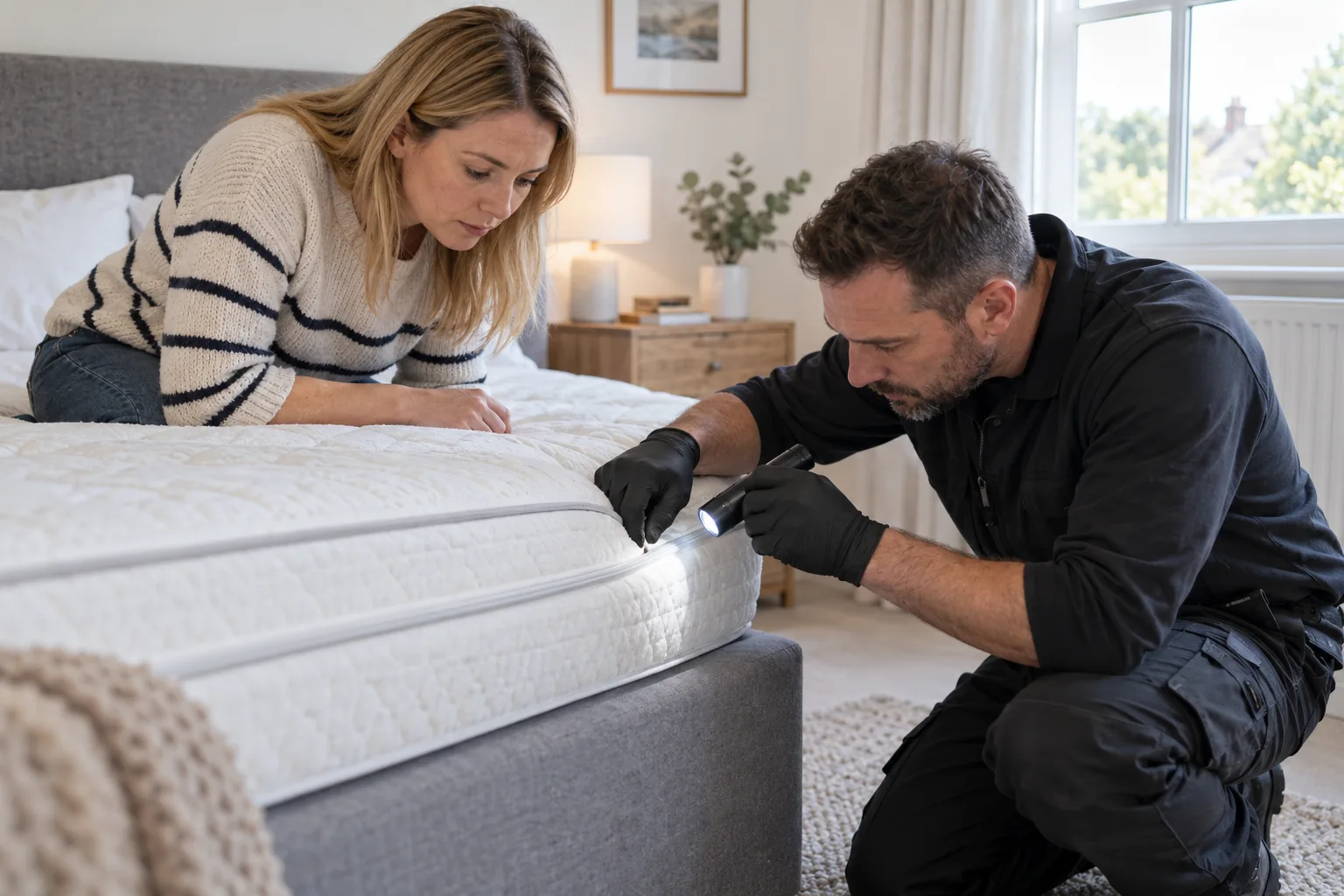
After the provider's recommended interval, inspect the places where evidence was originally found and other likely harbourages. Use a torch and look methodically at mattress seams, bed-frame joints, screw holes, the headboard, nearby furniture and the edge of the carpet. The inspection is about finding physical evidence such as a live insect, cast skin or characteristic spotting, not searching every surface in the home without a plan.
Record the date and exact location of anything you find. If possible, take a clear photograph beside an object that gives scale. A captured specimen can be useful for identification; contain it in a sealed clear bag or small vial and label where it was found. Avoid crushing it onto bedding, which can obscure details. If you are not sure what the object is, send the image to the pest professional or arrange an inspection rather than treating an uncertain speck as proof.
Keep the original inspection findings alongside the post-treatment notes. If the provider identified activity at a particular bed or chair, check those same points and note whether there is fresh evidence. A professional inspection creates a useful baseline: without it, a later discovery is much harder to compare with what was present before work began.
Use monitors as supporting evidence
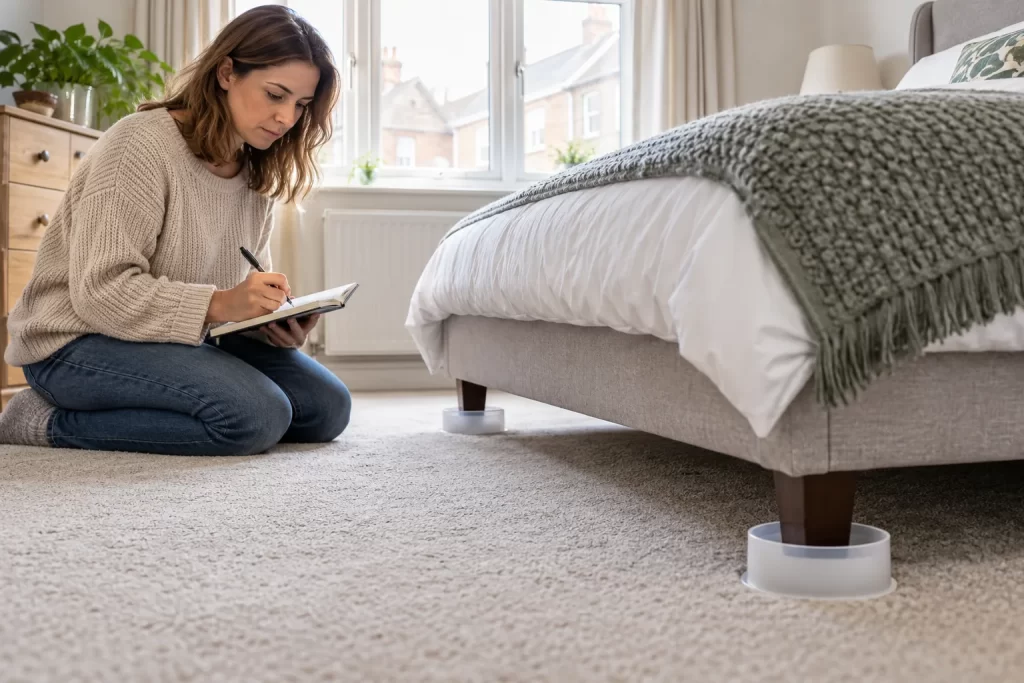
Interceptors or other suitable monitors can help reveal movement around a bed or chair over time. They work best when placed correctly and left in position as directed. If using interceptors under bed legs, keep the bed slightly clear of walls and bedding off the floor so that the intended route passes through the monitor. A monitor blocked by a blanket, displaced during cleaning or coated in dust may provide little useful information.
Write down where each device is placed and check it on a regular schedule. A date-stamped log helps you distinguish a new capture from an old one and compare activity over several checks. No capture does not prove that a room is clear: monitors sample movement at their location, and an insect may not cross them during the period observed. Likewise, a capture does not tell you by itself whether an insect survived treatment or arrived in an untreated belonging afterwards.
The site's heat monitoring service explains measurement during the treatment itself. Post-treatment monitors serve a different purpose: they help observe activity after the equipment has gone. Keep the two records separate, then share both with the provider if a concern arises. Avoid moving devices every day because changing their position makes comparisons less reliable.
Return belongings in a controlled order
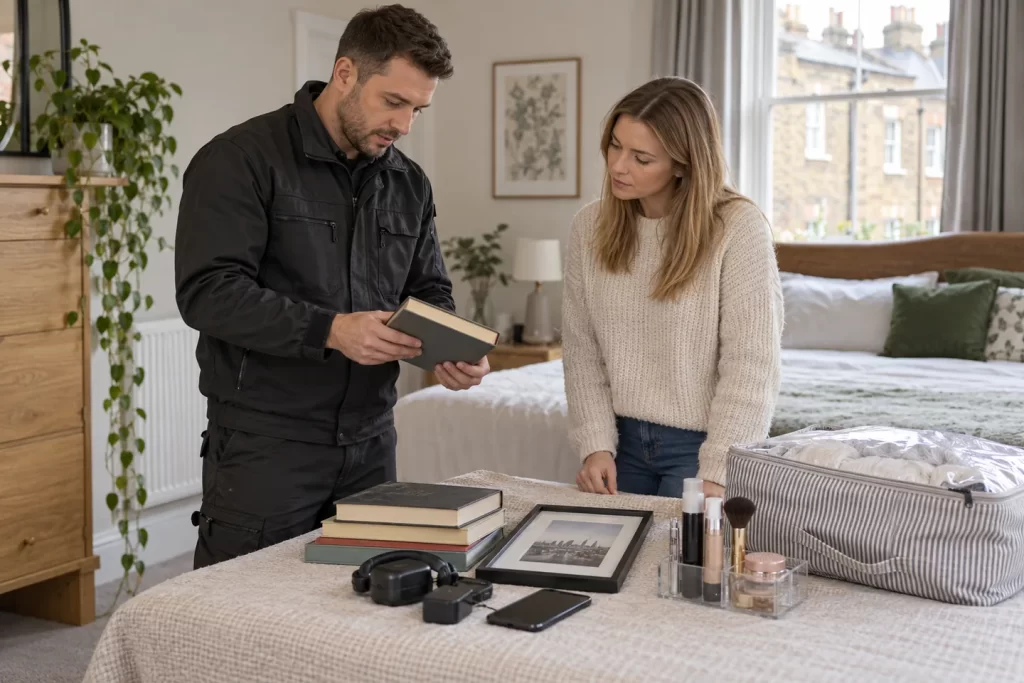
Follow the technician's instructions for items removed before treatment. Some may have been treated separately; others may have remained sealed or excluded because their material could be damaged. Check the inventory against the handover before unpacking. If an item has no recorded status, ask the company what to do with it. Do not assume that time in a bag or storage box has dealt with bed bugs.
Bring treated belongings back in a way that keeps them distinct from untreated ones. Use clean bags or containers for items that have been processed, and avoid placing them on a suspect sofa or bed before the room is ready. Launderable textiles can be handled according to their care labels and the provider's instructions. Do not improvise with a domestic tumble dryer, heater or sealed plastic bag when the item or method has not been assessed.
Our guide to preparing belongings for heat treatment recommends tracking items and exceptions. That same list is useful afterwards: it reduces the chance that a box omitted on treatment day is returned unnoticed. If the provider treated only selected possessions, get clear directions on where to store them while the room is checked.
Understand what a later sighting may mean
A bed bug found soon after treatment deserves attention, but it does not answer the cause by itself. It might point to an area that was inaccessible or did not receive the intended exposure. It might have come from an untreated item, an adjacent area or a new introduction. Identification, location and timing matter. A live insect found in a monitored bed zone is different evidence from an old cast skin in a bag that had been stored elsewhere.
Do not spray a household insecticide or move furniture between rooms before speaking to the provider. Unplanned products and movement can complicate the next inspection, scatter evidence or create exposure concerns. Keep the insect contained, photograph the location, note recent movement of luggage or belongings and contact the company under the follow-up arrangements in your paperwork. Ask whether the agreed service includes a return visit and what evidence they would like you to preserve.
Skin marks are especially poor as a stand-alone measure. People react differently, and many causes produce itchy marks. If there is no physical evidence, avoid concluding that bed bugs remain solely because someone has a new spot. Continue the agreed monitoring schedule and seek medical advice for a significant or worsening skin reaction; pest identification and health assessment are separate questions.
Reduce the chance of reintroduction
Once the professional has confirmed reoccupation, make ordinary travel and second-hand item checks part of your routine. When returning from a trip, keep luggage off the bed and inspect seams and pockets before storing it. Check used furniture carefully before bringing it indoors. These measures cannot guarantee prevention, but they reduce opportunities for an unnoticed introduction after a successful treatment.
If several flats or rooms share walls, discuss whether any neighbouring area needs inspection. A new issue could arise from another source even when the treated room was appropriately handled. Do not accuse a neighbour or assume movement through a wall without evidence; ask the property manager or pest professional how to coordinate a discreet assessment. Our shared-house inspection guide covers communication and access planning where multiple occupants are involved.
Keep beds and seating easy to inspect. Reduce stored items beneath beds, avoid leaving laundry in piles beside sleeping areas and maintain access to frame joints. This is not a substitute for treatment or proof that the infestation has ended. It simply makes future checks quicker and gives a technician better access if a follow-up is needed.
Agree a useful follow-up plan
Before the technician leaves, ask what observation period they recommend, how often to check monitors, what findings should trigger a call and how a return inspection is arranged. Get the answers in writing if they are not already on the service record. A good plan is specific to the property's evidence and treatment scope, rather than a universal promise that no insect will ever be seen again.
If activity is confirmed, ask the provider to explain the next step and how it relates to the original report. The response might involve a targeted inspection, a further treatment, attention to an excluded item or coordination with an adjoining room. The right course depends on evidence and access. Avoid paying for repeated work without understanding what is being changed and why.
The most useful post-treatment check is a short chain of evidence: a clear scope, a handover record, a consistent inspection, properly placed monitors and a prompt response to any identified insect. Heat can be effective when professionally planned and delivered, but it cannot prevent a future introduction. Keep records, preserve physical evidence and let the provider assess any concern against the work that was actually carried out.
Leave a Reply
You must be logged in to post a comment.