
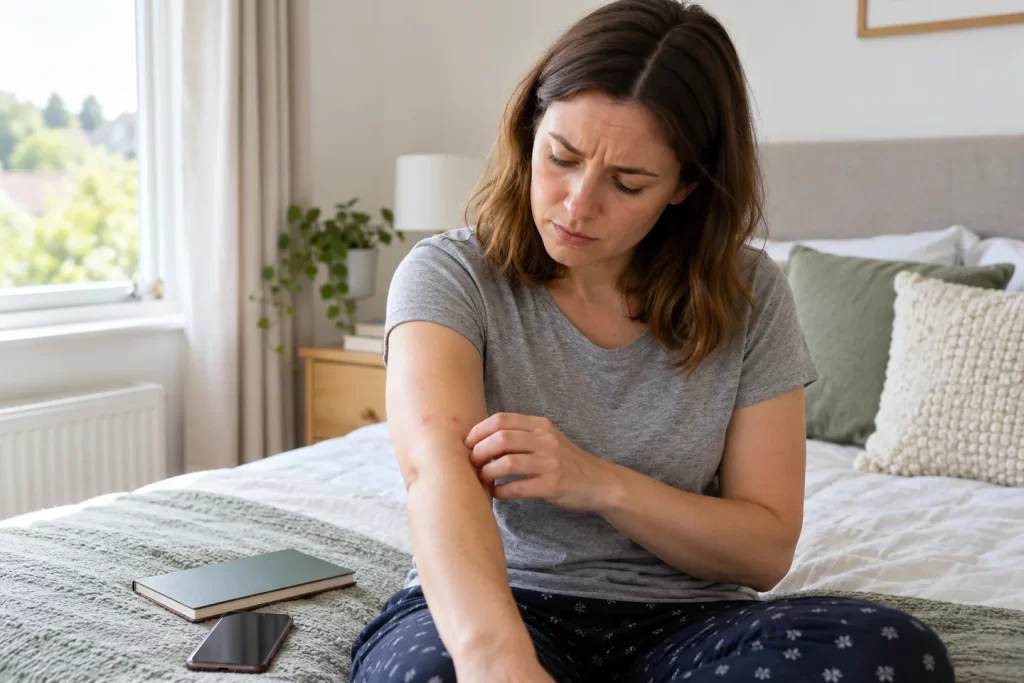
Waking with itchy marks can make bed bugs seem like the obvious explanation, particularly after travel or a change of accommodation. Skin marks, however, cannot identify the insect that caused them. People respond differently to bites; some develop visible irritation and others have no reaction. Similar-looking marks may also come from other insects or from conditions that do not involve an insect at all. The useful next step is to look for physical evidence in the sleeping area while taking care of the skin symptoms separately.
The US Environmental Protection Agency calls bites a poor indicator of bed bug infestation and recommends looking for signs such as insects, cast skins, eggs and characteristic spotting. The NHS describes common symptoms and when health advice may be needed. This article does not diagnose a rash. It explains how to avoid a premature pest conclusion, make a careful room check and decide who can help with each part of the problem.
Why two people in one bed may report different marks
An absence of marks on one sleeper does not prove the bed is clear, and marks on another do not prove it is infested. Individual skin responses vary. The EPA notes that some people do not react to bed bug bites at all. A visible mark can also appear after a delay, making it hard to link the reaction to one night or one location. Counting spots after a hotel stay and matching them to a particular room is therefore unreliable.
The NHS says bed bug bites can be itchy and sometimes appear in a line or group, but that pattern is not unique enough to identify their cause. The popular idea that three bites in a row must be bed bugs is especially misleading. A person can receive one bite, several bites or none that become visible. Other exposures can create clusters too. Use the pattern as a note for a healthcare professional if necessary, not as proof for a pest treatment.
Take clear photographs of the marks if they change, including a date and a simple note of symptoms. Avoid repeatedly scratching the area, and seek advice from a pharmacist or healthcare service if the reaction is troubling. For possible serious symptoms, use the NHS advice on insect bites and stings or seek urgent medical help as appropriate. Medical care addresses the skin; a pest inspection addresses whether insects are present in the property.
Other explanations deserve consideration
Mosquitoes, fleas and other biting insects can cause itchy spots. Skin irritation from fabric, detergent or another contact may also be mistaken for bites, while rashes such as eczema can overlap in appearance. It is not sensible to identify any of these from a quick photograph alone. The EPA specifically notes that bed bug bites can resemble other insect bites, rashes and hives. If a clinician needs to assess your skin, tell them when the marks appeared and what else has changed, without insisting on an insect diagnosis that has not been established.
The setting can suggest places to inspect, but it does not determine the answer. A person with pets may suspect fleas, while someone who has travelled may suspect bed bugs. Either guess could be right or wrong. Looking for insects and their physical traces gives a more reliable direction than building a treatment plan from the story alone. If fleas are a credible possibility, the site's flea treatment service addresses that separate pest; identification should guide which service is relevant.
Do not let an online image search settle the matter. Photographs of reactions are taken under different light, on different skin tones and at different stages. Your own marks may look similar to several examples. A clinician can help with symptoms, while a qualified pest professional can inspect the room for insects. These are related but distinct questions.
Inspect the sleeping area for physical evidence
Start close to where you sleep. Use a torch to check mattress piping, seams and labels. Examine accessible joints in the bed frame and headboard, then the bedside table and nearby skirting. Bed bugs can hide in protected cracks and seams, often close to a regular resting place. Avoid pulling apart electrical fittings, cutting upholstery or moving a suspect bed into another room. A systematic, non-destructive check is more informative than a hurried search through every cupboard.
Look for a recognisable live insect, pale eggs or eggshells, shed skins and clusters of dark spotting. Reddish stains on bedding may also be relevant, although any stain needs context. The EPA lists these among the physical signs to consider. A single fleck of dust or one unexplained dark dot is not a diagnosis. Photograph suspected evidence in place with a wider view and a close view, then note its exact location and date.
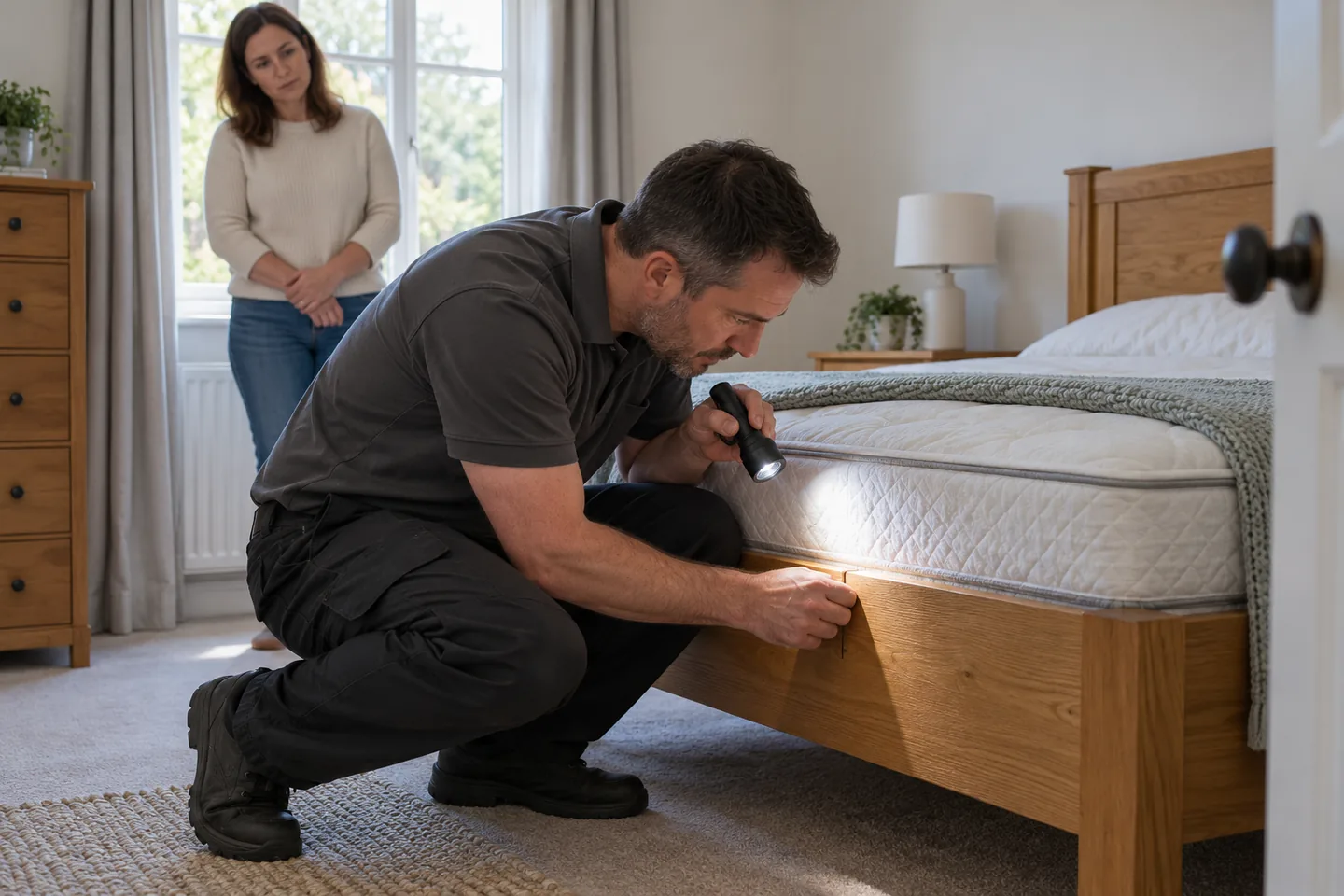
If you find a loose insect, place it in a small sealed container if safe to do so. Avoid crushing it before identification. A pest professional can distinguish a bed bug from common lookalikes and decide how far the inspection should extend. The bed bug treatment service is an appropriate route when physical evidence points towards bed bugs. Do not buy a treatment solely because a skin mark looks familiar.
What to do if the first inspection is clear
A clear visual check can reduce concern, but it cannot guarantee there are no insects hidden in inaccessible spaces. Note which areas were actually checked. The quality of the inspection matters more than the reassuring word “clear”. If symptoms continue, consider both healthcare advice and a more thorough pest assessment based on any additional evidence. Avoid repeatedly dismantling the room in a way that damages belongings or makes future findings hard to interpret.
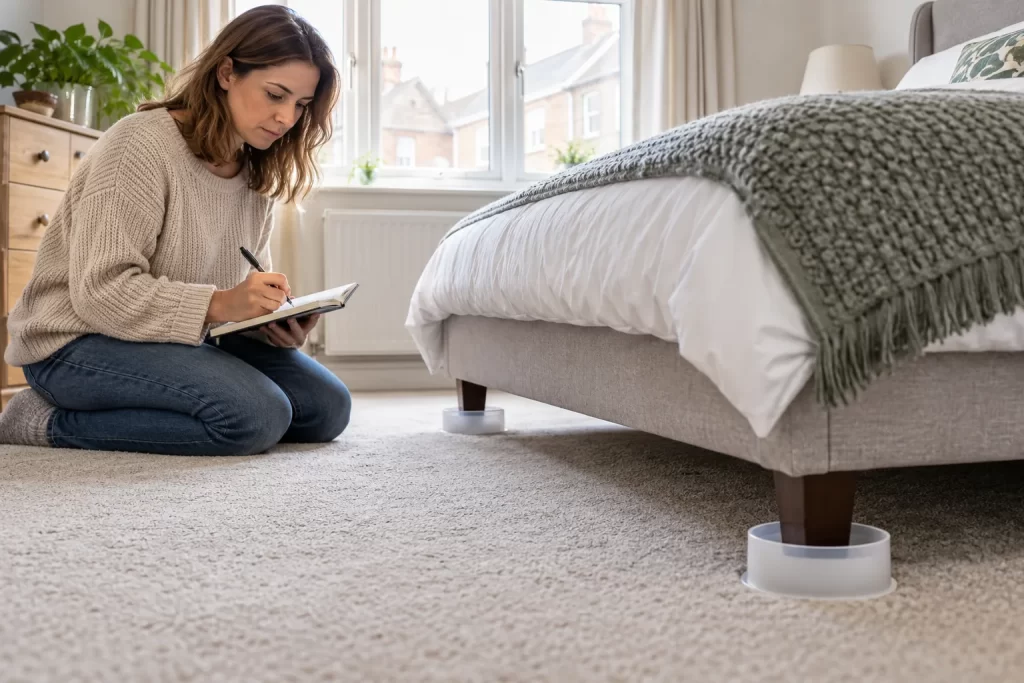
Monitoring devices can supplement an inspection. An interceptor beneath a suitable bed leg may capture an insect moving along that route, and a dated record can help a professional. An empty device does not prove the room is free of bed bugs, especially after a short period or when nobody is sleeping there. Keep photographs and dates of any new physical signs. Try not to move sleeping positions or transfer bedding between rooms merely to test a theory.
If another occupant has marks but you do not, share observations without treating either experience as decisive. Ask whether anyone has found an actual insect, cast skin or characteristic staining. In shared accommodation, report a confirmed specimen or strong physical evidence to the person coordinating the property. Keep the message factual and respect housemates' privacy.
When a professional pest inspection is worthwhile
Seek a pest assessment if you find an identifiable insect, several consistent signs around a bed, or repeated suspicious sightings despite a careful initial check. Tell the provider what was found, where it was found and whether anyone has used sprays or moved furniture. A good inspection should examine likely harbourages and explain which findings support a conclusion. Ask what uncertainty remains if no insect is found and whether monitoring would help.
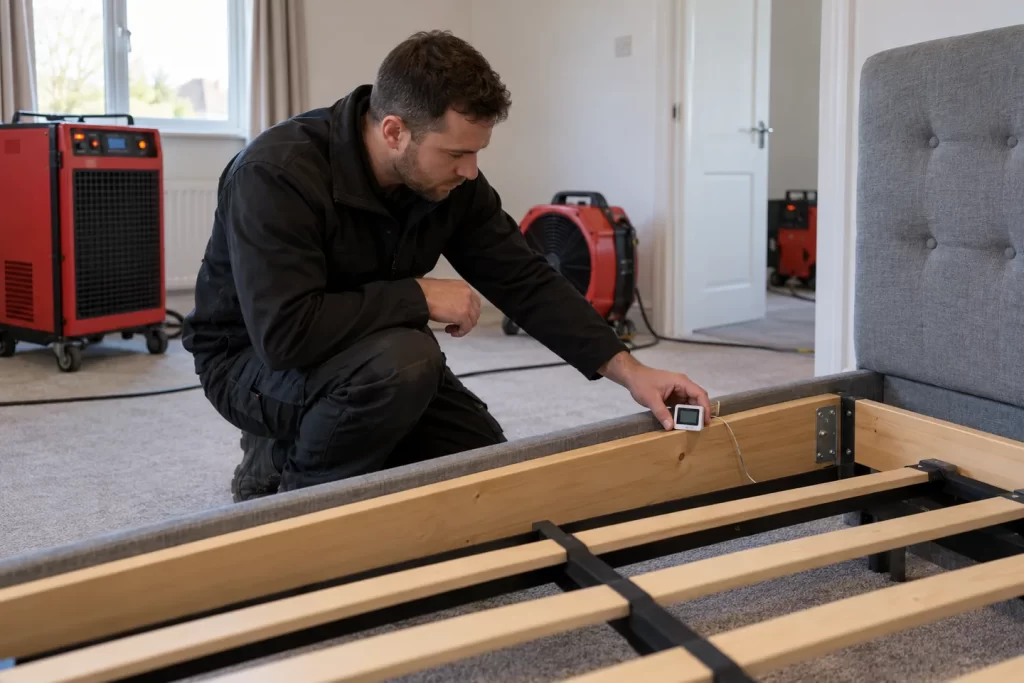
Professional treatment should follow the pest evidence and the scope of the problem. A heat treatment, for example, requires planning around rooms and belongings; the bed bug heat treatment page describes a service option but does not turn a skin reaction into a diagnosis. Spraying products speculatively may create unnecessary exposure and complicate later work. If you have already used a product, tell the inspector its name, location and date of use.
If a professional identifies a different insect, ask what that means for the next step rather than continuing with a bed bug plan out of habit. If no pest evidence is found and skin symptoms persist, revisit the healthcare question. An unresolved rash should not be attributed to an invisible infestation simply because the initial guess felt compelling.
Care for the person as well as the property
The NHS advises that bed bug bites are usually itchy but do not usually cause other health problems. Some people can have a stronger reaction, and any concerning or worsening symptom deserves appropriate medical advice. Keep this separate from pest identification: even if a bed bug is found, a clinician should assess symptoms that warrant care. Conversely, treating a rash successfully does not remove insects from a room if they are actually present.
It is common to feel anxious or embarrassed when bed bugs are suspected. A measured process helps: record the marks without obsessively checking them, inspect the bed for physical signs, preserve any specimen and ask the right professional about each issue. Bed bugs are not a verdict on cleanliness. Avoid blaming a traveller, housemate or neighbour without evidence of where an insect came from.
A more reliable conclusion
Skin marks can prompt an inspection, but they cannot identify bed bugs on their own. Reactions vary, other causes overlap and an absence of marks on someone else proves little. Physical signs in the room, especially an identified insect, provide a firmer basis for pest action. Use healthcare advice for the skin and professional pest advice for the property. Keeping those decisions evidence-led can prevent unnecessary treatment while still acting promptly when real signs appear.

Leave a Reply
You must be logged in to post a comment.