
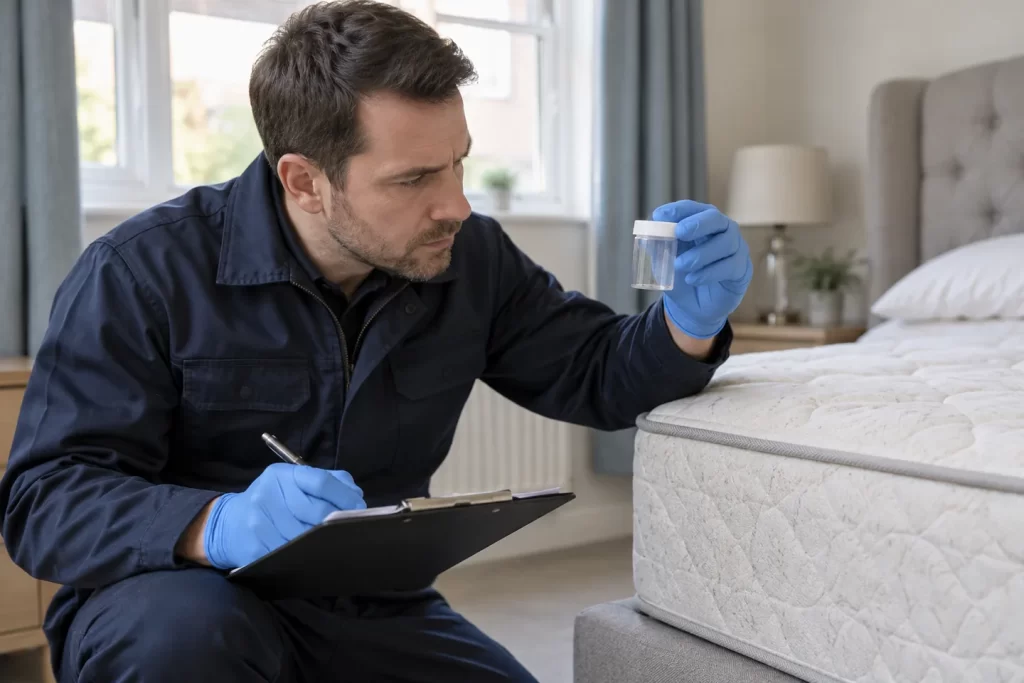
A pale, insect-shaped shell beside a bed could be a cast skin left by a growing bed bug. It could also belong to another insect. A genuine bed bug cast skin has the general outline of a bed bug, including its legs, but it is hollow and does not move. The finding is worth documenting and inspecting further; it is not a reliable basis for treatment until the material has been identified.
“Shell” is a loose household term. Some people mean an empty egg case, others mean a shed insect skin, and others mean a dead insect. Those are different clues. If you keep the specimen and note exactly where it was found, an inspector can distinguish them much more readily than from a description such as “small brown thing on the sheet”. The bed bug treatment page explains the professional help available when physical evidence points to an infestation.
Why bed bugs leave skins behind
Bed bugs grow through several immature stages before becoming adults. The immature insects, often called nymphs, shed their outer covering as they grow. The empty covering is a cast skin. It can stay in or near a hiding place after the live insect has moved. That makes it a useful sign during an inspection, particularly when no insect is visible at the moment you look.
A cast skin does not tell you exactly when it was shed. It may have been left recently, or it may have remained undisturbed in a crack for some time. It also cannot tell you how many live insects are present. One skin is evidence of a past moult by one insect, provided the identification is correct. Drawing a current infestation estimate from that single object would go beyond the evidence.
The skin is often pale, tan or translucent. Size can vary because the insect sheds at different stages of growth. Seen closely, the form is more informative than colour: look for an oval body outline and legs. A flattened, papery appearance is consistent with an empty covering. A live nymph may be similarly light in colour, but it has a body rather than a hollow shell and may move when disturbed. Avoid deciding from a photograph alone if the image is blurred or lacks scale.
Cast skin, eggshell or dead insect?
An eggshell is much smaller and lacks the familiar legged outline of an insect. An intact bed bug egg is approximately 1 mm long and pale; a shed skin from a nymph is a different stage of the life cycle. A dead insect has body contents and may show darker colouring or damage, though drying can make identification harder. The useful first question is therefore not “Is it pale?” but “What structure can I actually see?”
Other indoor insects also moult. Carpet beetle larvae, for example, leave distinctive hairy cast skins that might be found near textiles. A speck in a bedroom is not automatically from a bed bug simply because it looks like a shell. If natural fibres are damaged or hairy larvae are present, the carpet beetle service may be the more relevant reference. A clear specimen and context are better than trying to match one low-resolution internet image.
Where cast skins are likely to be found
Search the protected places around the bed before searching the whole property. Mattress piping, seams and labels are accessible starting points. The junctions of a bed frame, the back of a headboard and folds in upholstered furniture provide more sheltered surfaces. A skin discovered inside a joint alongside dark spotting has a stronger context than one loose fragment found on the floor after vacuuming.
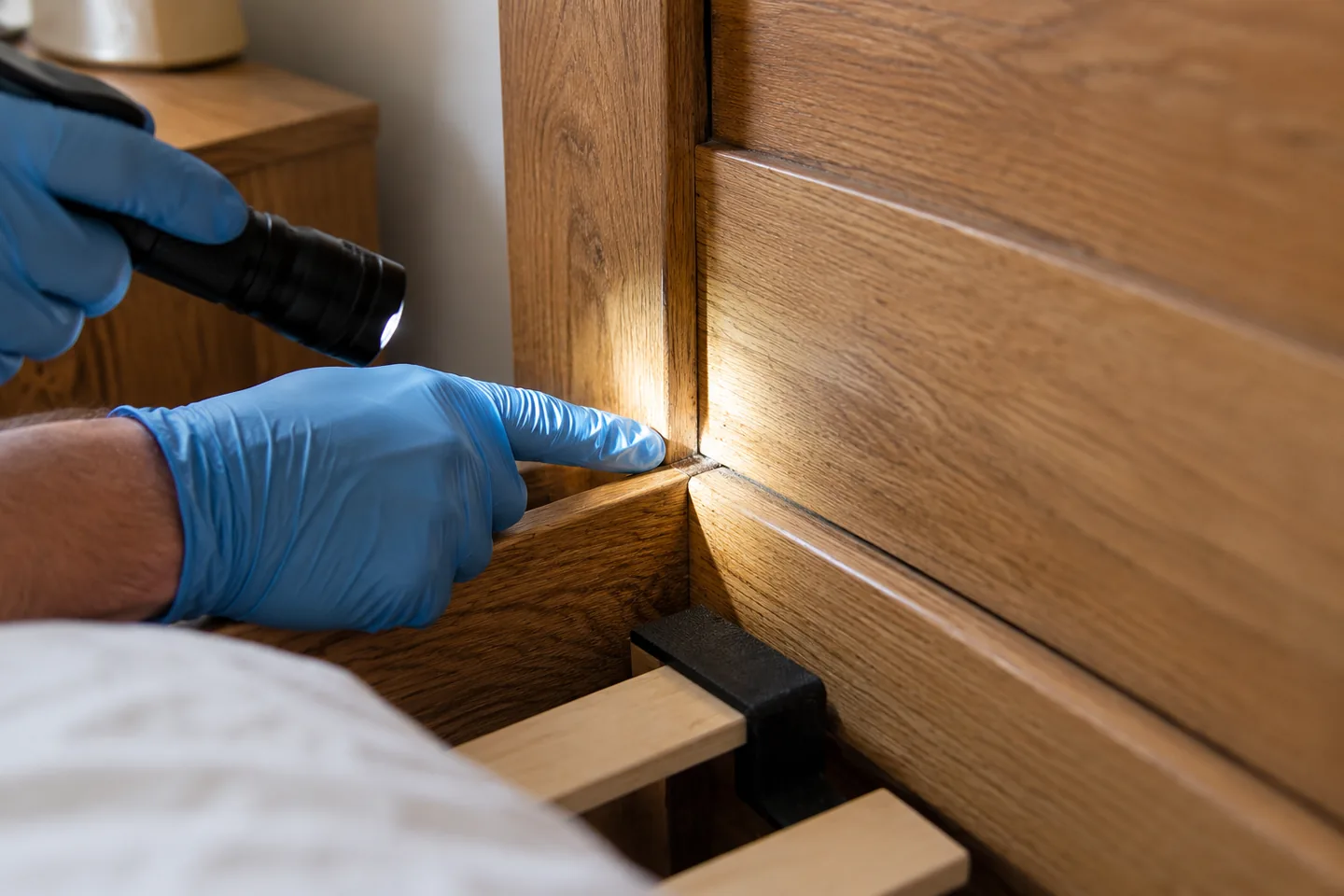
Use a torch and take your time. Look along an entire seam, then inspect the adjoining corners. A small object can disappear against pale fabric and stand out against dark timber. If the bed has storage drawers, inspect accessible edges and joints. Keep the inspection orderly so that you can tell someone which locations were checked. Opening every bag and cupboard at once makes it easier to lose track of the original finding.
Do not prise open wall fittings or electrical sockets. Bed bugs can use narrow spaces, but an untrained search inside electrical equipment creates an avoidable hazard. If the evidence suggests activity beyond furniture, explain that to an inspector. An organised professional bed bug inspection can consider the room as a whole without turning a speculative search into property damage.
What if you found it away from the bed?
A cast skin on a sofa, in luggage or near a chair deserves the same careful identification. Bed bugs can shelter close to places where people rest, and items can move between rooms. Record the item's recent location and avoid carrying it through the property while you are unsure. A skin found in a second-hand item may pre-date its arrival at your home; conversely, dismissing it because the item is new to you would be unwise. Inspection of both the object and its surroundings is needed.
Do not assume that a skin found in a shared building proves that a neighbouring flat is the source. The route of introduction is often uncertain. What helps is a dated record, photographs and prompt communication with the person responsible for arranging access if more than one room may need checking.
Record the evidence before cleaning
Take one photograph close enough to show shape and one wider photograph that shows the original location. Put a ruler nearby for scale, but do not move the specimen before the location photograph. If it is loose, place it in a small sealed container or clear bag. A piece of transparent tape can sometimes preserve a fragile fragment, although it may obscure detail. Write down the date, room and surface. The specimen is more useful when an inspector knows where it came from.
Then look for other physical signs. Live bed bugs, dark faecal spotting, eggs and more cast skins can support identification. The British Pest Control Association describes pale moults and eggs as visible signs and recommends looking for a combination of clues. Rust-coloured marks on bedding can have several causes. Skin reactions are even less specific: bites alone cannot confirm bed bugs, and some people show no obvious reaction.
If no other evidence appears, that does not automatically settle the matter. A cast skin may be difficult to identify or may be old. Ask a competent professional whether a closer inspection or a detection monitor is sensible. If bed bugs are confirmed, treatment options can then be discussed in relation to the rooms and possessions involved.
What not to infer from one shell
Do not estimate the age or scale of an infestation from the colour of a single skin. Lighting and dust change how it looks. Do not decide that the problem has ended because you see only empty skins; live insects may be hidden. Equally, do not throw away a mattress on the strength of one uncertain fragment. Disposal can be costly and, if items are moved carelessly through communal areas, may create further problems.
Avoid spraying the suspected location before identification. Some products are unsuitable for mattresses or other surfaces, and chemicals may disturb insects or remove the evidence an inspector needs. If treatment is recommended after a positive identification, follow the provider's preparation instructions for your property. Ask what areas will be inspected or treated, how possessions should be handled and what follow-up evidence would show whether more action is needed. The bed bug heat treatment page provides one service-specific starting point for that discussion; a cast skin by itself does not establish that heat treatment is needed.
The practical value of a cast skin is that it gives you something physical to identify. Preserve it, photograph its location and inspect nearby hiding places. A confirmed skin, especially with other signs, warrants a professional response; an ambiguous fragment calls for careful checking. To discuss what you found and whether an inspection is appropriate, contact Bed Bug Finder.

Leave a Reply
You must be logged in to post a comment.