
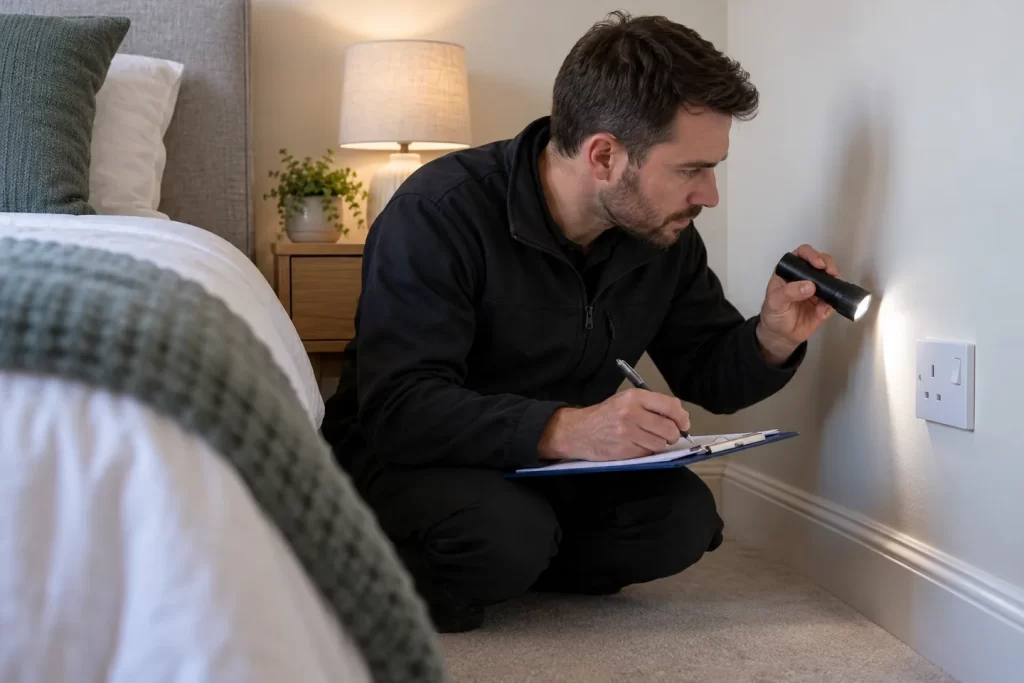
Bed bugs can shelter in narrow gaps near where people sleep. In an established infestation, those gaps may include the edges of electrical fittings. That possibility can sound alarming, especially if you have seen a mark near a bedroom socket. It does not mean every socket conceals insects, and it is no reason to remove a faceplate or put anything into an electrical opening. A sensible inspection starts with the bed and its surrounding furniture, records visible evidence, and leaves electrical work to people qualified to do it safely.
The British Pest Control Association has identified plug sockets among the less obvious places bed bugs may hide. It also explains that inspection usually begins close to the bed before extending to skirting and electrical installations when the evidence calls for it. This guide explains what an occupant can observe without disturbing a fitting, how to interpret a suspect sign, and when a professional inspection is appropriate.
Why a socket might become a hiding place
Bed bugs seek protected spaces, particularly near a regular host. A socket on a wall beside the headboard may have edges and adjoining gaps that offer cover. It is the sheltered space around an installation that matters, not electricity as an attraction. A socket across a large room is generally a less obvious starting point than mattress seams, the bed frame or a bedside table. Yet an infestation can extend beyond the bed, so an inspector may consider nearby fittings after assessing the main harbourages.
No household inspection can establish what is behind an intact faceplate simply by looking at it. Equally, a clear-looking front does not prove there is no activity elsewhere. The location of any evidence matters: several characteristic signs at the bed, with further signs along a nearby wall, are more informative than one unexplained speck on a switch. The bed bug treatment service can assess the extent of a suspected infestation before a treatment is chosen.
Bed bugs may also shelter under loose wallpaper edges, at skirting gaps, behind furniture and in bed-frame joints. Those more accessible areas often provide better evidence without touching electrical equipment. If you find a live insect in the open, photograph it and keep a sample in a small sealed container if you can do so without risk. Identification should come before assuming the whole room is affected.
Start at the bed, not the socket
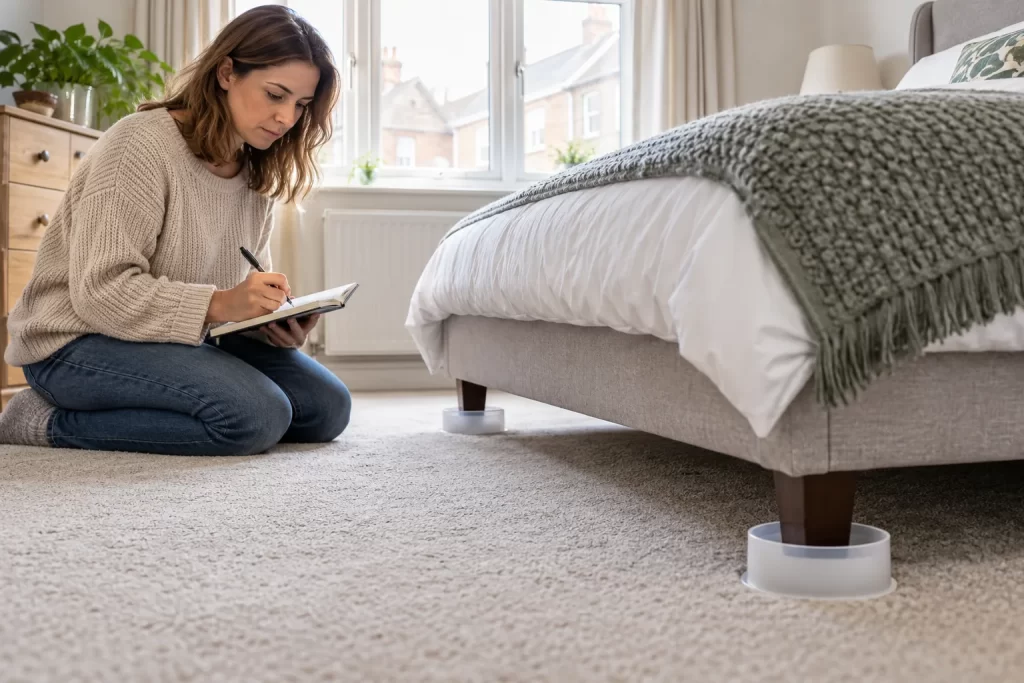
Use a torch to check mattress piping, seams and labels, then inspect accessible joints in the bed frame and headboard. Look at the back of the bedside table and the skirting immediately behind the bed. Do not pull heavy furniture without help or drag an uncontained item through other rooms. Work systematically so that you can say where each observation was made. A note such as “three dark spots on the headboard joint” is more useful than “marks somewhere in the bedroom”.
Look for a combination of signs: a recognisable insect, cast skins, pale eggs in protected crevices and clusters of dark spotting. None of these should be judged from colour alone. Ordinary dust, old paint, rust and other insects can confuse a quick inspection. A magnified, well-lit photograph helps a specialist distinguish the object from its surroundings. Keep a record of where the mark was found and whether it appears alongside any other physical evidence.
Keep the bed area as you found it after recording the evidence. A hurried tidy-up can remove useful clues or spread items between rooms. If you are in shared accommodation, tell the relevant manager or housemates what you actually found rather than announcing a diagnosis based on a skin mark. A professional can decide whether adjacent rooms need checking.
What you can check around a fitting
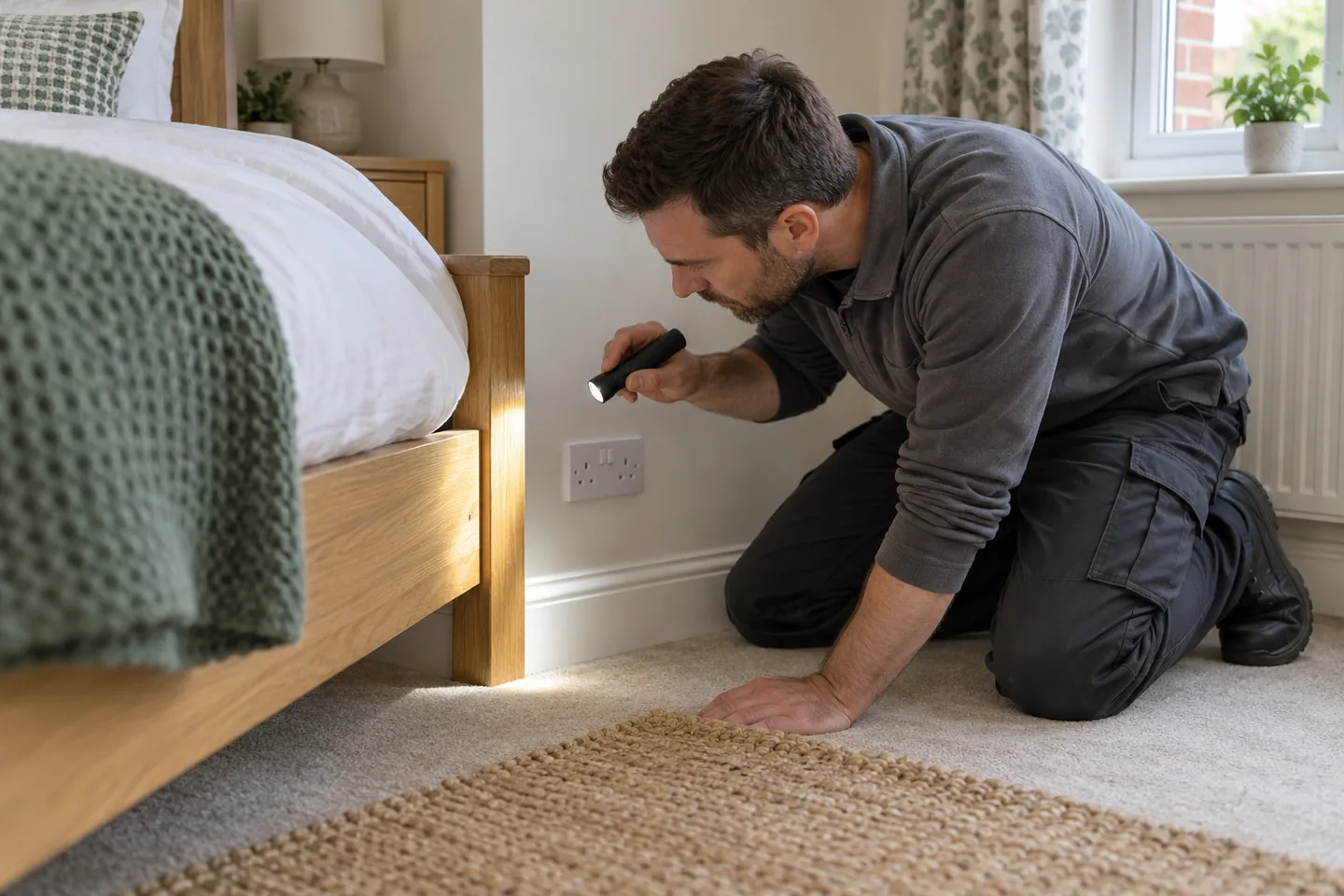
You can look at the visible wall around a socket from a normal, safe distance. With a handheld torch, note any insects moving on the wall, clusters of marks at the outer edge of the fitting or signs along the skirting nearby. Take a photograph that includes the whole fitting and another close view of the mark if the camera can focus. Record whether the wall is close to the bed and whether you saw similar evidence elsewhere. This is observation, not an electrical inspection.
Do not unscrew a faceplate, probe a gap, insert a vacuum nozzle, or apply liquid, steam, aerosol or powder to a socket. Do not cover the socket with tape in an attempt to trap insects. Such actions introduce electrical and fire risks and can make later assessment harder. Keep children and pets away from a visibly damaged fitting and seek appropriate electrical help if the fitting itself appears unsafe. A pest professional can coordinate with an electrician when access behind an installation is genuinely necessary.
If an insect appears on the wall near a socket, its position alone does not prove it emerged from that socket. It may have travelled along the wall from a bed frame or other gap. Watch only long enough to record what you see without disturbing the fitting. A short video can document movement, but do not wait beside an unsafe or damaged electrical point to obtain one.
Why a dark mark is not enough
Dark spotting can be consistent with bed bug activity when it occurs in a suitable hiding place alongside other evidence. Around a socket, however, marks can have many unrelated causes, including paint, dust and wear. One isolated dot gives little basis for deciding that insects are inside a wall. Conversely, a spotless socket does not clear a mattress or bed frame. Evidence must be interpreted across the room.
If you find a loose insect away from the electrical fitting, place it in a small sealed container and label where and when it was found. Avoid crushing it if identification is still needed. Do not attempt to pick an insect out of a socket opening. A clear photograph of the visible insect is safer than trying to retrieve it from electrical equipment. If identification remains uncertain, ask a qualified pest professional to review the specimen or images.
Skin reactions alone cannot locate an infestation. People respond differently to bites, and similar marks may have other causes. Record physical signs in the sleeping area before deciding that a socket, wall void or neighbour's room is the source. This can prevent an unnecessary or poorly directed treatment.
When to call for professional inspection
Arrange an assessment if you find a recognisable bed bug, several consistent signs close to the bed, or repeated unexplained sightings. Explain the exact position of any socket-related observation, but also report what you found at the mattress, furniture and skirting. The inspector can decide how far the search should extend and whether an electrician is needed for any electrical access. Ask how evidence will be documented and which rooms will be included.
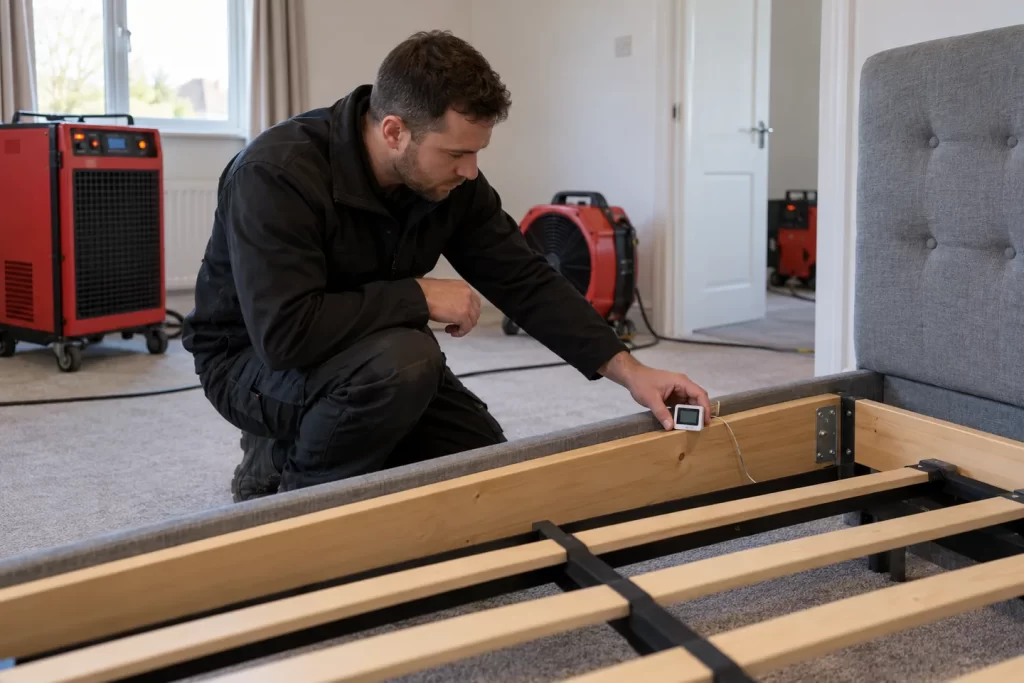
An inspector can explain the service route. If heat treatment is proposed, ask how room conditions, belongings and potentially sheltered locations will be assessed. The heat monitoring service describes why temperature checks matter during heat work. Do not assume that a treatment will reach every concealed space without a plan for coverage and verification.
Tell the provider if the socket is loose, cracked, scorched or otherwise damaged. Electrical safety should be addressed separately by someone competent to work on the installation. A pest technician's responsibility is to assess pest evidence and treatment options; an electrical fault needs an electrical professional. If you rent the property, document the observation and report it through the appropriate property contact so inspection and any necessary access can be coordinated.
Avoid moving the problem while you wait
There is usually no benefit in dismantling the room immediately after a suspicious observation. Keep belongings in their usual locations until you receive preparation instructions, unless there is a separate safety reason to move them. Do not transfer bedding, loose clothing or furniture to another bedroom without a plan. If laundering is advised, carry items in closed bags and follow the treatment provider's instructions for each material.
Do not spray an insecticide around sockets or try a household “fogger”. Unplanned pesticide use can be unsafe and may make an inspection or later treatment more difficult. If you have already used a product, tell the professional its name, where it was applied and when. The bed bug heat treatment page sets out one available method; suitability depends on a confirmed problem and the room being treated.
After professional work, ask what evidence would indicate continuing activity and when to recheck. Monitoring may be useful, but a single quiet night or one clear-looking socket is not a reliable success test. Keep dated notes of any later specimens or sightings so the provider can distinguish persistence from a new introduction.
The practical conclusion
Bed bugs can use protected gaps near electrical installations, but a socket should not be the first or only place to inspect. Check accessible bed and furniture harbourages, photograph visible signs, and keep your hands and tools out of electrical fittings. A professional can assess pest evidence and arrange safe access if the installation itself genuinely needs examination. That approach gives you a clearer diagnosis without creating an avoidable electrical hazard.

Leave a Reply
You must be logged in to post a comment.