
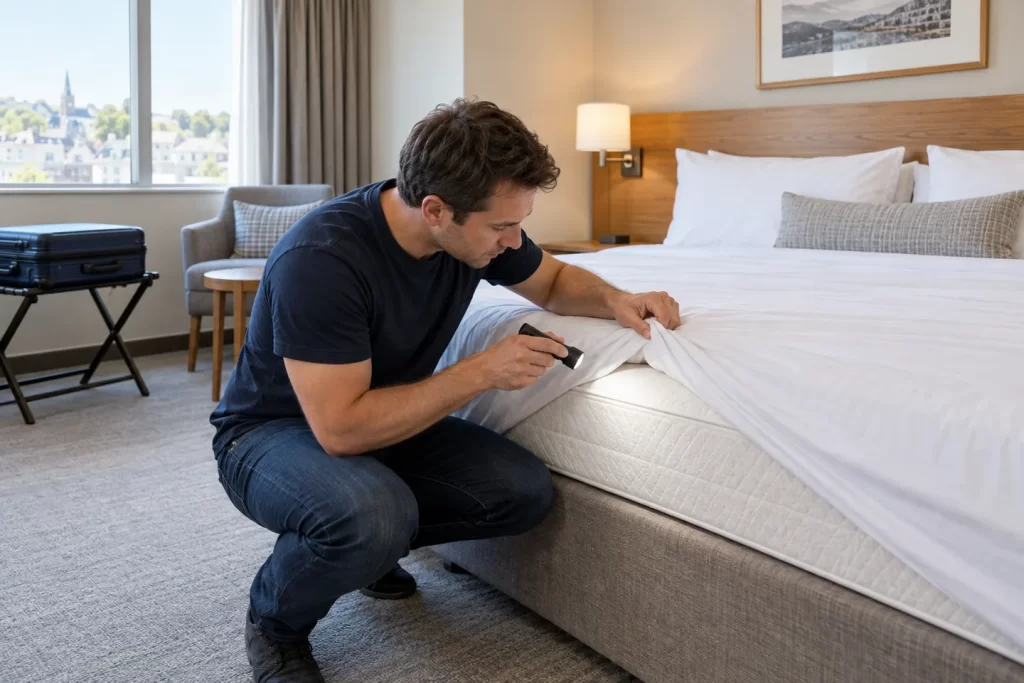
A short inspection when you arrive at a hotel gives you a chance to spot a problem before you spread your belongings around the room. It does not require dismantling furniture or turning a holiday into a full pest survey. Keep your suitcase closed, put it somewhere away from the bed while you check, and spend a few minutes looking at the places where bed bugs are most likely to shelter. If you find a suspect insect or several signs together, photograph them and speak to reception before unpacking.
Bed bugs can be introduced to many kinds of accommodation. The standard of cleaning, price of the room and age of the building do not prove whether they are present. Equally, a spotless room is reassuring but cannot guarantee they are absent: small insects may be tucked out of sight. The purpose of an arrival check is to make a proportionate decision with the evidence you can gather safely and quickly. The British Pest Control Association advises travellers to check mattresses and soft furnishings before putting luggage on the bed or chairs.
Start with your luggage still closed
Do not put the case on the mattress or upholstered chair as soon as you enter. A clean, hard bathroom surface can be a temporary place for a closed case while you inspect. If you use the room's luggage rack, inspect it first. Keep coats and loose clothing together rather than laying them over the bed. These habits make an inspection easier and reduce the number of items you would need to check if you find something concerning.
Take out a phone torch or small flashlight. You do not need specialist equipment. Good light helps you see along seams and behind accessible edges, but avoid moving fixed furniture or disturbing electrical fittings. If the room is dark, switch on the main lights and use the torch from an angle so small objects cast a shadow. Put your bag where you can keep track of it while you work.
Check the luggage rack before using it
Look at the rack's fabric straps, hinges and joints, including their undersides if you can see them without tipping the rack onto the bed. A rack can keep a suitcase off the floor, but it is not automatically a safe surface if it has not been checked. Wipe nothing away until you know whether you need a photograph. If the rack is visibly dirty or difficult to inspect, keep the case on a clear hard surface while you ask the hotel for another option.
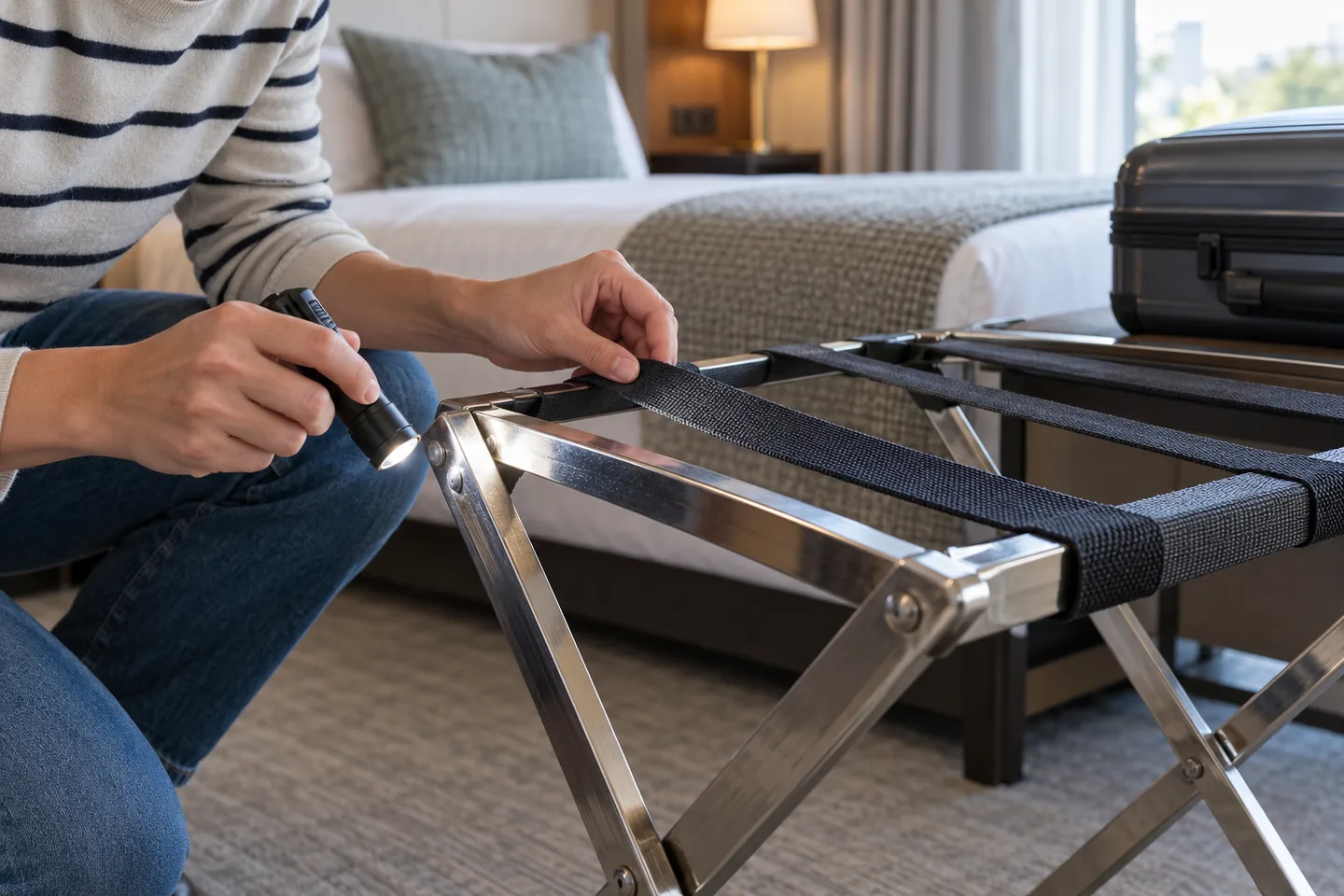
Even after a clear check, keep the case zipped when you are not using it. Unpack only what you need. Avoid storing clothes in bedside drawers or spreading packing cubes across the floor if you have a particular concern about the room. Those are practical precautions rather than proof that the furniture contains insects. The clothes and luggage heat treatment service is relevant if belongings later need professional assessment; there is no reason to arrange treatment merely because you have stayed in a hotel.
Inspect the bed in a consistent order
Start where the sheet meets the mattress, then follow the piping and accessible seams around the top edge. Lift a corner of the sheet gently rather than stripping the whole bed. Look around the mattress label, corners and the join between mattress and bed frame. If the bed has a padded headboard, inspect reachable edges and the space immediately behind it if accessible without tools. The headboard, frame joints and nearby upholstered folds offer protected places that are more informative than a glance at the middle of a clean sheet.
You are looking for a live insect, tiny pale eggs, hollow cast skins or dark spotting clustered in likely hiding places. A live bed bug is a stronger clue than an isolated dot. The bed bug treatment page explains how suspected activity can be assessed when physical evidence is present. Do not rely on bites or itching to judge the room: skin reactions vary, may appear later and have many other possible causes. Likewise, one dark mark on a sheet could have an ordinary explanation.
Move slowly enough to see what is there, but set a sensible boundary. A five-minute inspection of the most relevant seams and joints is more useful than lifting every item in the room at random. If the bed is upholstered, check the accessible folds nearest the sleeping area. If two beds are present, check both before settling in. Where a sofa bed will be used for sleeping, treat it as another bed and inspect its reachable seams. Do not cut fabric, remove a fixed headboard or ask children to search crevices.
What counts as useful evidence?
Take one close photograph of a suspect insect or mark and one wider photograph showing its exact location. Include a coin or ruler for scale if possible without moving the finding. If a live insect is easily contained, put it in a small clear container; do not squash it on the bedding. Record the room number and time, and keep the photographs private for discussion with hotel staff. A single blurry photograph may not allow identification, so explain exactly where you saw the object.
Dark spotting, pale objects and shed skins can have other sources. If you cannot tell what you have found, say that it is suspected evidence rather than declaring that the room has bed bugs. The hotel's response should be based on a proper inspection. A clear room on a short check is also not a certificate of absence. Make a sensible decision with the evidence at hand and keep luggage use tidy during your stay.
If you find something concerning
Stop unpacking and tell reception or the duty manager promptly. Show the photograph and the exact location. Ask for the room to be assessed and for an alternative room while the concern is investigated. If a new room is offered, inspect it in the same way before moving your things in. Avoid placing open bags on an uninspected bed while staff are helping. If you already unpacked, keep the items together and explain that to staff so the response accounts for them.
Do not spray the room or apply insecticide to your suitcase. Products can be unsuitable for soft furnishings, may obscure evidence and are the hotel's responsibility to manage through an appropriate process. Do not carry a suspect insect through shared areas to show it to another guest. A sealed container or good photographs are enough to present to the manager. The important next step is confirmation, not an argument about where the insect came from.
If the hotel cannot resolve the concern to your satisfaction, document what you found and discuss other accommodation with the booking provider. Keep receipts and correspondence in case you need to explain the change later. An uncertain speck does not automatically justify a dramatic claim; a clearly identified live bed bug deserves prompt action. In either case, calm, precise documentation helps you and the accommodation team make better decisions.
During the rest of the stay and when you leave
Continue to keep the suitcase closed and off the bed when it is not in use. Avoid moving bags between rooms repeatedly. When packing, check outer seams, handles and wheels in good light. If you suspect exposure, keep potentially affected items separate from clean items until you can inspect them at home. Do not put them loose into a bedroom wardrobe. The aim is to avoid turning an uncertain room finding into an unnecessary spread of belongings.
At home, unpack in a controlled area, inspect the case carefully and follow fabric care labels for clothing. Heat can kill bed bugs when the right temperature reaches the whole item for long enough, but a wash cycle alone is not a reliable substitute for a validated treatment. The correct approach depends on the item and its care instructions. Ask a competent provider before exposing delicate or heat-sensitive belongings to high temperatures. If you find an insect in your luggage, preserve it for identification and check the nearby area before moving the case through your home.
Hotel-room checks are a useful habit, not a reason to assume every trip carries an infestation. Keep the routine short: park a closed case away from the bed, check the luggage rack, inspect mattress seams and reachable headboard edges, then document any suspicious physical sign. If the evidence follows you home or you need help identifying it, contact Bed Bug Finder and explain where and when the finding occurred.
Leave a Reply
You must be logged in to post a comment.