
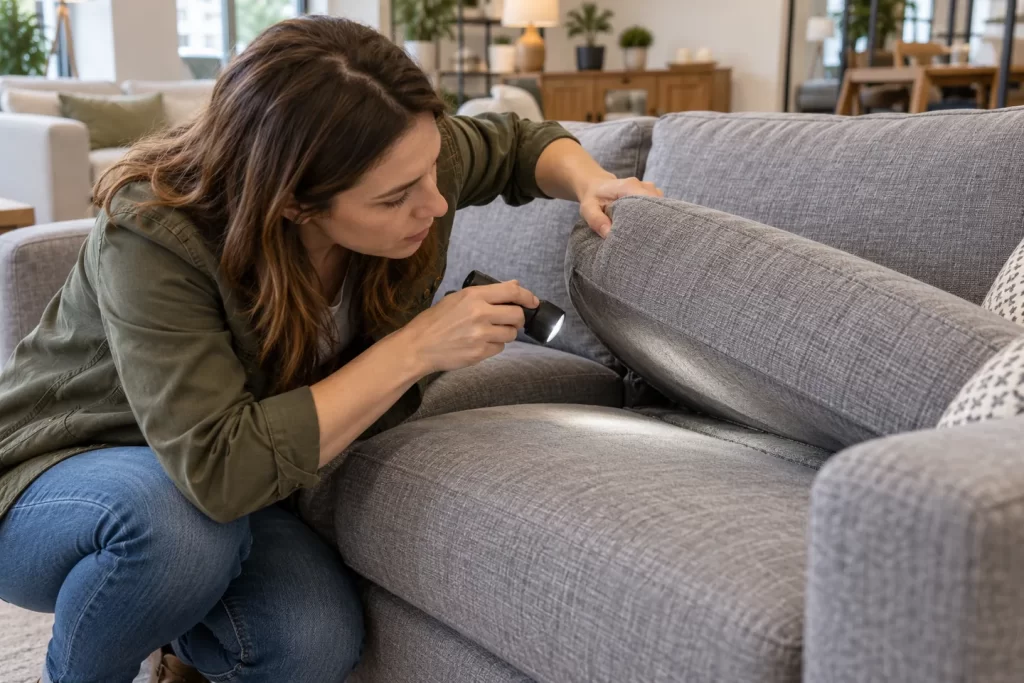
A second-hand sofa can be a sensible purchase, but it is easier to check it before collection than after it has been placed in your living room. Bed bugs can travel in furniture and shelter in upholstered folds, frame joints and other protected spaces. A clean appearance or a seller's reassurance cannot substitute for looking closely. Arrange enough light and time to inspect the sofa where it stands, and be prepared to decline the item if you cannot access the important areas or find convincing physical signs.
The US Environmental Protection Agency advises checking used couches and other furniture for bed bug evidence before bringing them home. That does not mean every used sofa is risky or that a quick look can guarantee safety. It means making a deliberate purchase decision with the evidence you can gather. This guide focuses on inspecting a sofa without damaging it, interpreting uncertain findings and planning a careful move if you decide to buy.
Ask about the sofa before travelling to see it
Request clear photographs of the front, back, underside and removable cushions. Ask whether there are tears, loose lining or inaccessible storage compartments. A seller may not know whether bed bugs have ever been present, so treat a confident answer as context rather than proof. Explain that you will check seams and accessible frame edges before committing to collection. If the seller will not allow a reasonable inspection, that alone may be enough to choose another sofa.
Consider the item's recent history. A sofa taken from a property with a known infestation needs a professional assessment even if it looks clean. A sofa left on the pavement has unknown exposure and may be difficult to inspect fully. Conversely, a sofa from a tidy home can still conceal insects. The practical question is what you can verify today, not whether the surroundings fit a stereotype. Set aside a phone torch and a small clear container if you want to preserve a suspect insect for identification.
Start with the places people sit
Look at the visible fabric first, but spend most of your time on seams, piping, tufts and folds. Lift removable cushions one at a time. Inspect the stitching along each cushion edge and the grooves where the cushions meet the arms and backrest. Pull out the seat cushions if the design allows, then check the exposed base and corners. Do not throw the cushions across the room or lose track of which side you have inspected.
Bed bugs may leave live insects, pale eggs, cast skins or dark spotting. Those signs are easier to interpret when they occur together in a sheltered location. A lone dark mark could be ink, grease or another ordinary stain. Crumbs, lint and tiny textile fibres are common in used upholstery and can resemble insect debris. If you find a small object, photograph it where it was, then collect it if it is loose. The bed bug treatment page explains the professional service available if identification confirms an issue.
Look under decorative flaps and along seams where two fabric panels join. If a cushion cover has a zip, inspect the zip tape and accessible inner edge. Avoid turning the seller's home into a dismantling exercise: do not cut lining, remove staples or unzip a cover if doing so might damage a delicate item. When access is limited, note that limit rather than treating the unseen area as clear.
Inspect the arms, back and frame
Run a torch along the seams on the inside of each arm and around the lower front rail. Check the rear panel, especially the junction between upholstery and frame. Tilt the sofa only with permission and enough help to do it safely. On the underside, inspect the dust cover, stapled edges, wooden joints, legs and screw recesses that are visible. Some sofas have recliner mechanisms or storage compartments; check accessible folds and joints without putting fingers into moving hardware.
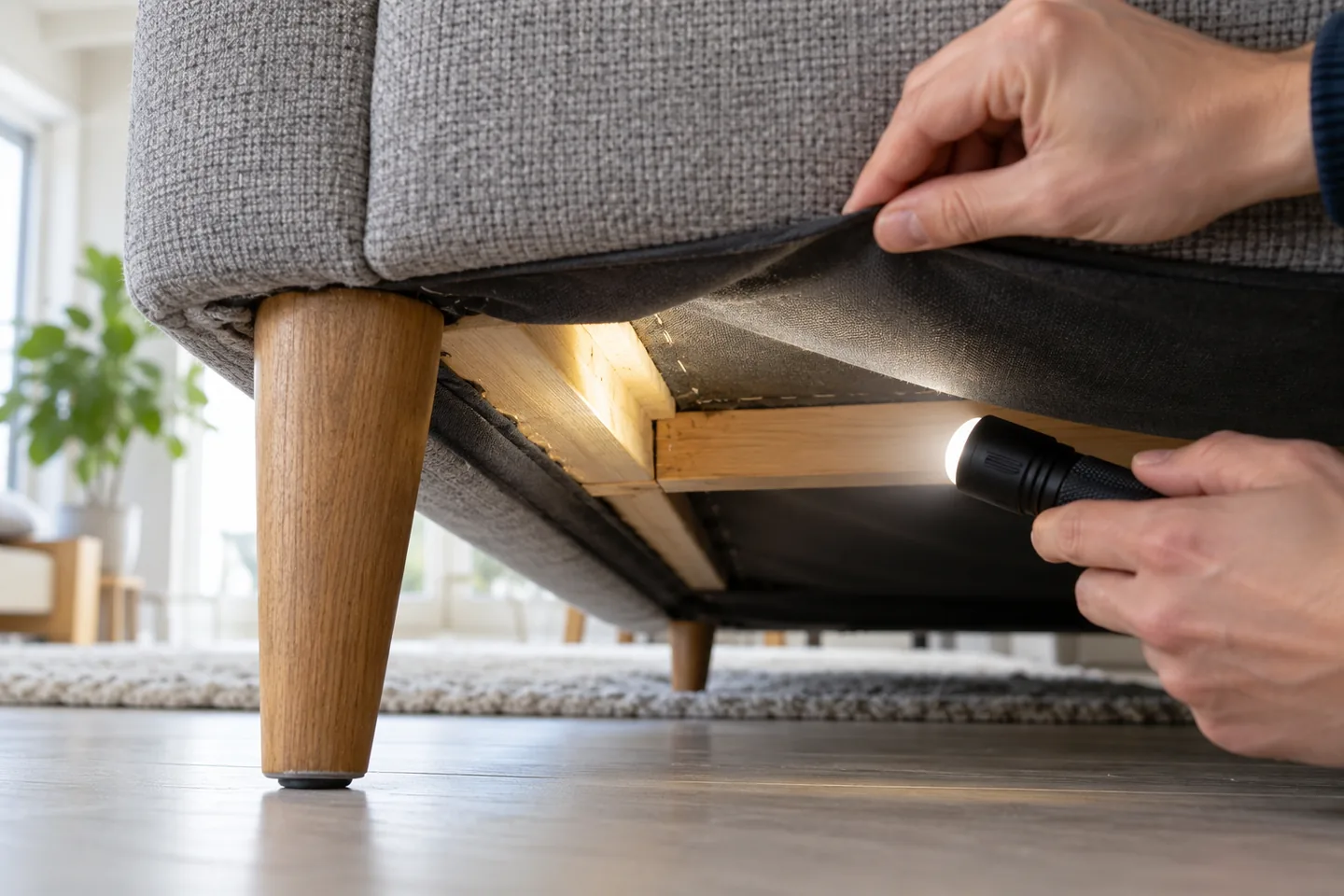
A tear in the underside fabric creates an additional hiding place and can make a confident inspection harder. Dust alone is not evidence of bed bugs. Fresh-looking dark clusters, cast skins or live insects in the same protected seam deserve attention. Do not assume that an insect found on the outside of the sofa originated in the frame; identify the insect and examine the context. If you cannot see enough of a complex recliner or sofa bed, a professional inspection may be more sensible than an uncertain purchase.
How to interpret what you find
A live, identifiable bed bug is a strong reason to stop the purchase and discuss next steps with the seller. Multiple signs in upholstery seams also warrant professional identification. Photograph the exact location and keep any specimen in a small sealed container. Avoid announcing an infestation based on a blurred photo or one unexplained dot. The aim is to decide whether the furniture can be bought and moved safely, not to diagnose the seller's whole property from one sofa.
An absence of visible signs is reassuring, but it is not a guarantee. Small insects can be deeply hidden, eggs may be hard to see and some areas may be inaccessible. Make a realistic judgement based on the quality of inspection, the construction of the sofa and its history. A low price does not make a poorly inspectable item safer, while an expensive brand does not remove the need to check it. If you remain doubtful, passing on the item is a reasonable outcome.
The seller may mention that the sofa was cleaned or steam treated. Ask what was done, by whom and when. A surface cleaning can improve appearance without reaching protected gaps. Effective treatment depends on identification, method, coverage and verification; do not rely on a vague claim that the sofa has been “sprayed”. The bed bug heat treatment page outlines one service type, but no treatment should be presumed necessary without evidence.
Plan the move before paying
If you buy the sofa, arrange a direct route from collection to its intended location. Protect it from dirt in transit while allowing for any inspection you still need to make; wrapping should not conceal a concern. Keep removable cushions together and note where they were. Avoid storing the sofa next to bedding or other upholstered furniture while it waits to be moved. If transport involves shared hallways or a vehicle used for other household items, keep the process orderly and minimise unnecessary stops.
Inspect the sofa once more when it arrives, particularly any surfaces that were not visible at the seller's property. Vacuum accessible seams and the underside if the material and manufacturer guidance allow. Dispose of the vacuum contents carefully after use. Cleaning is not a substitute for identifying a suspect insect, and a casual household steam pass cannot be assumed to reach every internal joint. If you notice a physical sign after delivery, keep the sofa in place while you seek advice; moving it around the home may complicate assessment.
Other pests and damage can change the decision
Not every pest sign in upholstery belongs to a bed bug. Carpet beetle larvae and their hairy cast skins can occur around natural fibres. Damage, damp and odour may also make a sofa unsuitable for reasons unrelated to insects. Record what you actually see and consider whether the item is worth restoring. The carpet beetle service may be the more relevant reference if hairy larvae and textile damage are the main findings.
If you find an uncertain insect, do not put it back into the sofa and hope it disappears. Preserve it, photograph the context and ask for identification. If a bed bug is confirmed in the furniture, discuss whether the item can be treated safely and what needs checking in the place where it has stood. Do not leave a suspect sofa on a pavement for somebody else to collect without warning. Disposal and transport should be planned so the problem is not passed to another household.
A sensible purchase decision
The best time to avoid an avoidable introduction is before the sofa comes through your door. Ask to inspect it, work methodically through cushions, seams and accessible underside joints, and keep a record of anything suspicious. A clear check reduces uncertainty but cannot eliminate it. A live bed bug or convincing cluster of signs calls for identification and probably a different purchase decision. For help identifying a finding or assessing furniture already in your home, contact Bed Bug Finder with photographs and the exact location of the evidence.
Leave a Reply
You must be logged in to post a comment.