
Fleas can appear in a home even when no dog or cat lives there. Their presence does not prove that the property is dirty, and it does not identify the source by itself. Fleas may be carried in by a visiting animal, emerge from a previously occupied home, arrive with second-hand furnishings or be associated with wildlife using a nearby roof space or crawl area. First confirm that the insects are fleas, then look for evidence that can narrow down where they came from.
People sometimes mistake springtails or other small jumping insects for fleas. A specimen or clear photograph helps a professional identify what is present. Itchy marks are not enough to establish fleas because skin reactions have many causes. If there is a significant skin reaction, seek medical advice separately from pest identification.
Confirm the insect before tracing a source
Fleas are small, wingless, laterally flattened insects with strong hind legs that allow them to jump. They may be difficult to catch and can move quickly through carpet or fabric. A jumping speck is not automatically a flea; springtails also jump and are associated with moist areas rather than animals. Try to photograph or capture a specimen without crushing it, and note where you saw it.
A professional can distinguish fleas from lookalikes and inspect the location. Record whether the insect was found on a carpet, upholstered chair, bed, windowsill or near an entry point. Note whether there were several sightings, what time they occurred and whether anyone has visited with an animal. These details are clues, not proof. The flea treatment service can be a starting point for discussing identification and an inspection if activity continues.
Consider the home's history
If you have recently moved in or bought second-hand furniture, fleas may have been present before the current household arrived. Adult fleas can emerge when they detect movement or warmth, so activity may begin after a property has been empty or a room starts being used again. A past pet in the home could be relevant even if you never kept one there. Ask the previous occupant or landlord about known pest reports if it is appropriate, but do not treat a vague history as confirmation.
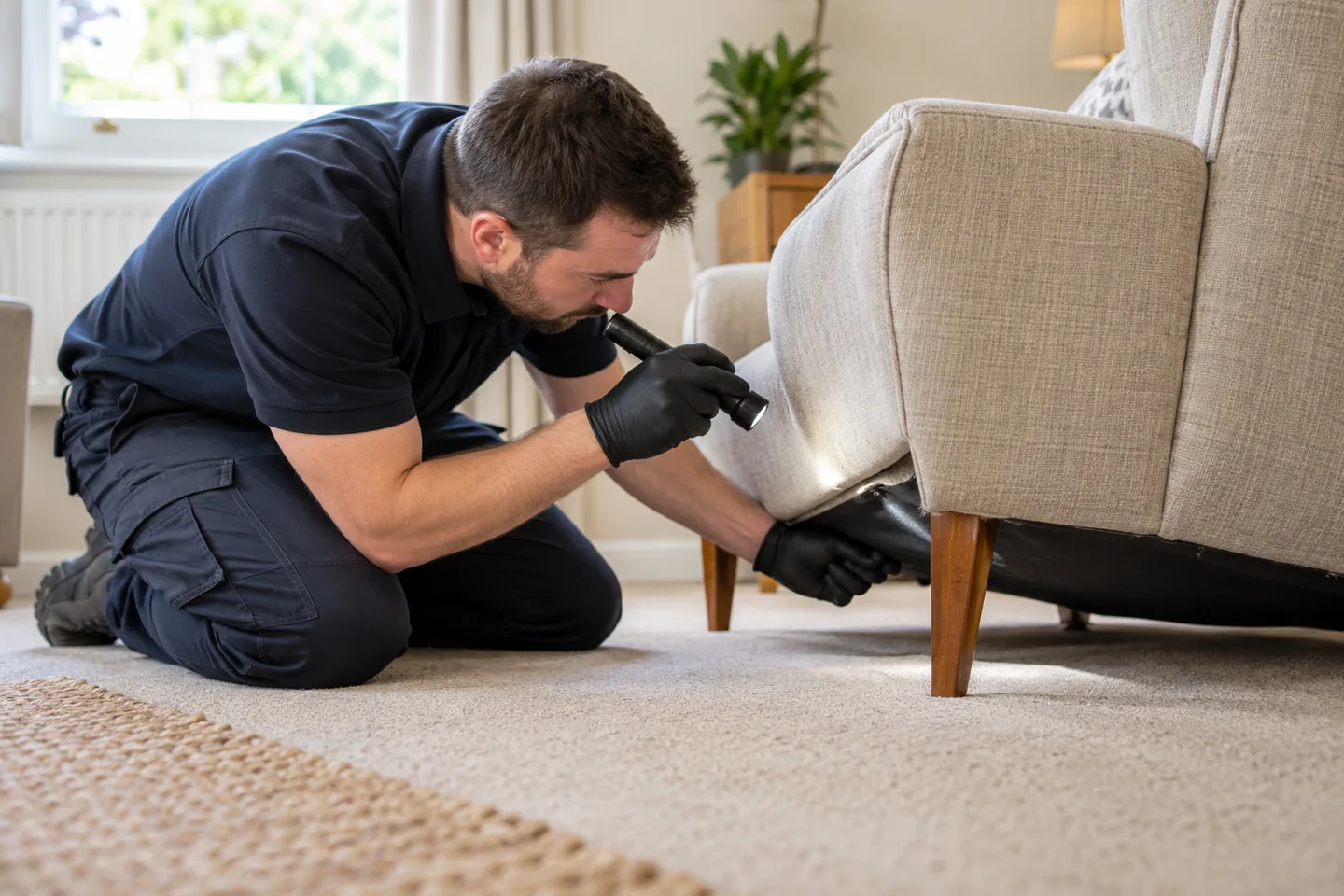
Second-hand sofas, rugs, pet beds, cushions and other upholstered items can be worth checking, especially if they came from a home with animals. Inspect seams, undersides and crevices. If an item was stored in a garage or shed used by animals, tell the professional. Avoid carrying a suspect chair through shared areas before advice; containment may be needed if it is moved.
The location of the first flea can help. Sightings concentrated around one recently acquired rug or chair suggest that item deserves inspection. Activity spread across several rooms may indicate a broader source or movement between areas. A few sightings near a door could relate to an animal passing close to the entrance, but it is not enough to identify that animal as the source.
Visiting animals and shared spaces
An animal brought into the home by a visitor can carry fleas, even if it stayed only briefly. Fleas can also be transported on clothing or belongings, although animal hosts are a more common route. If a visitor had a pet, ask whether it is receiving veterinary flea care, but do so tactfully and without implying blame. The visitor may not know that fleas are present.
In a flat or terrace, a wildlife or pest issue in a shared roof space, crawl space or adjoining building may need assessment. Some wildlife and stray animals can carry fleas, and a nest or resting place near the home could be relevant. Do not enter a loft, disturb a nest or handle wildlife. Ask a qualified pest professional to inspect safely and determine whether the animal source is plausible.
If a neighbouring property reports fleas, that information may be useful, but it does not establish that insects have travelled into your home. Share dates and locations with the property manager or professional and ask whether a coordinated inspection is warranted. Avoid treating communal areas with products without permission or professional direction.
Check carpets and places where an animal may rest
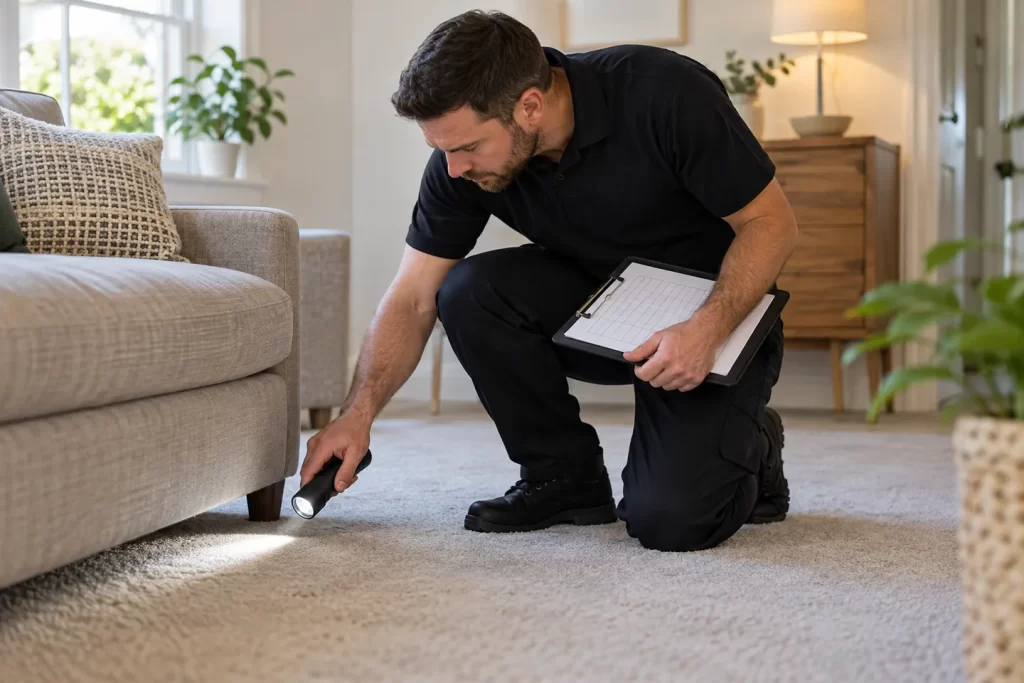
Flea eggs and immature stages can be in the environment rather than on a host. Even when there is no resident pet, inspect carpets, upholstered furniture, rug edges, gaps beneath furniture and places where an animal may have rested. If the property had a pet before, pay particular attention to the areas where it slept. Vacuuming and cleaning can reveal whether activity is concentrated in one spot.
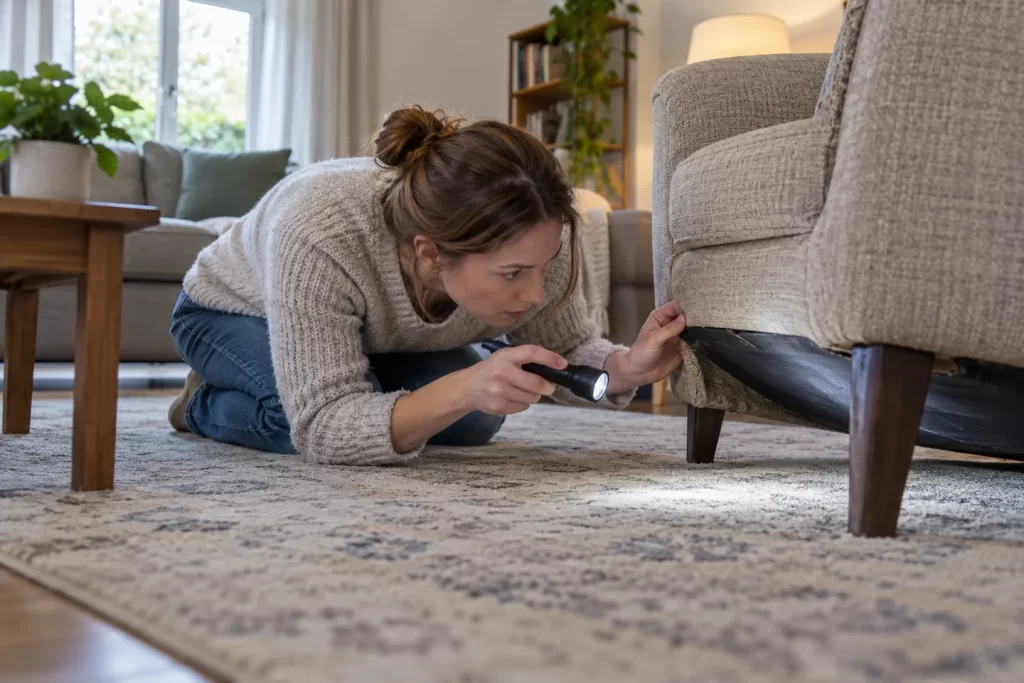
Inspect under cushions and along seams of second-hand furniture. Look at the underside of rugs and upholstered chairs without pulling apart fixed components. Avoid shaking textiles indoors. If you find adult fleas, photograph them and note the surface. If you find animal hair or nesting material, do not handle it barehanded; ask a professional whether it should be assessed.
Keep a simple map of sightings by room and date. A cluster around the same chair is more informative than “fleas everywhere” with no locations recorded. Place sticky monitoring boards only where safe and out of reach of children or pets, and follow the product instructions. Traps may help reveal activity, but a lack of captures does not prove the home is clear.
Clean while you investigate
Vacuum carpets, rugs and upholstery regularly, concentrating on seams, edges, under cushions and beneath furniture. Empty the vacuum contents into a sealed bag and remove it from the home. Wash suitable washable covers or bedding according to care labels. Cleaning reduces debris and can remove some eggs or larvae, while making it easier to notice new activity. If activity continues after treatment, use the contact page to report when new adults appeared and share the treatment record.
If no pets live in the property, there is no animal to treat, but that does not mean a source has been identified. A professional may recommend an environmental treatment if fleas are confirmed, based on the rooms and evidence involved. Ask what products are used, where they will be applied, how long people must stay away and when vacuuming or cleaning can resume. Follow label directions and the provider's re-entry advice.
Do not apply a flea product intended for a pet to carpets or furnishings, or a household product to an animal. Avoid foggers and broad sprays unless a qualified professional explains why they are appropriate and the label permits the use. Insecticides used incorrectly can expose occupants without reaching the source.
When to call a professional
Arrange an inspection if confirmed fleas continue to appear, sightings involve multiple rooms or you suspect a wildlife source. Share the dates, exact locations, recent furniture purchases, visitor animals and property history. Ask the professional to explain the evidence for each possible source and which areas need checking. A good inspection distinguishes confirmed facts from plausible routes rather than assigning blame.
The flea heat treatment service may be discussed for some properties, but treatment method should depend on the source, layout and suitability of the contents. Ask what areas are included, whether follow-up is needed and what preparation is required. Heat or insecticide applied only to a room may not address an external animal source or an untreated item.
If the source is traced to wildlife or a nest, the plan may need safe exclusion or management by a qualified professional in addition to flea control. Avoid sealing an opening while an animal may be inside. A pest specialist can coordinate the order of work and advise which areas need cleaning or monitoring.
Avoid jumping to conclusions
The absence of pets narrows some possibilities but does not reveal a single cause. Previous occupants, visiting animals, second-hand furniture, wildlife and misidentification all deserve consideration. The timing and location of evidence can help prioritize checks. Keep notes, preserve specimens and resist the urge to spray every room before the pest is confirmed.
If the activity stops after cleaning and no further fleas are found, continue reasonable monitoring for the period the professional recommends. If sightings return, record the new place and time rather than repeating an earlier treatment automatically. A new emergence may be related to the original source, or it may point to an item or route that was not assessed.
Fleas in a pet-free home are possible and do not indicate poor housekeeping. The practical response is to identify the insect, map activity, inspect likely sources and clean while evidence is gathered. A focused professional assessment can then distinguish an old infestation from a current animal-related source and recommend a treatment that matches the property.
Leave a Reply
You must be logged in to post a comment.