
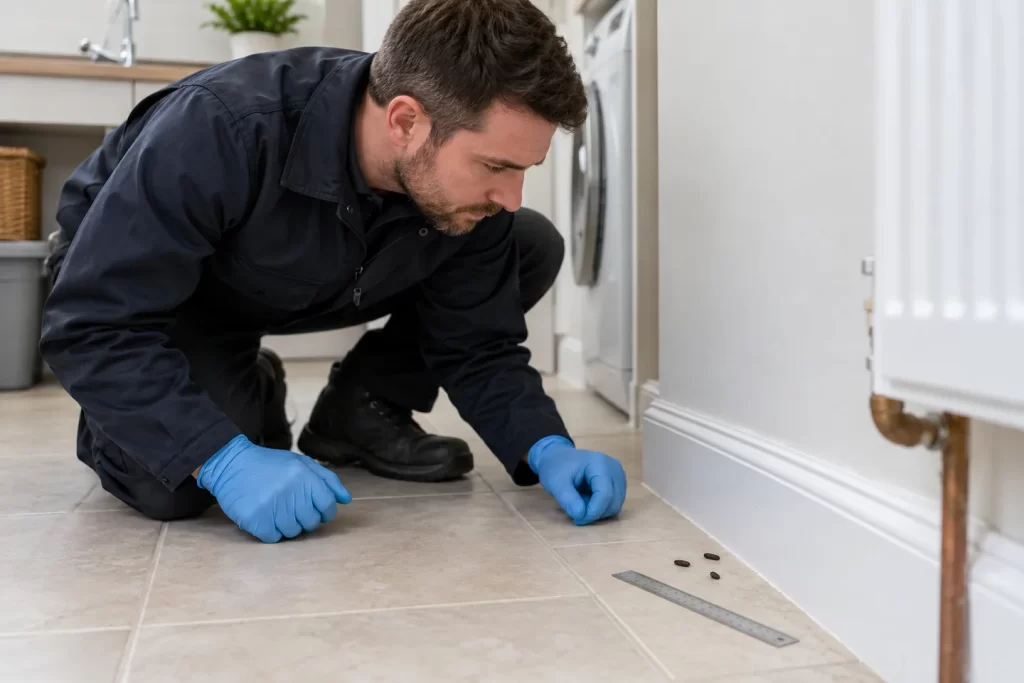
Finding small dark pellets in a kitchen cupboard, loft or shed is unsettling. Droppings can be useful evidence of rodent activity, but they are not a complete diagnosis on their own. Size, shape, placement and surrounding signs may suggest a mouse or a rat; variation within species, age of the material and poor photographs can make a confident identification difficult. The safest first step is to record what you have found without disturbing it, then decide what additional evidence is needed.
This distinction matters because a mouse and a rat can use different routes and behave differently around food, shelter and control devices. The British Pest Control Association (BPCA) emphasises correct identification before control. If you are uncertain, a professional inspection is more useful than buying bait on the basis of a single pellet. The site has separate guides to mice control and rat control; the choice between them should follow the evidence.
What size and shape can suggest
House mouse droppings are typically small, dark and pointed, while brown rat droppings are generally larger and more substantial. BPCA technical guidance uses approximate sizes of around 5 mm for typical mouse material and around 10 mm for a rat example, but these are aids, not a laboratory test. Diet, moisture, individual variation and the way a pellet dries can affect appearance. A small rat may produce smaller droppings than an adult, and another animal or even a piece of debris may be mistaken for rodent waste.
Photograph the material in place with a ruler or coin nearby for scale, but do not move the pellets to obtain a better image. Record the date and the precise position. A cluster beside a wall, a few pellets in a drawer and repeated deposits along a route tell different stories. Avoid deciding species from a social media photograph alone: a camera can exaggerate size, and light may change the apparent colour. If identification will determine control work, let a competent pest controller inspect the wider pattern.
Do not handle or break apart droppings as an informal identification test. Material from a loft may come from another animal, including bats; the right response can be different and legal protections may apply. A professional can consider whether the evidence is even from a rodent before any proofing or treatment is proposed. The question is not merely whether a pellet looks pointed, but whether the setting and all signs fit one explanation.
Look at location and associated signs
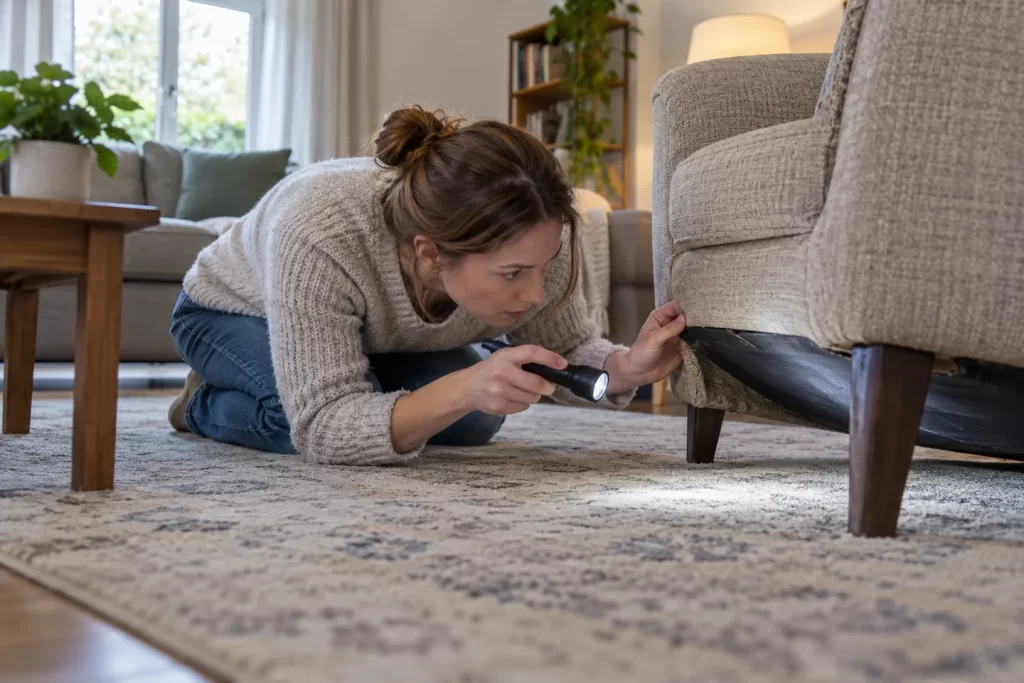
Rodents often travel along edges and behind stored goods, so a line of pellets near a skirting board can be more informative than a single isolated item. Check visually for gnaw marks, grease or rub marks, shredded nesting material, tracks in dust, damaged food packaging and openings around pipes. Keep your distance from inaccessible or unsafe spaces. Never pull apart electrical equipment or enter a loft with uncertain footing simply to follow a suspected route.
The CDC notes that droppings and gnawing are common signs of rodents but that old evidence does not necessarily prove current activity. If an area is safely cleaned using appropriate precautions and new droppings appear later, that is stronger evidence of an active visitor. A dated photograph before and after safe cleaning can help a technician compare. Location also guides an inspection: pellets in a ground-floor cupboard may prompt checks around service penetrations, whereas loft evidence calls for roofline and cavity assessment.
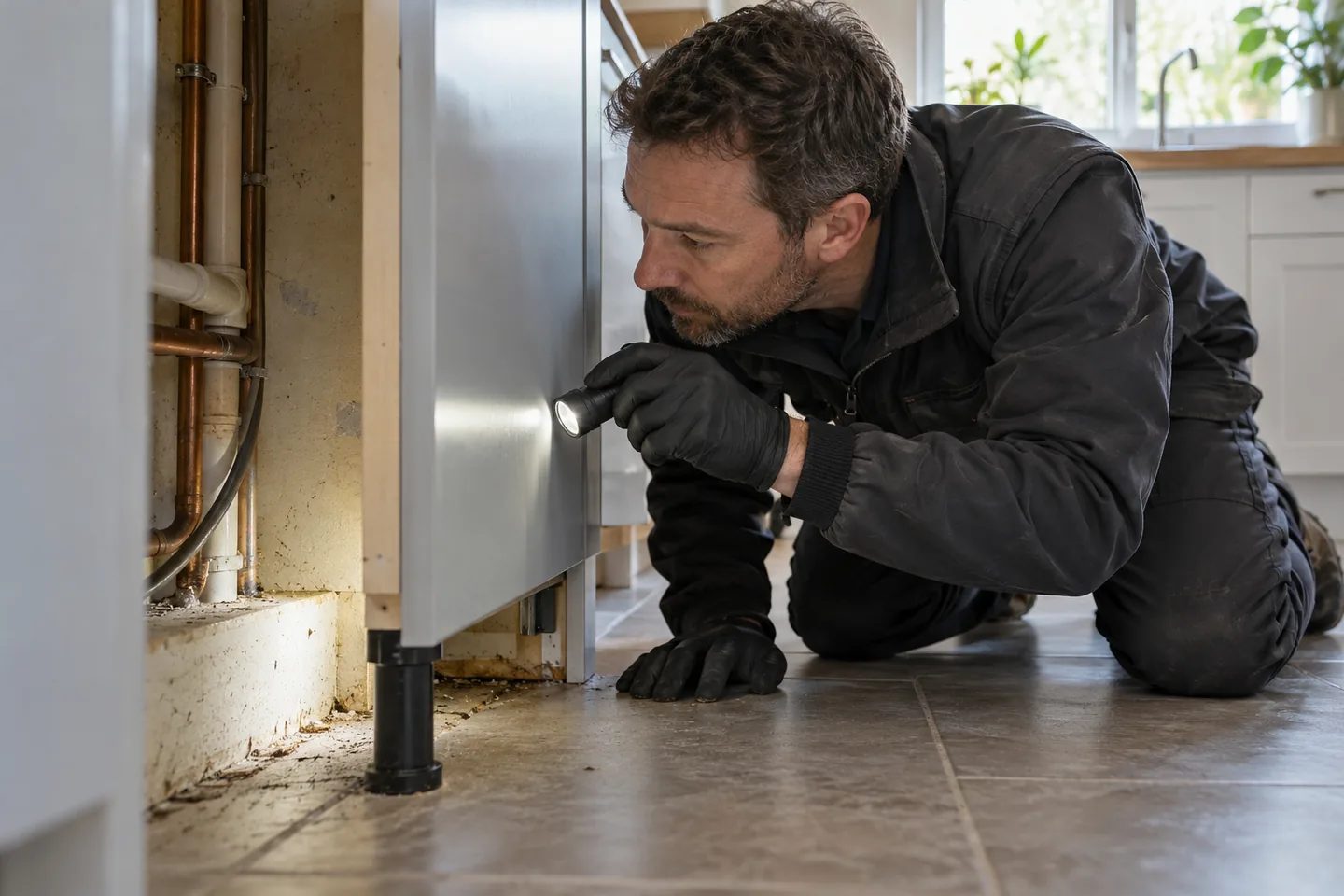
Listen and observe without turning noises into a species diagnosis. Scratching above a ceiling could be from rats, mice, squirrels or another animal. A droppings photograph, an approximate sound time, a map of sightings and any entry holes give a professional much more to work with than the sound alone. If you can obtain a clear photograph of the animal without approaching it, that may settle the matter. Avoid cornering a live rodent or attempting to catch it by hand.
Clean suspected droppings safely
Rodent waste should be treated as potentially contaminated. The CDC advises against dry sweeping or vacuuming droppings and nesting material because disturbance can put particles into the air. Keep children and pets away from the area. For a small, accessible deposit, wear rubber or plastic gloves, use an appropriate disinfectant according to its label to wet the material thoroughly, allow the required contact time, then wipe it up with paper towels. Dispose of the waste in a covered bin and clean the surrounding hard surface. Wash hands after removing gloves.
Follow the product label for dilution, surface compatibility and ventilation. Never mix cleaning chemicals. If there is heavy contamination, exposed insulation, a confined loft or contamination near food preparation, seek specialist advice rather than treating a simple household cleaning sequence as sufficient. A professional may need protective equipment and a plan for contaminated materials. If someone develops symptoms and has had significant rodent exposure, contact a healthcare professional and explain the exposure; do not use this article to judge illness.
For food cupboards, separate any visibly contaminated packaging and follow local food safety advice. Do not simply wipe a packet and return it to a clean shelf if contents might have been reached. A restaurant or other food business should follow its documented food safety procedures and consult the responsible manager and relevant authorities as needed. Pest evidence in a food area deserves prompt attention even while species identification is pending.
Why the identification changes the plan
A pest controller should inspect access points, sources of food and water, and the route between shelter and activity. The likely species influences where to look, which proofing details matter and how monitoring is positioned. A mouse can use a very small gap; a rat may be associated with larger openings, drains or outdoor burrows. Those are tendencies, not rules for every property. Sealing one visible gap without understanding other routes can leave the main problem untouched or trap an animal inside.
Ask the professional to explain the evidence for the proposed species and whether it could be more than one. The inspection may reveal an old deposit and a different current source of noise, or activity in two separate parts of the building. A treatment plan should describe the affected spaces, sanitation and proofing priorities, monitoring, and when follow-up will occur. It should also account for pets, children and non-target wildlife before any control device is chosen.
Do not scatter poison or traps wherever pellets happen to lie. Incorrect placement can expose other animals, create a hidden carcass problem or fail to address the entry route. If a service provider proposes control before asking about the source and access, request the inspection findings first. For help assessing a particular property, provide the photographs and location notes through the contact page.
A useful record for the appointment
Start with a simple timeline: when did you first notice material, in which room, and how often has it appeared? Add a sketch of the location, approximate pellet length measured without touching it, photographs with scale, and notes on sounds or gnawing. Record whether a pet has access and whether food has been damaged. Mention any recent building work, changes in waste storage or openings around new pipes. These facts help the technician decide which areas to inspect first.
Keep the original evidence undisturbed only if it is safe to do so. In a food area or a room used by children, safe cleaning takes priority over preserving pellets. Photographs usually provide enough initial context. Once the site is cleaned, mark the date and monitor for fresh signs without handling them. One old pellet under a long-unused unit is different from repeated deposits in an active cupboard, but neither observation alone should be stretched into an exact population estimate.
The aim is a sound decision, not a perfect visual identification by the homeowner. Treat suspected waste carefully, gather context and ask for a documented assessment. That sequence gives you a better chance of finding the current route, protecting the household and choosing proportionate control.
Leave a Reply
You must be logged in to post a comment.