
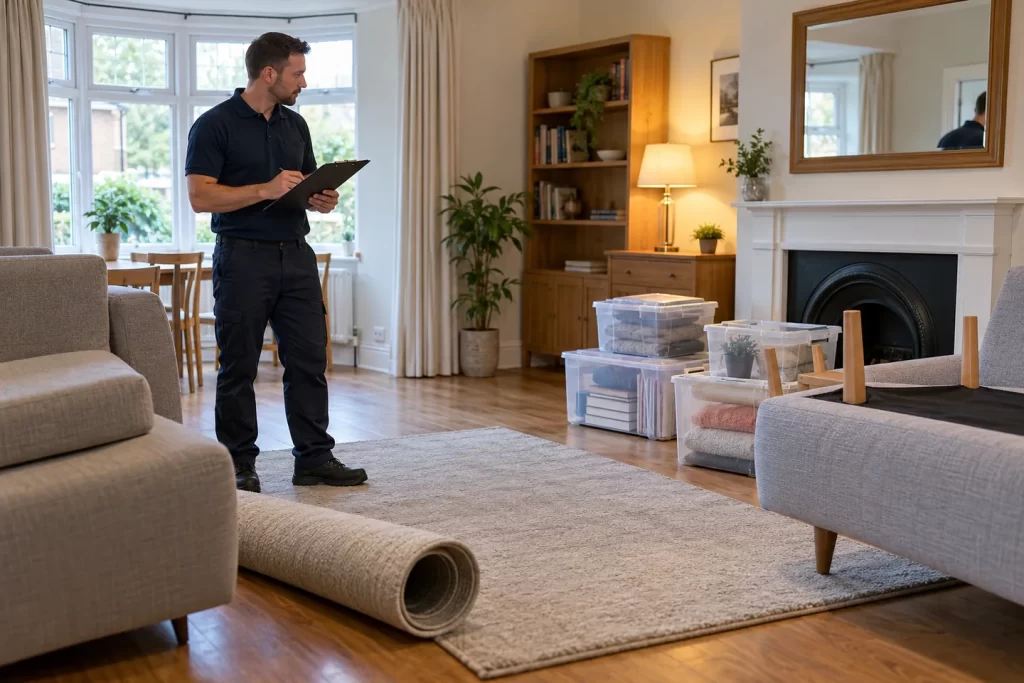
Preparing for flea heat treatment begins with a question: where are the fleas actually developing? Adult fleas may be noticed on a pet or around a person's ankles, but eggs and larvae can accumulate in the places an animal rests. Pupae may be sheltered in furnishings and floor edges. A technician therefore needs a picture of the whole problem before deciding whether heat suits the property and what must be included. Simply heating the spot where someone was bitten would be an incomplete plan.
This guide is a discussion aid for a professional visit, not a set of universal instructions. The provider should give written, property-specific preparation directions. Heat equipment, the treatment boundary, sensitive contents, people and pets all affect those directions. The flea heat treatment service page explains the available option; an inspection determines whether it is appropriate for your home.
Confirm that fleas are the problem
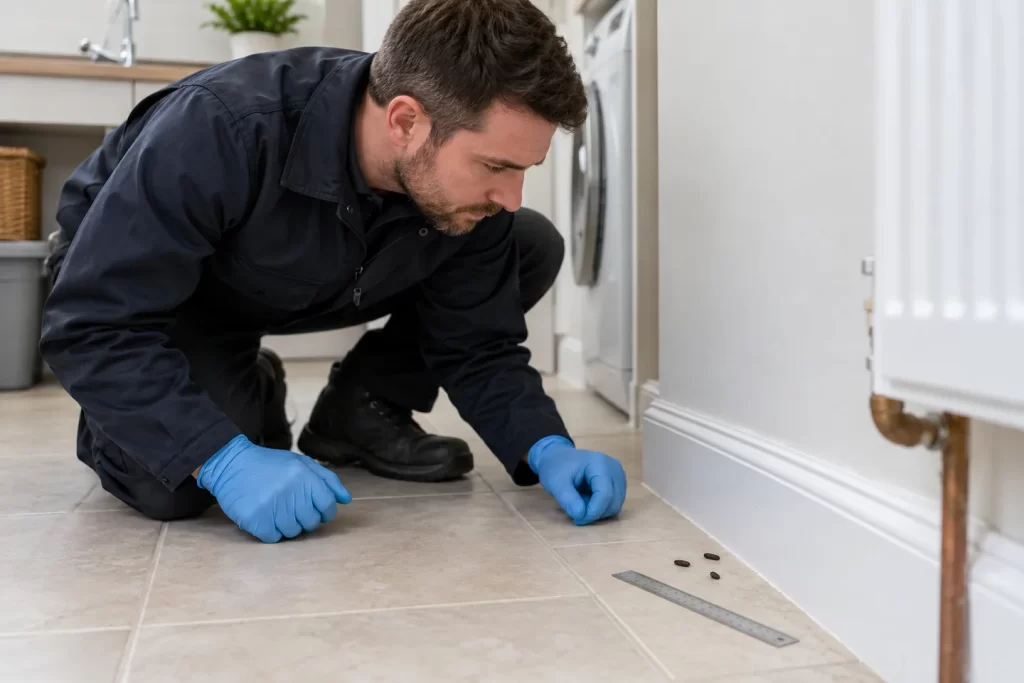
An itchy mark alone cannot identify a flea. Other biting insects and skin conditions can create similar complaints, while small jumping insects may be mistaken for different household pests. If possible, retain a clear photograph or a safely captured specimen and note when and where it was seen. Tell the technician whether pets live in the property, visit occasionally or have recently been present. Record the rooms where animals sleep and where people notice activity. This helps distinguish a likely source from a coincidental sighting.
The British Pest Control Association describes four flea life stages: egg, larva, pupa and adult. The immature stages can be associated with pet resting sites and surrounding material. That is why an inspection should consider bedding, soft furnishings, carpet edges and the animal's usual routes, rather than concentrating only on the most visible adult fleas. If the evidence is uncertain, request identification before committing to a heat treatment. The broader flea treatment overview can help frame questions about alternative methods.
If animals are involved, speak to a veterinary professional about suitable treatment for each pet. A room treatment cannot replace animal care. Equally, treating a pet without dealing with a developed household infestation may leave emerging adults in the environment. The pest technician and vet have different roles, and their advice should be coordinated rather than improvised with products bought in haste.
Agree the treatment boundary before moving anything
Ask which rooms, floor surfaces, furniture and belongings are within the proposed scope. Fleas may not respect the boundary of the room where the first bite was noticed. A pet may move between a sofa, bedroom and hallway. If only one area will be treated, ask what evidence supports that limit and how other pet resting places will be assessed. The answer should be specific enough to put on the written quotation.
Tell the provider about attached spaces, stored textiles, thick rugs and any rooms that cannot easily be opened. A technician may need to inspect beneath furniture and around skirting where material can collect. However, homeowners should not dismantle flooring or move heavy furniture without instruction. Moving potentially infested items into an untreated room can make the boundary harder to manage. Label any excluded item and ask how it will be handled, cleaned or monitored later.
This is also the time to discuss people who cannot vacate on the proposed date, animals that need a safe temporary place, and access arrangements for a landlord or shared property. The provider should explain when everyone must leave, who may enter during operation and when return is permitted. Do not assume that an adjacent room, cupboard or vehicle is a safe waiting area for a pet: follow the team's directions for the actual equipment and site.
Make floor edges and resting places accessible
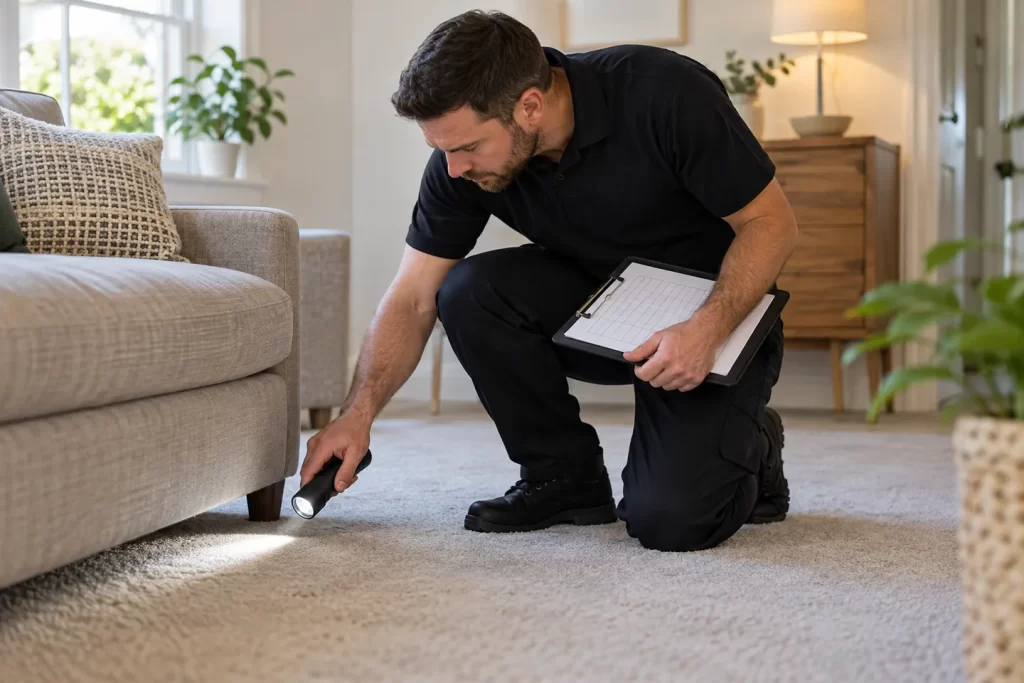
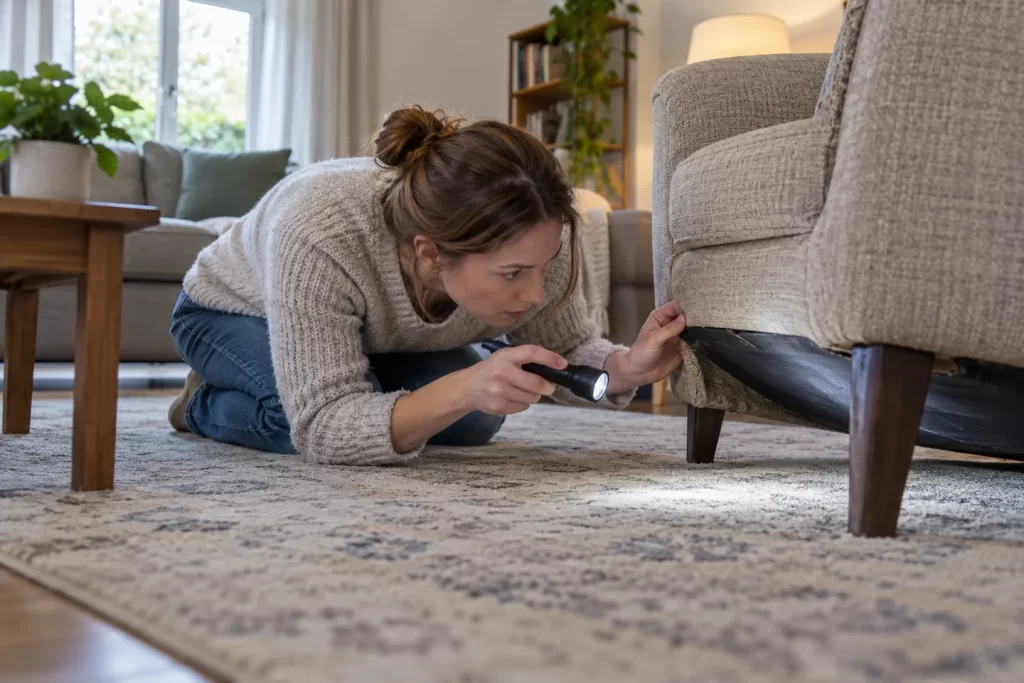
Preparation often means giving the technician safe access to likely flea habitats. Move ordinary clutter away from pet sleeping areas if instructed, but keep it within the agreed treatment plan. Clear enough floor area for inspection around sofas, beds and rugs. Ask whether furniture must be pulled from walls and who will do that. The purpose is to expose relevant surfaces and allow heat to circulate as intended, not to empty the property indiscriminately.
Vacuuming may form part of a flea management plan, but the timing matters. Ask whether the provider wants vacuuming before treatment, when it should resume afterwards, and how to dispose of the contents. Do not substitute an aggressive last-minute clean for the agreed plan: moving bedding and vacuuming into another room can disturb material and obscure evidence. If the provider requests laundering of pet bedding, follow the fabric care label and keep cleaned items separate from untreated ones. Document any bedding that cannot be laundered.
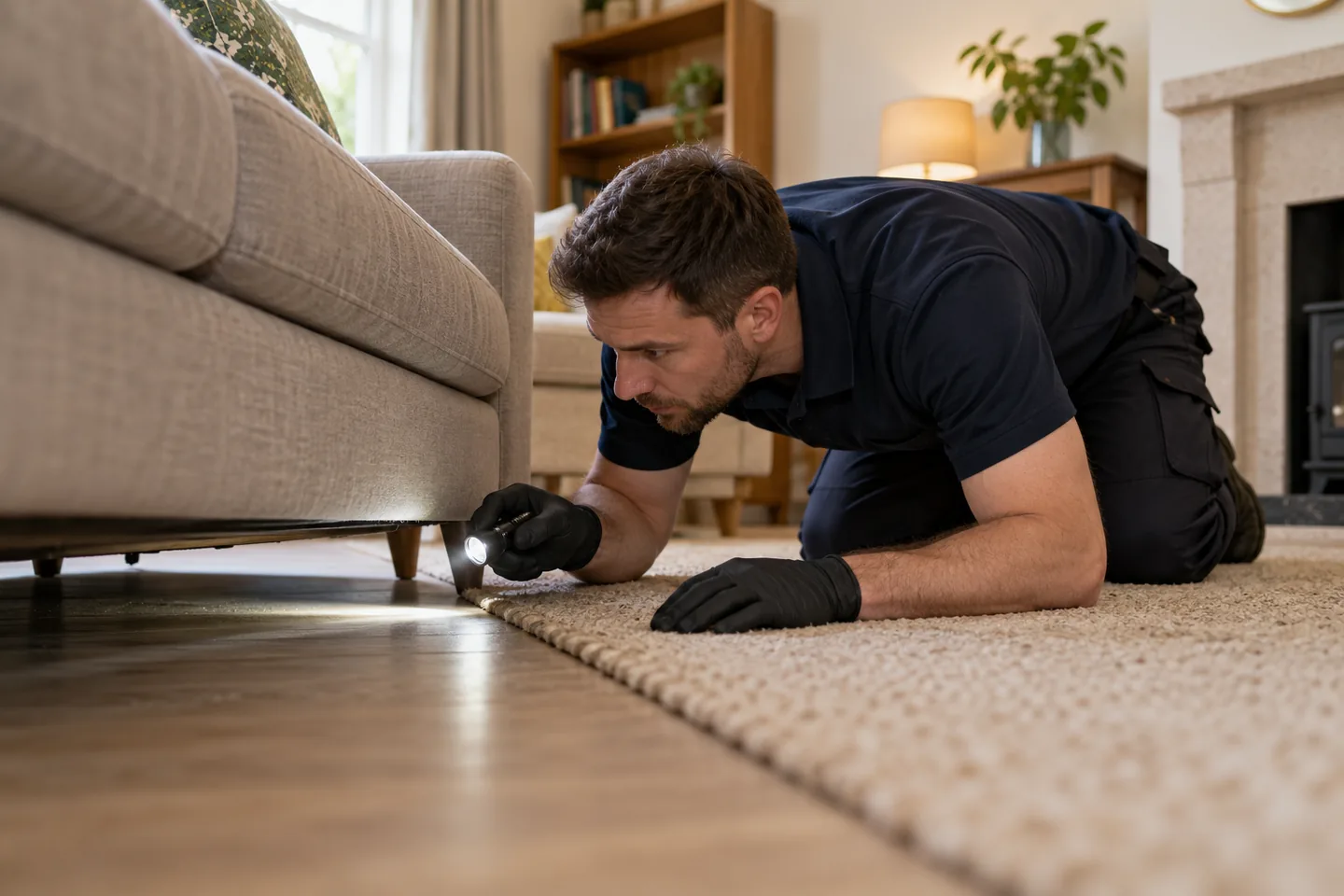
The provider may have different directions for a polished wooden floor, a thick fitted carpet and a loose rug. Ask how the team will deal with cracks, carpet margins and the underside of furniture. A tidy open centre of a room says little about the sheltered areas where flea development may occur. The practical measure of preparation is whether those places can be inspected and reached under the agreed method.
Identify heat-sensitive belongings
Professional heat treatment can affect belongings as well as insects. Before the visit, make a list of contents that may be sensitive to the provider's process: medicines, cosmetics, candles, certain electronics, batteries, plants, food, aerosol containers, artwork, musical instruments and delicate finishes are examples to raise, not a universal removal list. The safe decision depends on the actual temperature programme, placement and product manufacturer's guidance. Ask the technician what to remove, what can stay with protection and what needs another method.
Do not take a suspect rug or pet bed to a relative's house simply to clear space. If an item must leave the treatment zone, ask how it should be contained and whether it needs separate assessment before it returns. Make a small inventory of removed and excluded items. This prevents a later assumption that everything in the home received the same exposure.
For flats or shared buildings, mention sensitive common areas and any restrictions on electrical supply, ventilation or access. A professional needs to consider fire safety and building systems when setting up equipment. Occupants should not adjust heaters, open sealed areas or move monitoring sensors during treatment. If a heat-sensitive item was overlooked, alert the team rather than entering the treatment space yourself.
Understand what heat can and cannot demonstrate
The BPCA notes that extreme heat can kill flea life stages. That general fact does not prove that every concealed place in a furnished home will automatically reach a lethal exposure. Air temperature at a doorway can differ from the temperature inside a dense sofa, beneath a rug or at a floor junction. Ask what the provider measures, where it places sensors and what it does if an area heats slowly. A meaningful record describes both the measured conditions and limitations of access.
The provider should explain the time and temperature protocol it uses for its equipment and how it judges completion. Avoid relying on an advertised peak number without knowing where that number was recorded and for how long. Do not attempt to recreate professional treatment with domestic space heaters: uncontrolled heating introduces fire and electrical hazards and provides no reliable proof that protected insect stages were reached.
Heat also leaves no enduring barrier against a newly introduced flea. If a pet's infestation is untreated, wildlife can access the property, or an excluded textile is brought back without assessment, activity could recur. The technician should discuss these routes as part of aftercare. The method's success depends on correct identification, a sensible boundary, adequate exposure and prevention of reintroduction, not on heat alone.
Plan aftercare and follow-up evidence
Before the team leaves, ask for a record of treated rooms, excluded contents, notable access limits and the next inspection or monitoring step. Ask when vacuuming, cleaning and moving furniture may resume. If the provider recommends an additional visit or a different control method for an untreated area, get that recommendation in writing. Be cautious about interpreting a single later insect: its presence is evidence to investigate, but does not by itself show whether it survived, emerged from an excluded place or arrived later.
Keep a dated log of any sightings, their location and whether a pet was present. Preserve a specimen if it can be done safely. This gives the professional a useful basis for deciding whether further inspection is needed. A complaint based only on new bites can be difficult to interpret; confirmation of the insect and its location is more useful than counting skin marks. Continue the animal care plan agreed with your vet and tell the technician if the pet's treatment schedule changes.
Finally, ask what practical result the quotation promises. Does it include inspection, preparation advice, the heat visit, temperature records and follow-up, or only equipment time? What is the plan if one room cannot be accessed? A clear scope protects you from assuming that excluded contents were treated. To discuss the evidence in your property and obtain preparation instructions, use the contact page before moving belongings or booking a date.
Leave a Reply
You must be logged in to post a comment.