
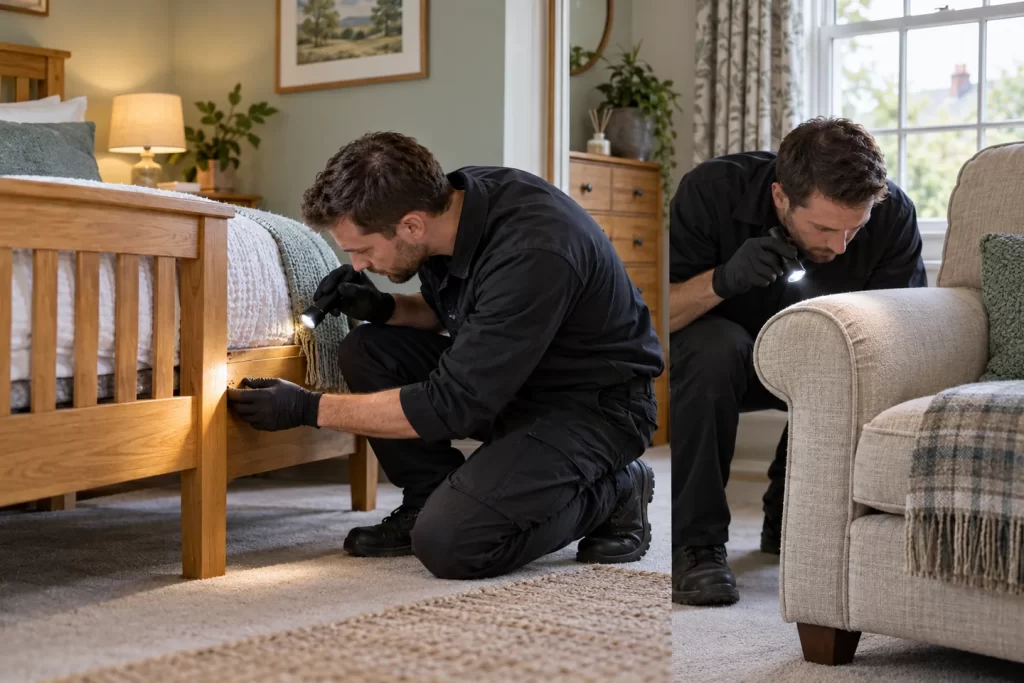
Heat treatment is often described as heating a room, but bed bugs do not live only in open air. They may shelter in mattress seams, bed-frame joints, screw holes, drawer runners, folds in upholstery and gaps where a piece meets a wall. These places warm at different rates. Whether a professional treatment reaches a particular harbourage depends on the furniture, how it is positioned, airflow, access and the treatment plan. A heater reading alone cannot answer that question.
The practical question is not whether heat can pass through every solid object. It is whether the provider has assessed the likely hiding places in the agreed scope and has a safe way to deliver and monitor the required conditions there. No single method or sensor can establish conditions at every point inside a home. Ask for a clear explanation of what will be moved, opened, monitored or excluded before you book.
Furniture is not one uniform block
A simple wooden bed frame has joints, bolt holes and slats that create different conditions from the exposed room air. A divan base may have a fabric underside, internal void or drawers. An upholstered chair can combine dense foam, seams, webbing and a timber structure. A wardrobe may have a narrow back gap and crowded contents. Each construction presents different access and airflow challenges.
Bed bugs tend to stay near people and their resting places, so beds and nearby seating deserve careful attention when evidence points there. Yet a technician should inspect rather than assume. A harbourage can sit behind a headboard, under a chair or in a bedside unit. A professional inspection helps establish which pieces are relevant and whether the problem extends beyond one room.
Material density matters because heat moves through a thick cushion or tightly packed stack more slowly than across an exposed surface. Enclosed cavities can also have limited circulation. A piece that looks warm externally may contain a cooler interior or a shaded joint. That does not mean a furniture item automatically prevents successful treatment; it means the plan needs to account for how that item is built and how heat can reach the areas of concern.
Access and preparation influence the result
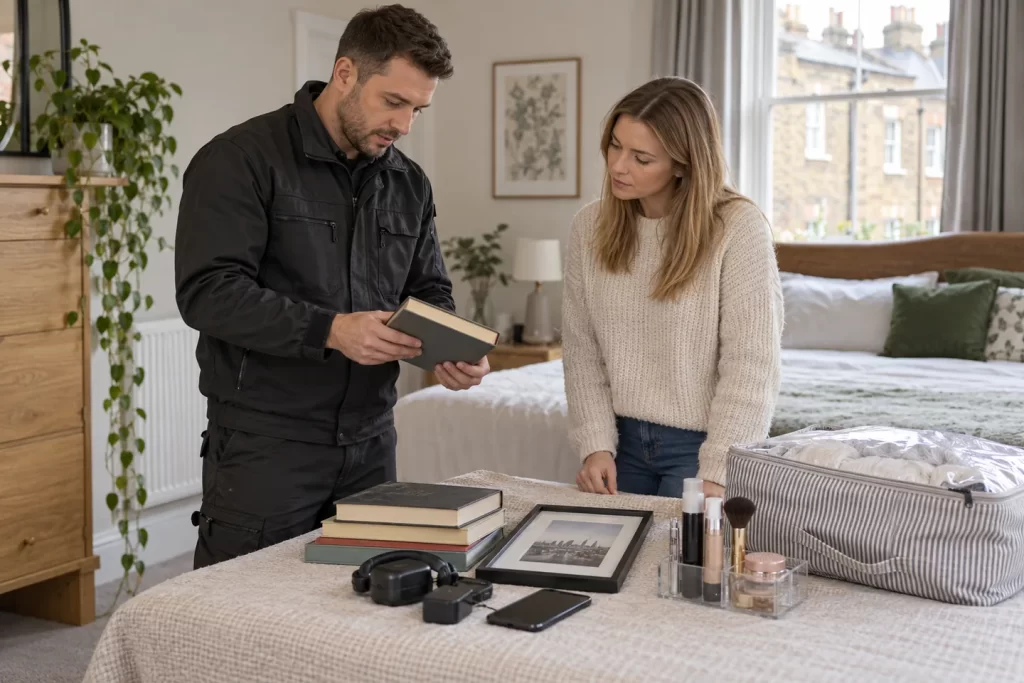
Technicians may need to move furniture away from walls, open drawers, remove loose contents or adjust the position of a bed. They decide what can be changed safely. Do not dismantle a bed or remove upholstery in advance unless the provider asks you to do so. Unplanned disassembly can damage fittings, expose sharp components or move a suspect item through the property. Share photographs and details of unusual furniture when arranging the visit so the team can plan equipment and access.
Clear access around and beneath furniture makes inspection and airflow easier. Store loose belongings as directed, and tell the provider about built-in units, heavy wardrobes, delicate finishes and items that cannot be moved. If an object cannot be reached, the technician should record that limitation and agree whether it falls outside the treatment scope or needs a different handling plan. Our guide to preparing a bedroom for heat treatment explains how to organise the room without spreading belongings.
The contents of furniture can matter as much as its frame. A drawer full of folded clothes, books or mixed objects can block airflow and create different warming conditions. The provider may ask for contents to be removed, sorted or treated separately. Follow those directions item by item; do not assume that shutting a drawer is an adequate way to treat everything inside it.
What monitoring contributes
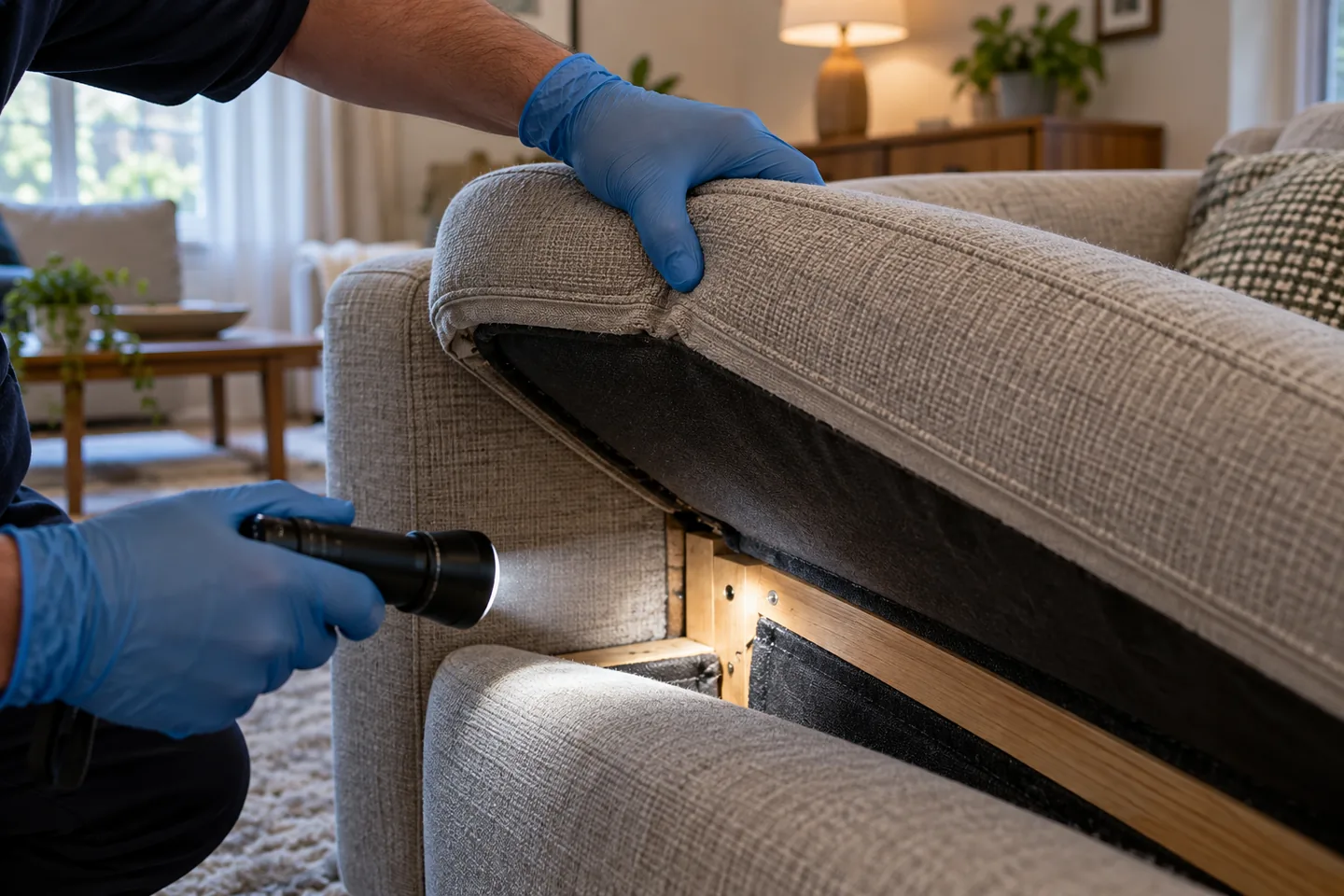
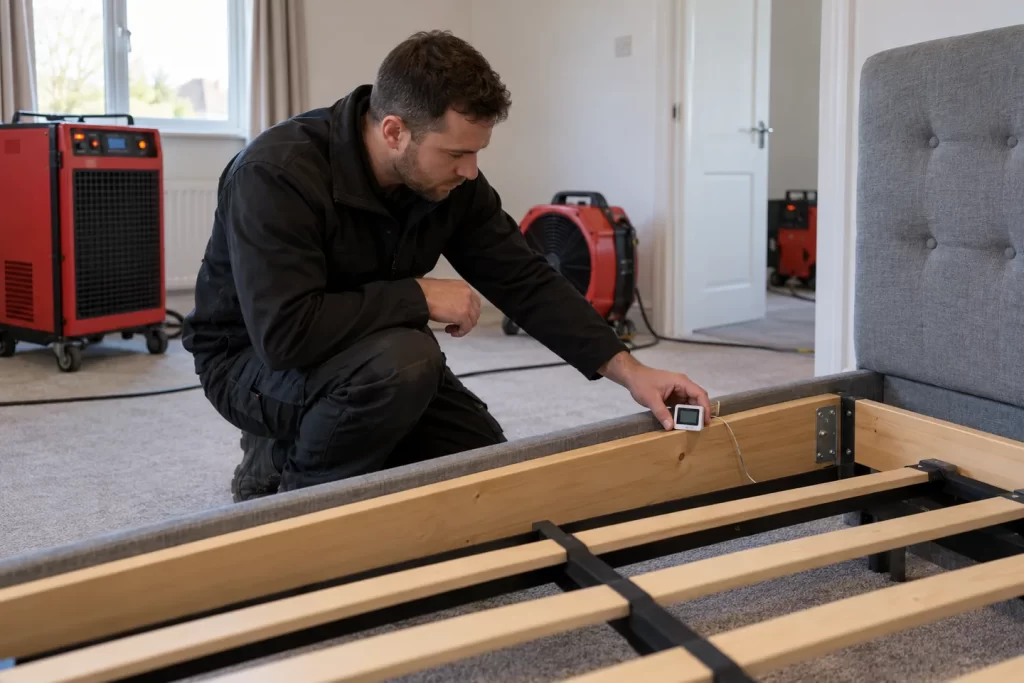
Professional heat work should include a plan for measuring conditions at selected points, especially locations expected to warm more slowly. Sensors placed in or near challenging furniture help the technician see whether heat is reaching those locations over time. A probe near the bed frame tells a different story from a display measuring the centre of the room. Sensor position and the provider's time-and-temperature procedure give context to any reading.
Monitoring is still a sample. A probe reports the conditions where it sits, not every hidden corner of a sofa or cavity behind a built-in cabinet. A trace can inform an adjustment to airflow or exposure, but it cannot identify an insect, verify an unmeasured pocket or prove that an excluded object was treated. The guide to heat-treatment temperature monitoring describes these limits and the questions a customer can ask about sensor placement.
Ask how the team chooses locations for your specific furniture and what it does if a point warms slowly. The answer should reflect the room's contents and access. It might include repositioning an item, opening a drawer, changing airflow or extending exposure under the provider's procedure. An unexplained claim that every object will reach an identical temperature is less informative than a discussion of the hard-to-heat locations and how they will be checked.
Why belongings may be treated separately
Not every possession should be exposed to the same conditions. Electronics, candles, aerosols, medicines, some plastics, musical instruments and items containing batteries may require removal or special instructions. A piece of furniture can also have finishes, glue, glass or composite materials that need assessment. Give the company an accurate inventory of unusual or valuable items and ask for written guidance before treatment day.
Loose contents removed from a drawer or wardrobe need a clear status. They may be treated separately, left sealed for another process or returned only after inspection. Heat has no residual effect, so a bag or box that was excluded should not be treated as protected simply because it sat in the room. The article on belongings needing special attention offers a practical inventory approach for documenting these exceptions.
Never place a heat-sensitive object into a treatment area without checking the provider's instructions. Likewise, do not apply a domestic heat source to a sofa, mattress or electronics to compensate for an inaccessible part. Household devices are not a substitute for controlled professional equipment and may cause fire, burns or damage without delivering suitable exposure to an internal harbourage.
Furniture can create cold spots without making treatment futile
“Cold spot” is a useful description for a location that warms more slowly than surrounding air or surfaces. It does not mean that every furniture item has an untreated interior. It signals the need for a measured, responsive approach. A technician can use fans, alter spacing, open accessible storage or change the placement of probes, subject to safe operating limits and the construction involved.
If a location cannot be accessed or monitored adequately, ask what the provider recommends. Depending on the evidence, an alternative could be dismantling by an appropriately qualified person, separate treatment of a removable component, targeted follow-up or a different control method. There is no single answer for all furniture. The treatment decision should account for insect evidence, item value, material sensitivity, room layout and the practical ability to check the result.
If a sofa or bed is heavily infested, disposal may seem like the simplest route. Moving it through communal corridors or leaving it kerbside can spread insects or pass the problem to someone else. Ask the professional whether the piece is treatable before making that decision. If disposal is advised, follow local waste arrangements and prevent reuse; do not donate a suspect item.
Questions to ask the provider
Before booking, describe the bed, sofa and other furniture near the evidence. Ask whether the quote includes those pieces, whether drawers or compartments will be opened, how the team gets access to the underside, and which locations it expects to monitor. Ask what preparations are required and which belongings must leave the room. Request a written list of exclusions, so there is no ambiguity about a chair or storage unit left in place.
After the work, ask for a handover that records the treatment boundary, any access restrictions and the monitoring summary. If a particular bed-frame joint was difficult to reach, the report should make that clear and explain what was done in response. A record cannot prove every location was identical, but it lets you understand the professional judgement used in your property.
The company's bed bug heat treatment service can be a starting point for a property-specific discussion. Share the inspection evidence and photographs rather than relying on a general description of the method. A technician can then decide whether heat is suitable, how furniture should be prepared, and what additional inspection or follow-up the situation requires.
After the room is treated
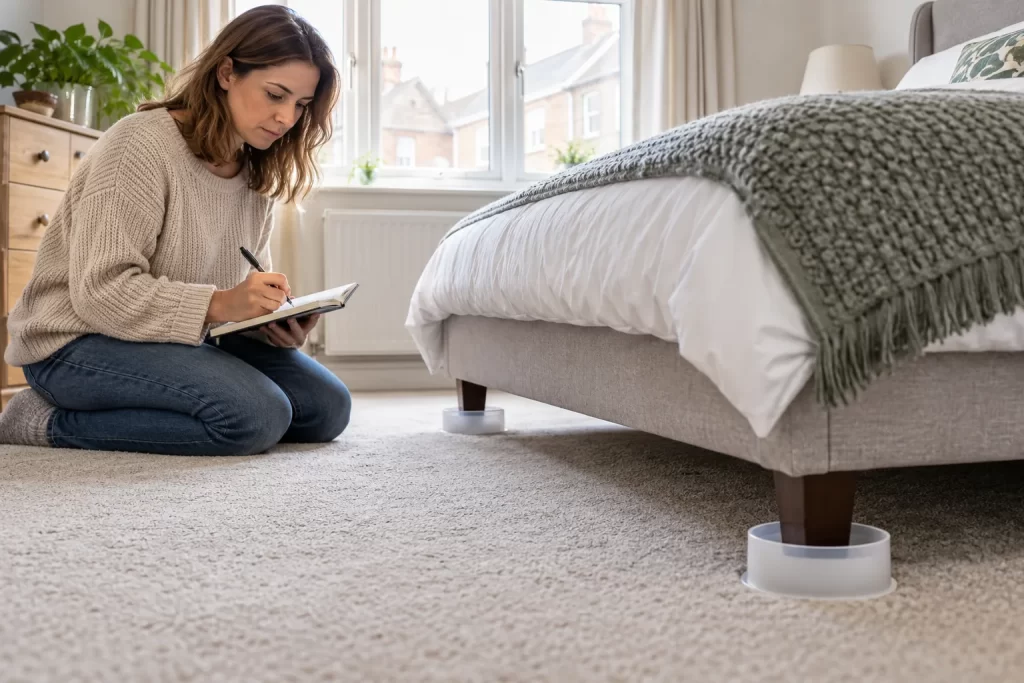
Keep treated and untreated belongings separate until the provider says they can be returned. Follow its reoccupation and ventilation directions. Once the room is ready, maintain access to the bed and nearby furniture so follow-up checks remain possible. Use any monitors as instructed and record the dates and locations of inspections. The site's heat monitoring service refers to measurements during a treatment; post-treatment monitoring is a separate way to watch for activity afterwards.
If you find an insect later, preserve it and note exactly where it was found, along with any movement of luggage or excluded furniture since the treatment. The finding might merit reinspection, but it cannot by itself identify a hidden cold spot as the cause. Contact the provider with the record and ask how it fits the agreed follow-up plan. Evidence-led investigation is more useful than immediately moving furniture or applying additional products.
Heat treatment can reach bed bugs in furniture when the professional plan accounts for construction, access and monitored exposure. The furniture itself is not a guarantee of failure or success. A sound inspection, accurate preparation, meaningful sensor placement and an honest record of exclusions give you the clearest basis for deciding whether the work addressed the likely harbourages in your home.
Leave a Reply
You must be logged in to post a comment.