
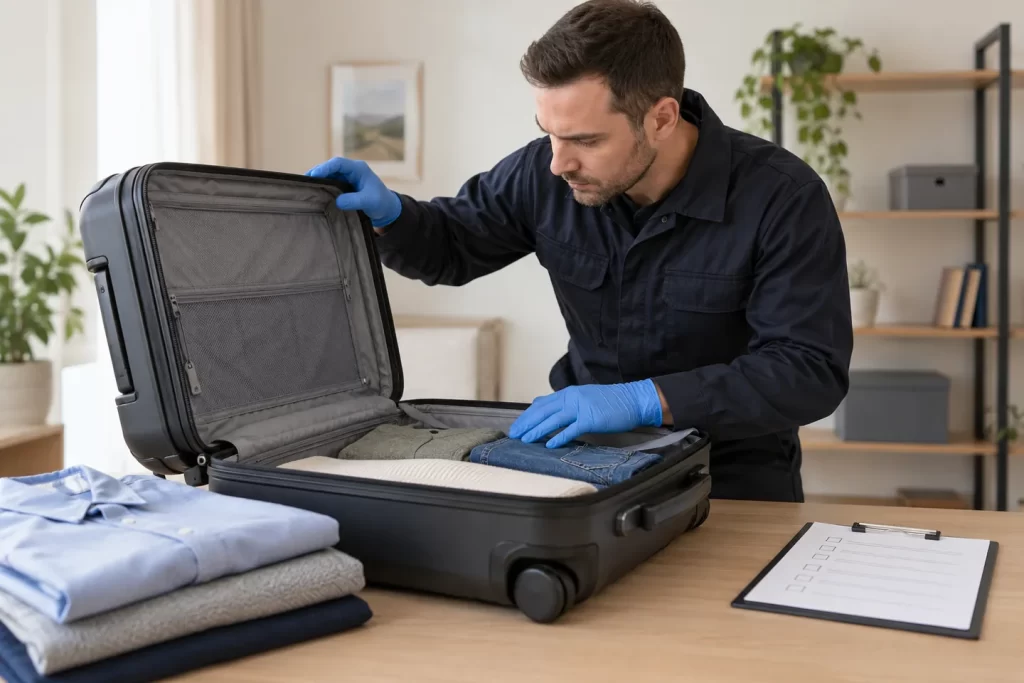
If bed bugs may have travelled home in a suitcase or clothing, separate treatment of belongings can be part of a wider response. Heat can be suitable for some items, but a suitcase is not a simple fabric bag and a pile of clothes is not a uniform load. Materials, construction, electronics, pockets and packed density all affect what a professional can safely treat. Before booking, establish which belongings are included and how the provider will handle them.
Heat treatment for possessions should not replace an inspection of the room where the luggage was opened or stored. Bed bugs may have moved to nearby furniture, so treating a bag alone could leave an affected harbourage elsewhere. Conversely, a worry after travel without any physical evidence may call for careful inspection rather than immediate treatment of every possession. A professional can help define the scope from the evidence and the items involved.
Make a precise inventory
List the items that may need attention before requesting a quote. Include suitcase type and size, backpacks, garment bags, shoes, washable clothing, coats, soft toys and other textiles. Note whether luggage has a rigid shell, foam padding, metal frame, telescopic handle, wheels or built-in battery. Photograph unusual, expensive or delicate items so the provider can assess them before collection or treatment.
Do not assume that every item should go into one heated chamber. A textile may have care-label instructions that differ from a leather shoe or a suitcase with plastic components. Electronics, medicines, aerosols, cosmetics, batteries, heat-sensitive accessories and pressurised containers should be identified separately. Ask whether each category is accepted, excluded or needs a different method. A clear item list prevents surprises when the technician is ready to start.
If several household members travelled, record which bag belongs to whom and where each was unpacked. This is not about assigning blame; it gives the inspector a route to follow. Note whether clothing went straight into a wardrobe, whether a suitcase was stored under a bed and whether items were moved between rooms. A hotel-room inspection guide explains why checking luggage areas and sleeping spaces together can be useful when travel is part of the timeline.
Ask what the service actually includes
The phrase “luggage heat treatment” can describe different scopes. Ask whether the price covers inspection, handling, transport, treatment chamber time, monitoring, return delivery and packaging. Confirm whether clothing is treated in the same chamber as the suitcase or processed separately. Ask which items require individual assessment and whether a provider can decline an item that may be damaged.
Get the treatment boundary in writing. It should identify the listed belongings, any exclusions and how the provider will record each item as treated or untreated. Ask how the company handles a packed suitcase: does it need to be emptied, and who is responsible for inspecting pockets and compartments? Do not assume a closed case is treated effectively throughout merely because its exterior became warm.
Ask how the provider measures conditions in a load and what its validated procedure is for different item types. A chamber's air temperature alone does not describe every fold, pocket or densely packed layer. The provider should be able to explain how it loads items, avoids blocking airflow and checks the conditions that matter for the service it offers. Request a record of the process and any limitations.
Check suitability and damage risks
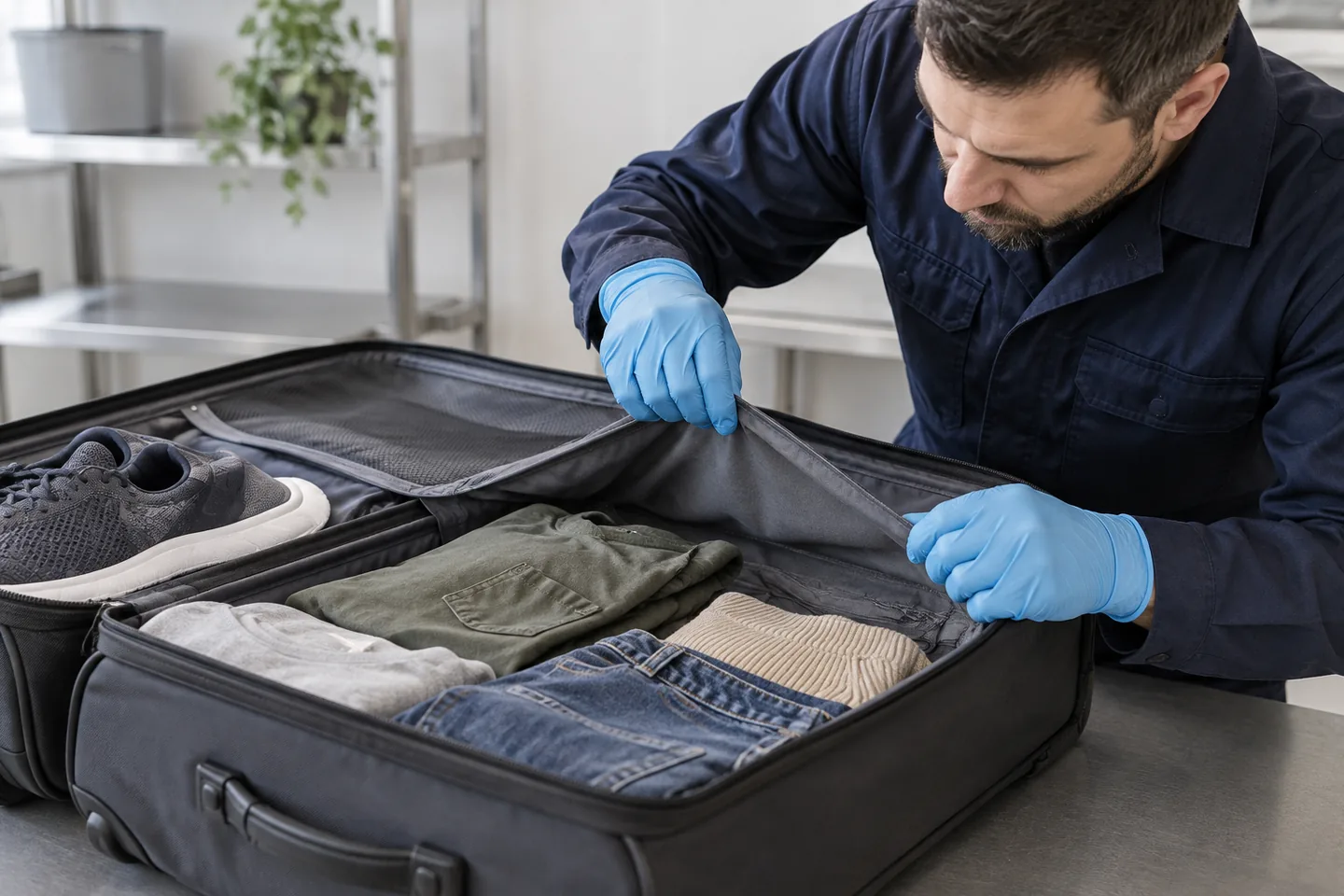
Heat may affect adhesives, coatings, leather, rubber, foam, plastic fittings, delicate trims and waterproof membranes. A suitcase may contain glue, a telescopic handle, internal dividers, wheels and a combination lock. A coat may have glued interfacing or a synthetic lining. Even when an outer fabric tolerates heat, another component may not. Give the provider the manufacturer's care information if available and ask how uncertain materials will be assessed.
Do not remove batteries, empty cosmetics or dismantle a case unless the company instructs you to do so. Some products can be hazardous if heated or handled incorrectly. Ask specifically about aerosols, lithium batteries, power banks, medication, perfumes and items with electronic tracking tags. If an item is excluded, ask for a safe alternative rather than trying to heat it at home.
The same caution applies to washing and drying. Care labels provide limits for domestic laundering, but a wash cycle does not automatically address every item or every infestation scenario. A commercial dryer should not be used on an object that may melt, shrink or catch fire. Follow the garment label and the pest professional's directions, and keep potentially affected belongings contained until they have a clear status.
Understand the preparation process
Ask whether you should bring items sealed, open, or in the original suitcase. This varies with the provider's process. If you are asked to bag items, use the specified bags and label them; do not mix suspected belongings with clean clothing. If a bag is sealed, avoid opening it in a shared hallway or vehicle. The company should explain where and how handover will take place.
Before the appointment, keep the items together in a room or area agreed with the provider. Avoid moving luggage from a bedroom to a car boot, office or neighbour's home without containment guidance. If items are already in a vehicle, tell the technician where it has been stored. That detail can affect the inspection scope and follow-up recommendations.
Ask whether you need to empty pockets and compartments, and how to handle the contents. Small objects can be overlooked in suitcase corners. Use a checklist to track what was removed, what was treated separately and what stayed inside. Do not discard a case simply because it is suspect; the professional can advise whether it is treatable, should be isolated or requires careful disposal.
Keep treated items separate afterwards
When the provider returns the belongings, confirm the packaging and treatment status before unpacking. Keep treated items apart from anything still waiting for inspection or another process. Use clean bags or containers if recommended. Labeling “treated” with a date can prevent another household member from mixing the items with an untreated pile.
Ask when and where treated belongings should be returned. If the bedroom or flat also needs treatment, do not bring the suitcase back into an affected room until the provider says it is appropriate. A clean suitcase stored on an untreated bed may become exposed again. The service plan should cover the room and the possessions as a connected problem where evidence suggests that is necessary.
Heat does not leave a residual protective barrier. It addresses the items during the treatment itself; a new introduction can occur later. After travel, keep luggage off beds, inspect seams and pockets when practical, and store it away from sleeping areas. These habits reduce opportunity for an unnoticed introduction but cannot guarantee that one will never occur.
Compare alternatives and exclusions
Some items may not be suited to heat. Ask whether the provider offers another professionally assessed option or recommends isolation and monitoring. Do not improvise with a household freezer unless the item, temperature and duration have been assessed; domestic appliances vary and dense objects may not cool evenly. Similarly, leaving a suitcase in a warm car or sealing it in plastic is not a reliable substitute for a validated process.
For washable clothing, the provider may recommend a care-label-compatible laundering or drying process. Clarify whether it is part of the booked service or an instruction for you to carry out. Ask how clean items should be packaged after processing and where to store them. For valuable, irreplaceable or delicate belongings, get written advice before authorising any treatment that could change their condition.
The site's heat treatment for clothes and luggage page can be a starting point for a property-specific discussion. Ask how the service handles different luggage designs, textiles, exclusions and records. If bed bugs were found in the home, the broader bed bug treatment service can help you discuss whether the surrounding room should also be inspected.
Questions to take into a booking call
Before handing over belongings, ask: Which exact items are included? What should I remove from pockets or compartments? Are batteries, cosmetics, medication or electronics accepted? How are suitcases loaded and monitored? What is the risk to the materials and how will uncertain items be handled? Who seals and transports the belongings? What written record will I receive? How will treated items be packaged and kept separate? What should happen if a nearby room also needs inspection?
Clear answers let you compare providers on safety, scope and accountability rather than on a vague claim that the process is “high heat”. A suitable provider will ask what the items are made of, explain its limitations and set out a safe handover. If a company cannot tell you whether it accepts an item, do not assume that the item will be included.
Heat treatment can be a useful option for suitable clothes and luggage when the item list, preparation and monitoring are planned. The safest booking begins with an honest inventory and a discussion of materials. Confirm what will be treated, what must be excluded and how each belonging returns to your home. That makes the service easier to assess and helps prevent a treated bag from being confused with an untreated one.
Leave a Reply
You must be logged in to post a comment.