
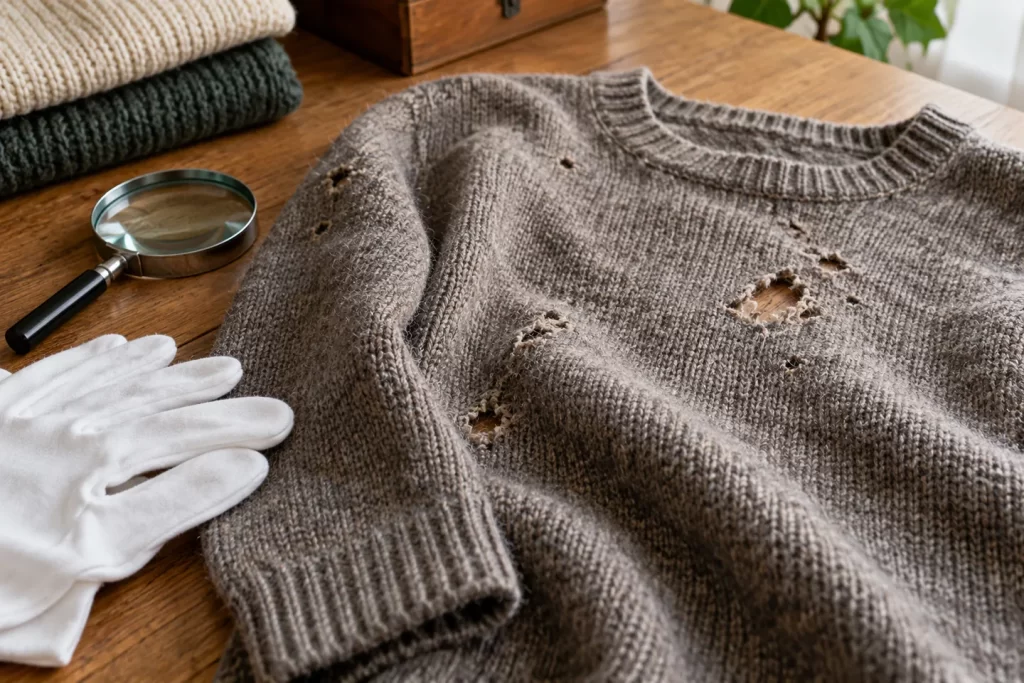
Carpet beetle damage often appears as irregular thinning, small holes or bare patches in materials containing animal fibres. The larvae, rather than the adult beetles, are responsible for feeding damage. Wool, silk, feathers, fur, leather, felt and items containing hair or lint can be attractive food sources, depending on the pest and what is available. Finding a hole in a garment does not confirm carpet beetles by itself; inspect for larvae, cast skins and the conditions around the item.
The most useful inspection looks beyond the damaged object. Larvae prefer quiet, undisturbed places and may be found in seams, folds, storage boxes, under furniture or where lint collects. A garment may have been moved from the place where the larvae are feeding. Check nearby textiles and edges before deciding that the visible hole is the whole problem.
What carpet beetle damage can look like
Damage is often irregular rather than a neat line of holes. A wool jumper may have thin patches where larvae have fed along a fold or under another garment. A rug can show worn-looking areas near an edge, beneath furniture or in a place that receives little vacuuming. Stored blankets and felt items may be affected where dust, hair or dead insects have accumulated. Fabric blends and finishes vary, so damage can differ between items.
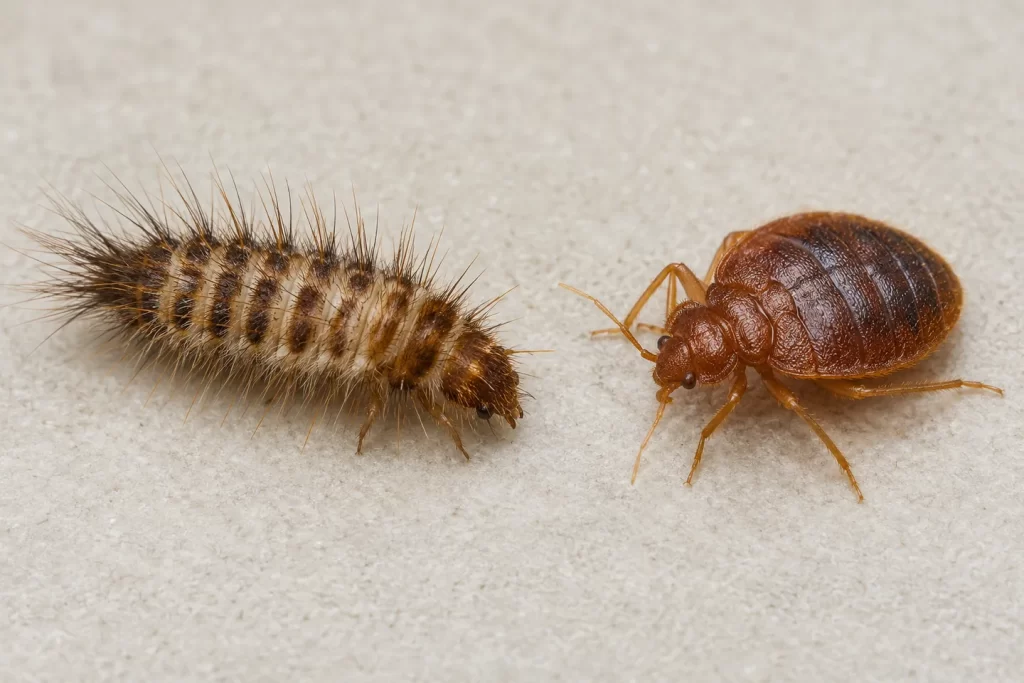
Look for other signs. Carpet beetle larvae are small, elongated and visibly hairy or bristly; their shed skins may remain nearby and resemble a dry, empty larva. Adult beetles are usually small and rounded, and may be seen near windows because some adults are attracted to light. An adult beetle at a window does not show where larvae are feeding. The carpet beetle larvae identification guide compares larvae with bed bugs and explains why a specimen is more useful than an assumption.
Carpet beetle damage is not the same as bed bug evidence. Bed bugs do not feed on wool; they feed on blood and shelter near resting places. If you find a flat, oval insect or signs around mattress seams, get it identified separately. A textile hole and an itchy mark are not sufficient to diagnose either pest.
Start with the damaged item
Take the item to a bright, clear area and examine both sides, seams, hems, cuffs, collars, pockets and folds. Use a torch or magnifier to check where fibres thin or holes appear. Do not shake the item around the room; a larva or cast skin may fall off and be lost. Photograph the damage and any insect or shed skin before cleaning.
Check the care label before laundering or dry cleaning. Delicate wool, lined coats, rugs and upholstered items may need professional cleaning. Heat or water can shrink, distort or damage some fabrics. Do not put a valuable textile into a domestic dryer or apply a household pesticide unless the label permits it and the item is suitable. If the material is fragile or valuable, ask a textile cleaner or pest professional before treatment.
Place suspect items in a sealed bag or container while you inspect the storage area, then label them. This contains loose debris and prevents mixing a potentially affected garment with clean items. Keep the bag away from food, children and pets. A bag is a temporary containment step, not a treatment; larvae may persist inside if no appropriate cleaning or control follows.
Inspect wardrobes, drawers and storage boxes
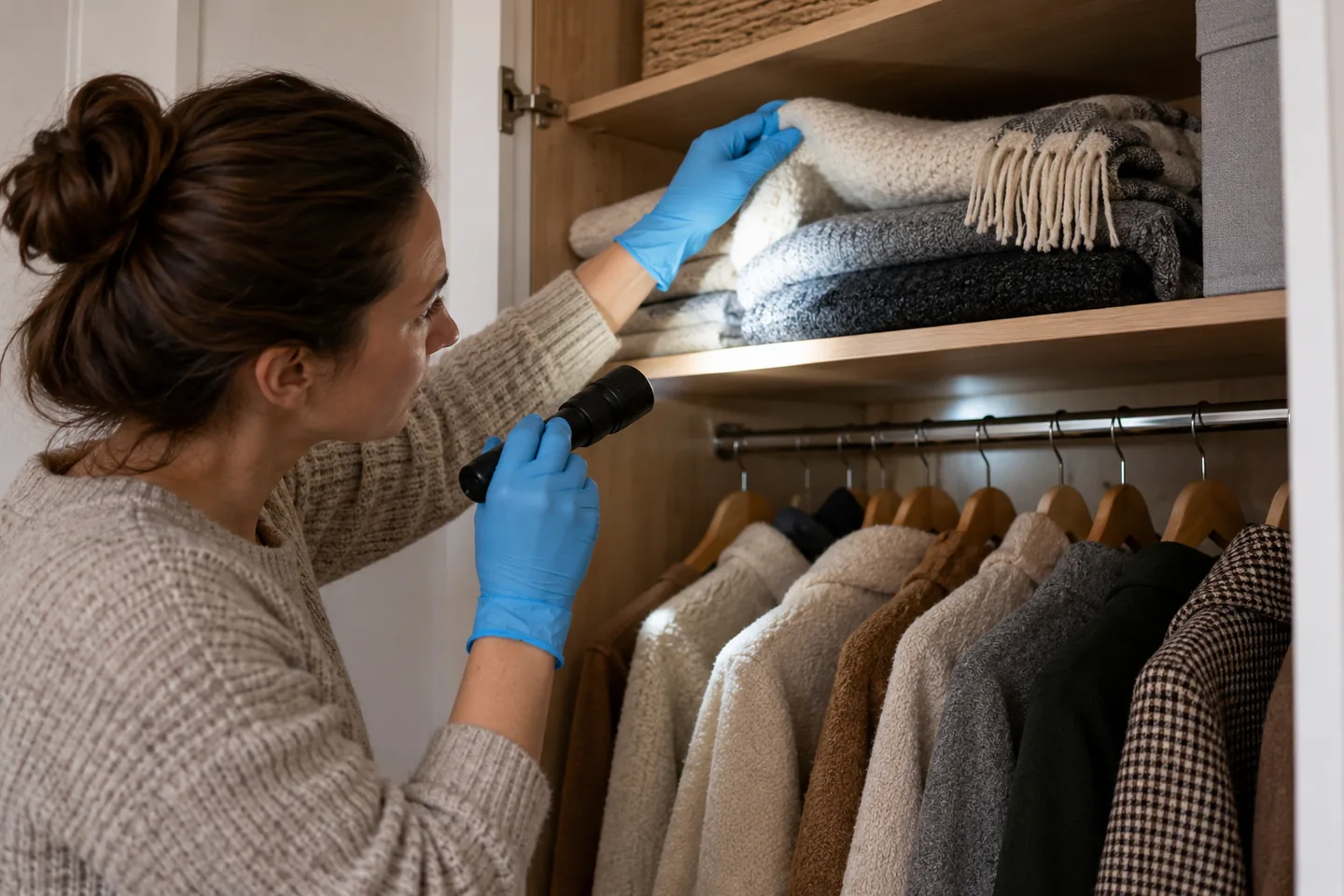
Remove items in manageable groups and check each one before putting it back. Pay attention to woollens stored at the bottom of a pile, rarely worn coats, natural-fibre rugs, blankets and clothes left in a box for months. Inspect the interior corners, shelf joints, drawer runners and the underside of stored containers. Look for larvae, cast skins, adult beetles and accumulated lint.
Check the floor and skirting around wardrobes, especially under heavy furniture and along carpet edges. Vacuum dust, hair and dead insects where they collect. If a wardrobe backs onto a wall or has a gap beneath it, inspect the accessible space without forcing furniture that could fall or damage the floor. Ask for help to move a heavy item safely.
Consider what else may supply food. Pet hair, feathers, dead insects, felt pads, old nests in a loft space or taxidermy can attract some carpet beetles. The source may not be the garment where damage first appeared. Record the places checked and the evidence found. If you find several larvae or repeated damage in different rooms, a professional inspection can trace the source more effectively than treating each textile separately.
Protect clean textiles after inspection
Once items are cleaned appropriately and dry, store them in clean, sealed containers or garment bags. Make sure storage boxes are free of lint and insect remains before use. Avoid packing damp clothes, which can create a separate mould problem. If using a wardrobe, keep floors and corners accessible for future checks and vacuum regularly around the edges.
Vacuum the affected storage area thoroughly, including shelf corners, drawer interiors, beneath furniture and along carpet edges. Empty the vacuum promptly into a sealed bag and put it in an outdoor bin. If the vacuum has a bag, replace it according to its instructions. Cleaning removes larvae, hairs and debris that can provide food. It also makes a follow-up inspection easier by reducing clutter.
Do not rely on mothballs, scented sachets or essential oils as a substitute for removing the source. These products may have limited effect and can be harmful if misused. Avoid spraying fabrics unless a product label specifically allows that use. An insecticide applied to a garment can create direct contact exposure without reaching larvae hidden in a seam or storage gap.
When professional help makes sense
Call a pest professional if larvae keep appearing after careful cleaning, damage affects several items, the source is in an inaccessible area or you cannot identify the insect confidently. Share photographs and describe where the damage is located, what fibres are affected and any larvae or cast skins you found. This allows the inspection to focus on likely food sources rather than treating a whole room without evidence.
An inspection should establish which species or pest group is involved, where larvae are feeding and whether the problem is active. Ask what cleaning or storage changes are recommended, which textiles need separate care and whether professional treatment is warranted. The company's carpet beetle service can be a starting point for discussing persistent damage and source identification.
If a treatment is proposed, ask which areas and items it includes, what preparation is required and whether the product is appropriate for textiles. Make sure valuable garments are not exposed to a process without your permission. Some infestations may be managed primarily through thorough cleaning and removal of infested material; the need for additional treatment depends on evidence and extent.
Avoid confusing carpet beetles with clothes moths
Both carpet beetle larvae and clothes moth larvae can damage natural fibres. Clothes moth larvae may create silk cases or webbing depending on the species, while carpet beetle larvae are hairy and leave bristly cast skins. The damage alone can overlap, so identify the insect or associated evidence. If a small moth appears near a wardrobe, it could be a clothes moth, but one adult does not prove the larvae are feeding in that exact cupboard.
Different pests require different inspection priorities. A professional should check for cases, webbing, larvae and textile damage before choosing control. Avoid using a moth treatment simply because a wool garment has holes. Keeping the likely pest correctly identified prevents wasted cleaning and inappropriate product use. The comparison of carpet beetle larvae and bed bugs can help you decide which evidence to photograph before booking an inspection.
Keep a simple record
Photograph each damaged item and label where it was stored. Note the date you found it, whether you saw a larva or cast skin, and what cleaning or containment you carried out. If evidence reappears, the record can show whether activity is limited to one storage area or continues across rooms. It can also help a professional distinguish old damage from a new finding.
Carpet beetle larvae can damage wool and stored textiles, but useful control starts with locating the feeding source. Inspect the item, its storage area and nearby places where lint or animal fibres collect. Clean carefully, protect items that have been checked and seek professional identification if the evidence continues. A focused inspection and sensible textile care can address the source without treating belongings unnecessarily.

Leave a Reply
You must be logged in to post a comment.