
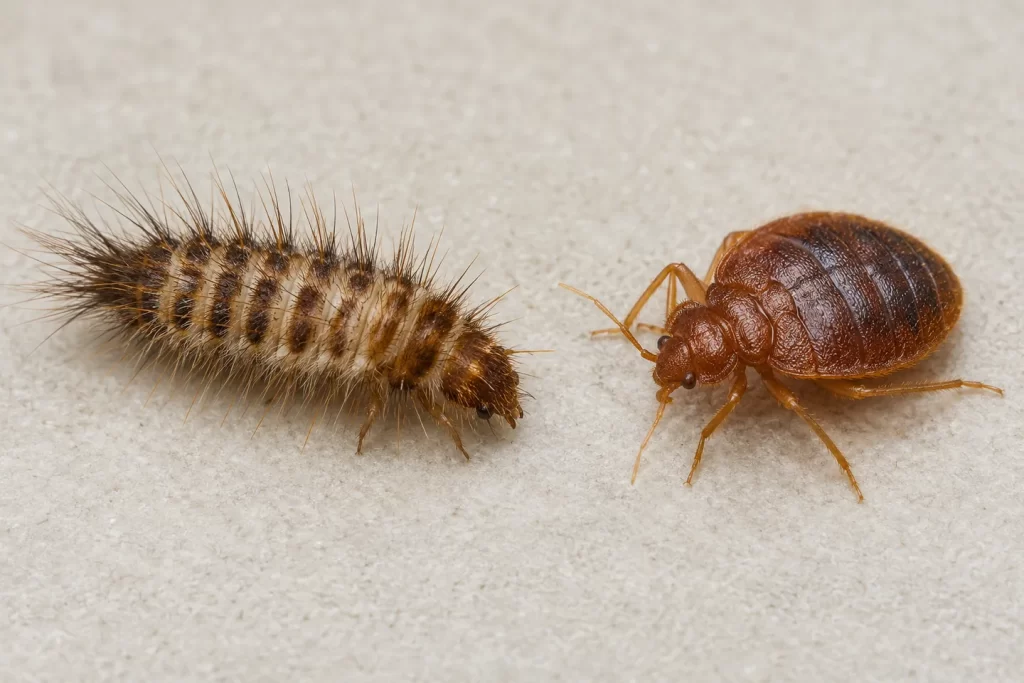
Finding a small insect in a bedroom can be unsettling, but a hairy carpet beetle larva and a bed bug are different insects with different habits. A clear look at body shape, hairs, legs, movement and the place where it was found can help narrow the possibilities. Do not identify a pest from a bite mark or one blurry photograph alone. Preserve the specimen or take a sharp close-up, then ask a qualified professional if the features are unclear.
Carpet beetle larvae feed on materials containing animal fibres and other suitable organic matter. They are often found around wool, feathers, hair, lint or undisturbed edges where food collects. Bed bugs feed on blood and tend to shelter near places where people sleep or rest. Either insect may appear in a bedroom, so location is useful context but not proof by itself.
Compare the body shape and surface
Carpet beetle larvae are generally elongated and bristly. Depending on species and stage, they may look like a small, banded, brownish or golden caterpillar with conspicuous hairs or tufts. Some have a tapered shape. Cast larval skins can remain near feeding sites and may look papery, hollow or fuzzy. The precise colour varies, so focus on the outline and hairs rather than expecting every larva to match a single picture.
Bed bugs are oval, flattened insects without the dense hairs seen on carpet beetle larvae. Adults are larger than the youngest stages; nymphs are smaller and paler. Their bodies may look reddish brown after feeding, but colour alone is unreliable because lighting, age and recent feeding change appearance. Unlike a bristly larva, a bed bug has a broad, recognisable bug-shaped body and visible legs.
Carpet beetle larvae have three pairs of small legs near the front of the body. They may crawl slowly and curl or remain still when disturbed. Bed bugs also have six legs, but their body is flatter and more oval, and they can move quickly into a narrow seam or crack. Because small specimens are hard to inspect by eye, take a close photograph with a coin or ruler beside it rather than handling it repeatedly.
The bed bug eggs and identification guide covers other physical evidence that can be found around a sleeping area. Eggs, cast skins and spotting should be assessed as a group, not treated as interchangeable signs. A hairy shed skin beside a wool rug may fit carpet beetle activity, while evidence around a bed frame may warrant a focused bed bug inspection.
Let the location help, but not decide
Carpet beetle larvae are often associated with protected places where lint or animal-based material accumulates: beneath furniture, along carpet edges, in wardrobes, near stored textiles, inside upholstered furniture or around a dead insect source. They may damage wool, silk, feathers, leather, felt or other animal-derived materials. A larva on a bed does not automatically mean that it is a bed bug; it may have wandered from a textile or carpet nearby.
Bed bugs are more likely to be found around sleeping and resting places: mattress seams, bed-frame joints, headboards, nearby furniture and cracks close to the bed. They can also shelter in other rooms or seating, especially where people spend long periods. Their presence should be supported by an insect or characteristic physical evidence. A mark on skin does not identify the insect that caused it.
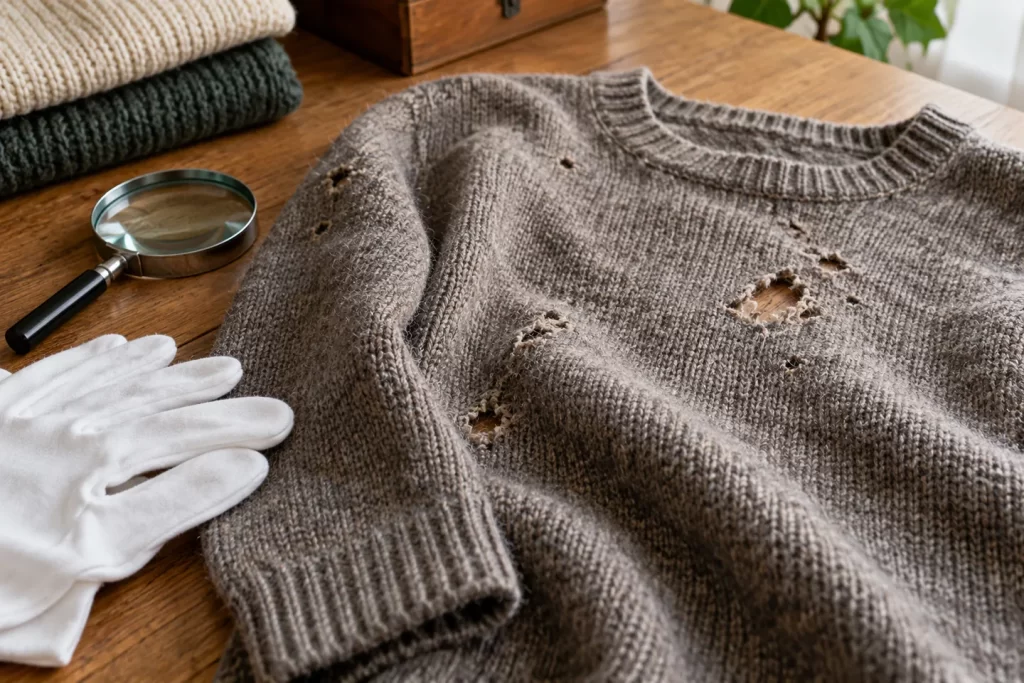
Consider what else is nearby. Small holes or irregular damage in wool clothing, shed bristly skins and adult carpet beetles at a window may point towards carpet beetle activity. A live oval bug, cast skins or dark spotting in mattress seams deserves bed bug assessment. No single clue is conclusive, and one insect can be found away from its main source.
Photograph or collect the specimen carefully
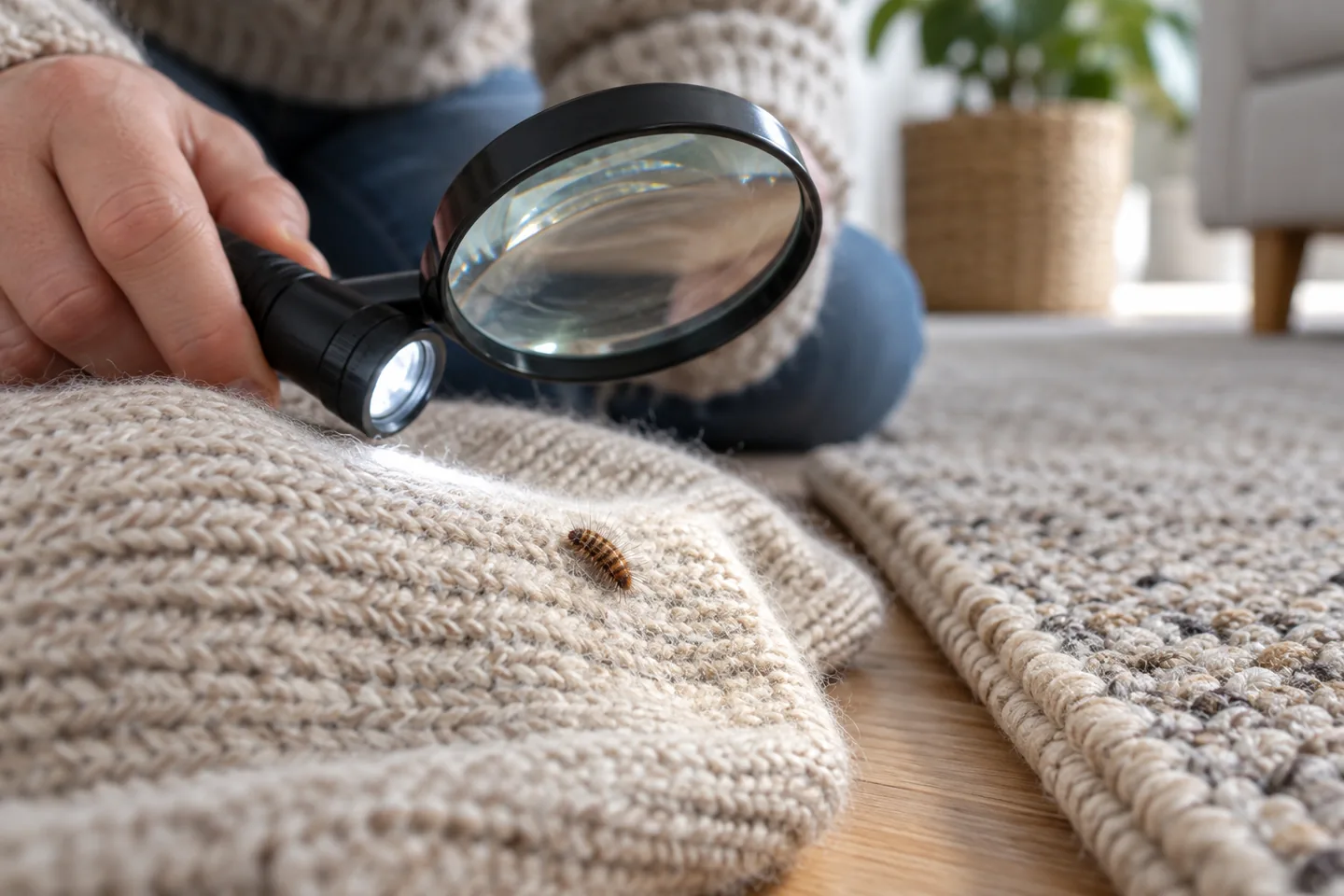
If you find an insect, take a photo before moving it. Use good light and include a scale object next to, not on top of, the insect. Photograph the whole body from above and, if safe to do so, from the side. Keep the background plain. A phone's macro setting can help, but avoid digital zoom if it makes the image blurry.
To preserve a specimen, use a small clear container or sealed bag and label where and when it was found. Do not crush it, stick it to tape or spray it first; damage can hide features needed for identification. If it is on a delicate textile, lift it carefully using a card or tissue. Wash your hands after handling and keep the container away from children and pets.
Record the exact location, such as “inside wardrobe seam beside wool jumper” or “under mattress piping at head end”. Note any nearby fabric damage, cast skins or spotting. This context can help a pest professional decide whether to inspect a wardrobe, a bed or both. A clear record is more useful than a large collection of unlabelled insects from different rooms.
What the two pests mean for your next steps
If the evidence points to carpet beetles, inspect susceptible textiles and storage areas. Look for larvae, cast skins and feeding damage in woollens, rugs, blankets, upholstery, feather items and stored fabrics. Vacuum carefully along edges and under furniture, then empty the vacuum contents into a sealed bag and remove it from the home. Launder or professionally clean affected items only as their care labels allow. Store clean textiles in sealed containers after the source has been addressed.
For persistent or widespread evidence, a professional carpet beetle inspection and treatment can identify the source and extent. Treatment should address where larvae feed, not just the adult beetles seen at a window. Ask what material or debris was found, what cleaning or storage changes are needed, and whether any treatment is suitable for the affected textile or room.
If you find credible bed bug evidence, avoid moving bedding and furniture between rooms. Preserve the specimen and arrange a professional assessment. The bed bug treatment service can be a starting point for discussing an inspection. A technician can inspect likely harbourages and explain whether treatment is justified. Do not apply a carpet beetle product or a household insecticide to a mattress or clothing unless its label expressly permits that use.
Common identification mistakes
One mistake is treating all small brown insects as bed bugs. Carpet beetles, booklice, fleas and other insects can appear indoors. Another is assuming that a bed location proves bed bugs. Carpet beetle larvae may crawl onto bedding from a rug, upholstered headboard or clothing. Identification depends on visible body features and the surrounding evidence.
Another mistake is relying on itchy marks. Many skin conditions and biting insects cause irritation, and people react differently. If someone has a severe or worsening skin problem, seek medical advice; that is separate from identifying the pest. Pest decisions should be based on specimens, signs and inspection rather than symptoms alone.
Finally, do not discard a mattress, rug or wardrobe before the inspection. Moving a suspect item through a home or shared hallway may spread an insect, and disposal can remove useful evidence. Ask the professional whether the item needs to remain in place, be contained or be handled separately. If disposal is recommended, follow instructions that prevent reuse.
A simple comparison checklist
Look for dense hairs or tufts and an elongated, tapered body: those features are more consistent with a carpet beetle larva. Look for a flattened, broadly oval body without prominent hairs: that shape is more consistent with a bed bug. Then consider the context. Wool damage, shed hairy skins and larvae near stored textiles suggest a textile-feeding pest; physical evidence in mattress seams or bed-frame joints deserves bed bug investigation.
Treat this checklist as a way to decide what evidence to collect, not a substitute for an identification. A young or damaged specimen may not show all features. When uncertain, photograph it beside a scale and ask a trained pest professional. Correct identification saves you from treating the wrong source and helps focus inspection on the materials or harbourages that matter.
Carpet beetle larvae and bed bugs can both appear in bedrooms, but they are distinguishable when examined carefully. Preserve the insect, note where it was found and look for related evidence. Then choose the next step that fits the identification: textile and debris inspection for carpet beetles, or a professional search of sleeping-area harbourages for bed bugs.

Leave a Reply
You must be logged in to post a comment.