
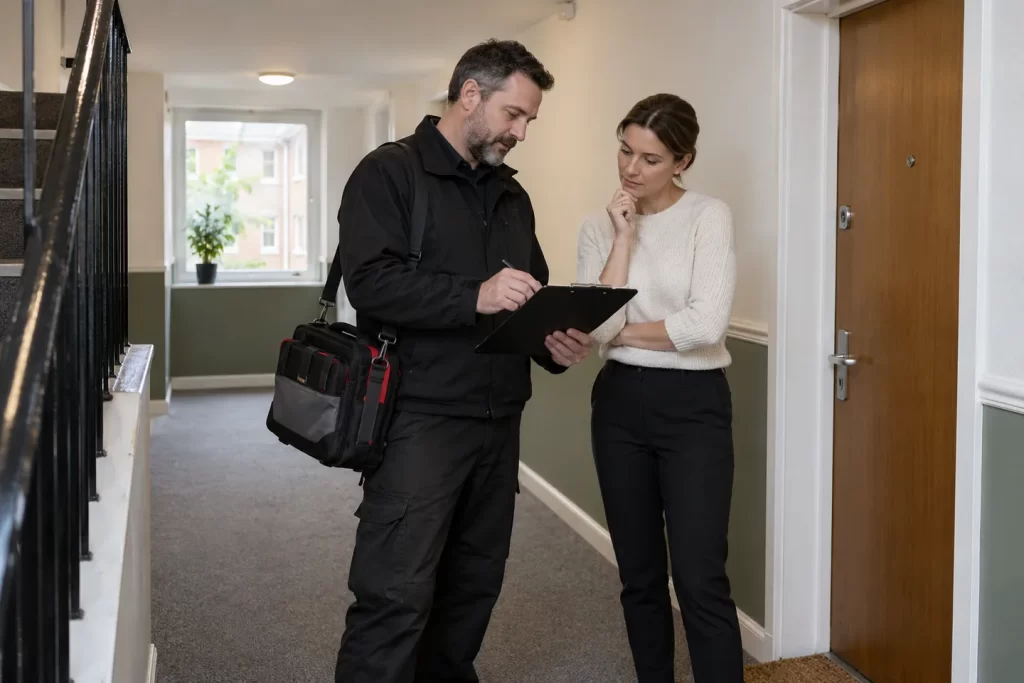
Finding bed bugs in one flat does not automatically mean the whole block is infested. It does mean that an inspection plan should consider the building layout and the evidence carefully. Flats share walls, service routes and common areas, but a pest professional should not assume that insects have moved between homes without supporting signs. The aim is to check relevant nearby spaces early, coordinate access fairly and treat the confirmed scope rather than relying on guesswork.
Bed bugs are commonly carried in belongings and can be introduced after travel, a move or the arrival of second-hand furniture. In a multi-occupancy building, a report in one home may be unrelated to another resident's situation. Conversely, where activity is established close to a shared wall or a connected service area, a neighbouring inspection may help identify whether the issue is limited or broader. Evidence and building context should guide that decision.
Begin with a confirmed report
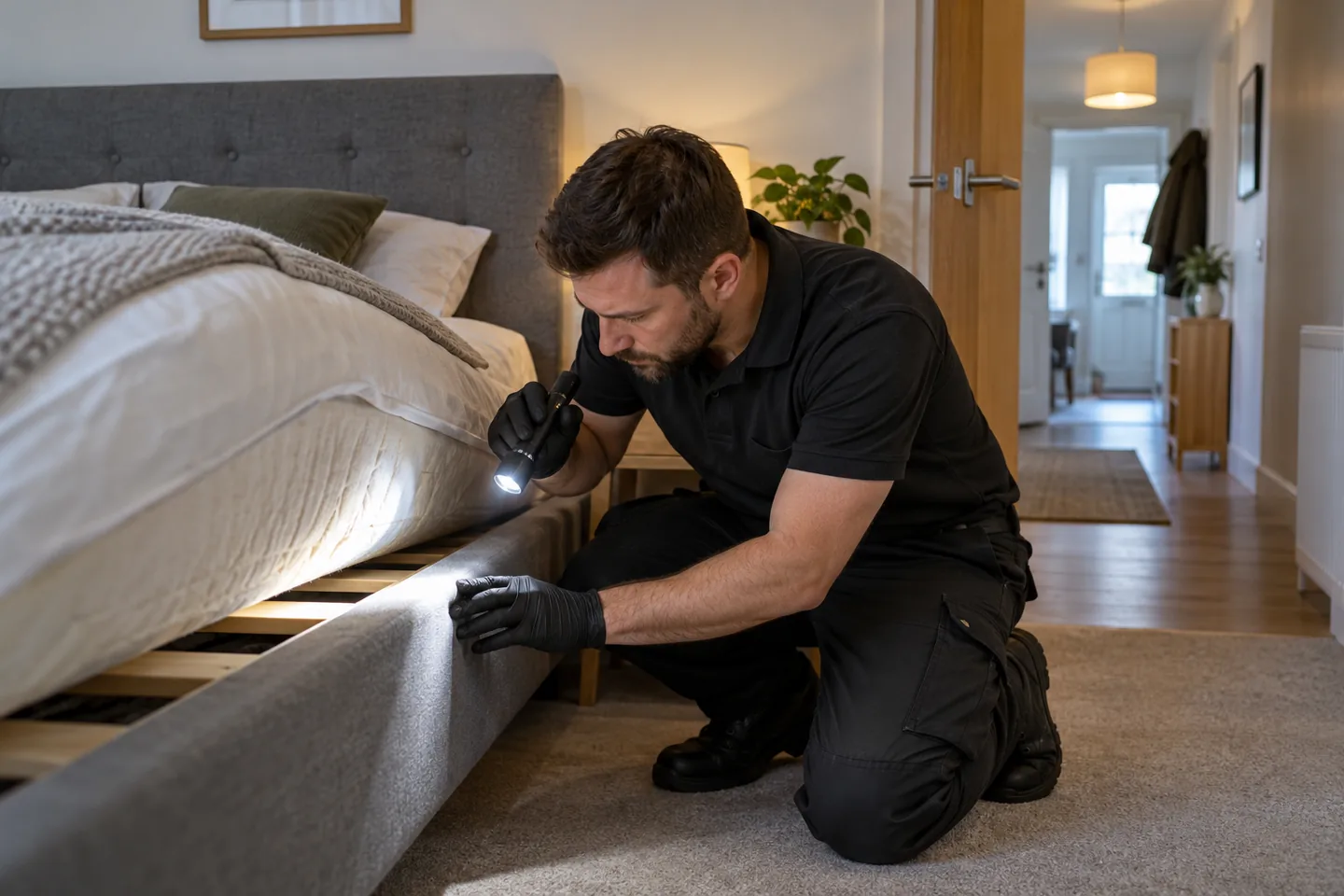
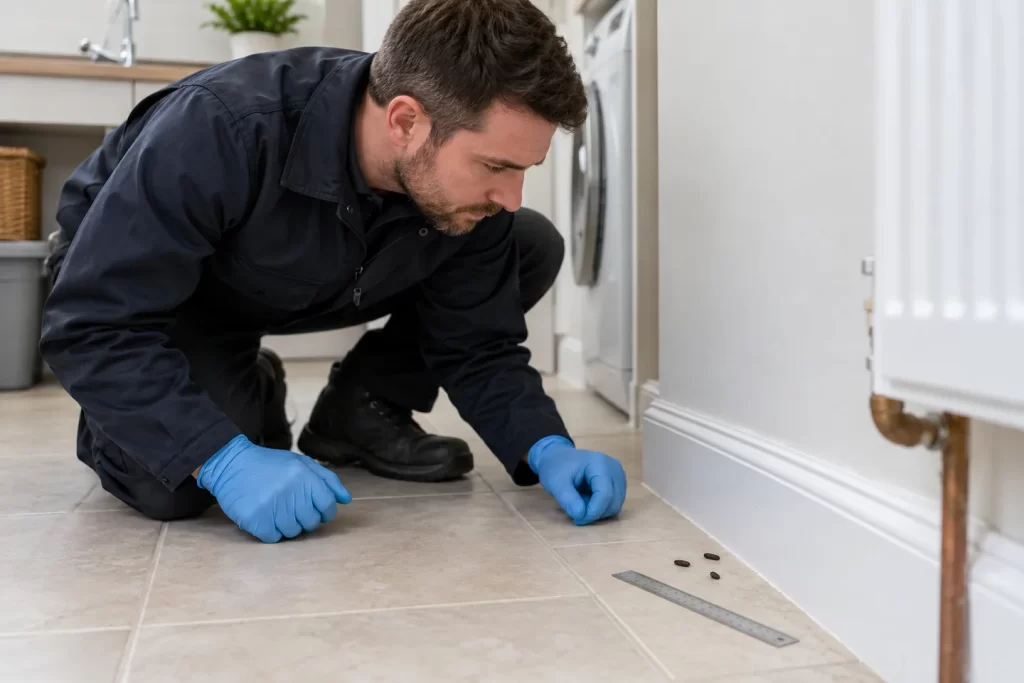
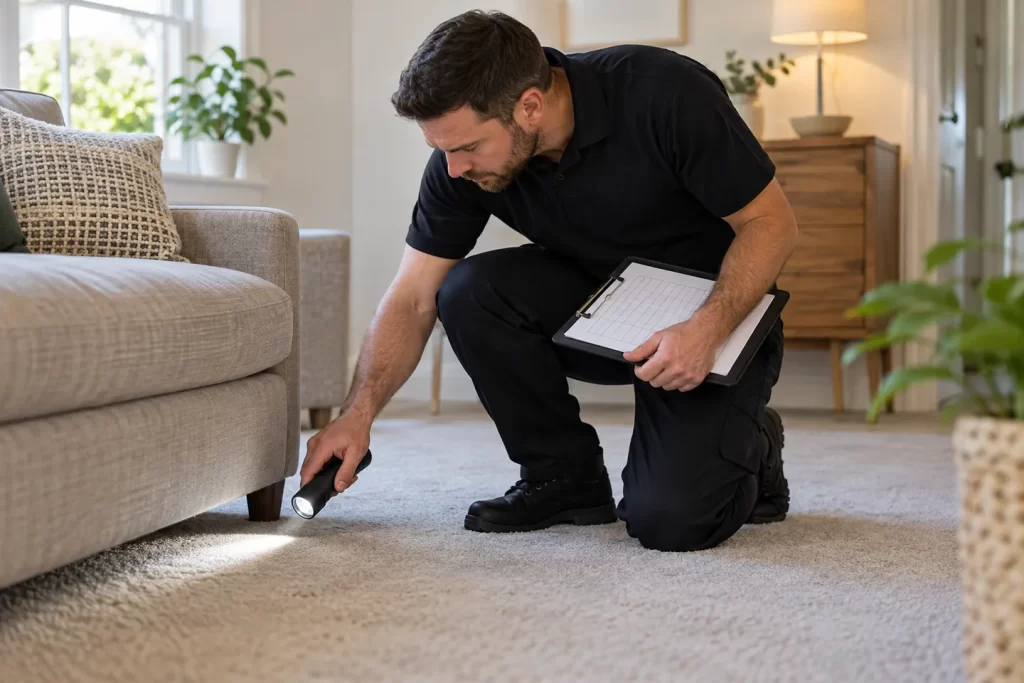
First establish what was found and where. A live insect, a cast skin or characteristic spotting in a bed area is more useful than a general report of itchy marks. Photograph the evidence if possible and preserve a specimen in a sealed container. Record the room, date and exact location. A trained bed bug inspection can distinguish likely bed bug evidence from other insects or household debris and document the affected area.
The inspection should consider sleeping and resting locations, nearby furniture and any connected room indicated by evidence. A professional can ask about recent travel, moved belongings and previous treatments. Those details help form a timeline but do not prove a source. Be cautious of explanations that assign blame to a neighbour before anyone has inspected the relevant properties.
If the evidence is uncertain, ask whether a specimen identification or monitoring period is appropriate before arranging extensive treatment. This is especially important in a block, where a false assumption can cause worry and unnecessary disruption for several households. The written record should state what was confirmed, what remains a possibility and what additional access would resolve the uncertainty.
Why nearby rooms can be relevant
Bed bugs do not fly or jump, but they can crawl through small gaps and can be transported in items. Shared walls, pipe routes and floor or ceiling voids may create connections in some buildings. The practical relevance depends on construction, the location of the evidence and how the flat is used. An adjoining room deserves attention when there is a reason to check it, not simply because it is nearby.
A technician may recommend a visual inspection of the adjacent flat or a shared area if activity is found near a party wall, a service penetration or a common corridor. That is a way to gather evidence, not a conclusion that the neighbour caused the problem. Access may require the resident's cooperation or the building manager's arrangements. Record which spaces were inspected and any access that could not be obtained.
Common areas also merit proportionate attention. A laundry room, furniture store or refuse area can be relevant if infested belongings have been left there, but routine sightings elsewhere in the block should not be treated as proof. The inspection should follow the known movement of belongings and the specific evidence. A broad, evidence-led plan avoids both missing a connected area and treating an entire building without reason.
Coordinate communication without sharing private details
Residents need a clear way to report evidence and arrange access. A landlord, managing agent or housing provider can act as a point of contact, explain the inspection timetable and pass on practical preparation instructions. Share only the information people need to participate. A neighbouring resident does not need another household's personal history or a speculative account of how the problem began.
Use neutral language: report that bed bug evidence has been identified in a particular area and that an adjacent inspection is being arranged. Avoid public notices that name a resident or label a flat as the source. A respectful approach makes it more likely that occupants will cooperate and report their own findings promptly. Keep a record of dates, access requests, inspections and agreed actions.
Where there are multiple occupants or a vulnerable resident, identify who can help with preparation and access. People may need support moving belongings or understanding instructions. Provide the pest professional with relevant constraints, such as mobility needs or fixed care schedules, so a workable appointment can be planned. Do not ask residents to move suspect furniture through the block unless the professional provides a safe, contained plan.
The bed bug treatment service can be a starting point for discussing a property-specific inspection and treatment plan. Ask the provider how it handles multi-flat work, whether it can inspect more than one home in the same visit and what arrangements are needed for common areas. Scope should be agreed with the responsible property contact and affected residents.
Keep preparation organised across homes
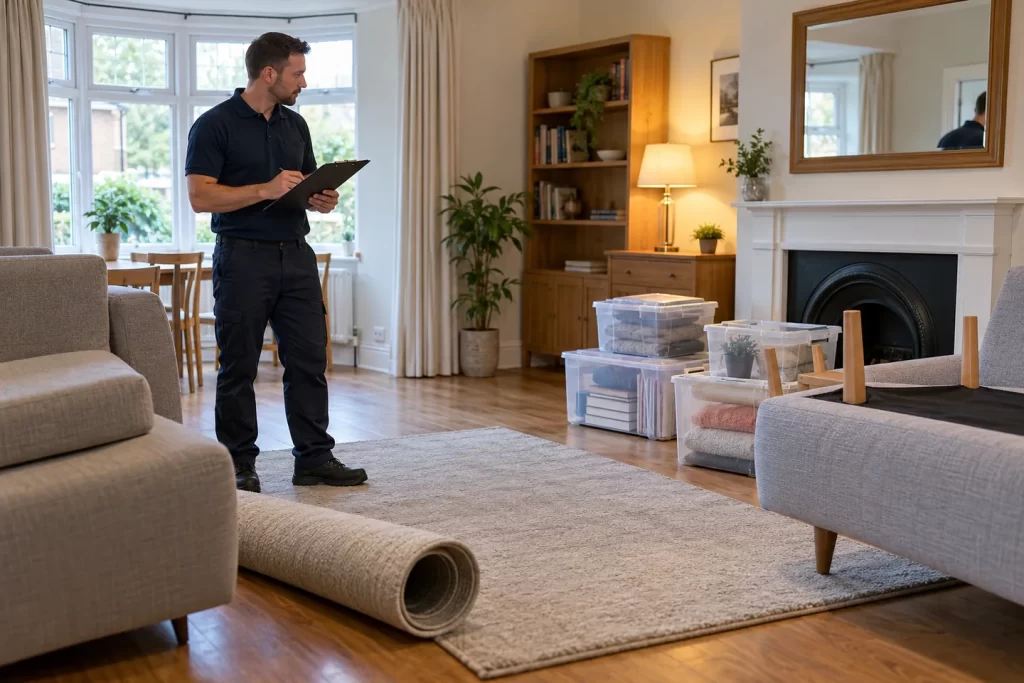
If more than one flat requires inspection or treatment, give each resident clear, written instructions that match the method. Avoid one generic checklist when the provider's requirements differ by room, furniture or treatment type. Confirm which rooms are being assessed, whether drawers should be emptied and how laundry or belongings should be contained. Make sure residents know which items should remain in place for inspection.
Uncoordinated moving can spread the problem. A resident who takes bedding, luggage or a chair into another flat may unintentionally transport insects. Until the professional advises otherwise, keep belongings in the room where they were found and do not leave suspect items in a corridor, lift or shared bin store. If furniture must be moved, ask the pest professional how to wrap, label and transport it safely.
For heat treatment, sensitive possessions may require removal or separate handling. The site's guide to preparing belongings for heat treatment offers an inventory approach. For any method, record exclusions so that an untreated item is not later assumed clear. The provider should explain what can return to the treated space and when.
What a coordinated treatment plan should record
The plan should identify which flats and rooms were inspected, what evidence was confirmed and which locations were treated. It should also record access limitations, excluded belongings, preparation requirements and follow-up dates. If a neighbouring home was not accessible, say so and agree whether another appointment or a monitoring step is needed. A written scope prevents different parties from assuming that somebody else covered an area.
Ask the provider what method it recommends in each flat and whether the treatment is the same throughout. One room may be suitable for heat, while another may require a different professional approach because of construction, sensitive items or access. The method should follow the inspection findings, not the desire to apply a uniform procedure everywhere.
For heat work, the provider should explain the area being treated and how it monitors challenging points. A room's air temperature does not describe every hidden location. The article on heat-treatment temperature monitoring explains why records and sensor position matter. For insecticide work, residents should receive product-specific re-entry and ventilation instructions and follow them precisely.
Responding to reports after treatment
If a resident later finds an insect, take the report seriously and gather the details. Ask where it was seen, when, whether it was alive and whether it can be contained for identification. Note recent movement of luggage, laundry or furniture. The finding may relate to an overlooked harbourage, an untreated item or a new introduction; it does not show on its own which explanation is correct.
The pest professional can compare the new evidence with the original inspection and treatment record. If activity is confirmed in a neighbouring flat, the plan may need to extend or be adjusted. If there is no physical evidence, continued monitoring or a focused inspection may be more appropriate than immediate treatment of every home. Avoid spraying common areas or placing products in corridors without professional advice and permission.
Provide a clear route for residents to raise concerns during the observation period. A shared log with dates and locations can reveal a pattern, but keep personal details private and avoid treating unverified marks as confirmed cases. The responsible manager should know who is coordinating the next inspection and when residents can expect an update.
Prevention and building-level lessons
After the immediate issue is addressed, consider how residents can report future evidence early. Provide a discreet contact route, guidance on travel luggage and second-hand furniture, and a process for arranging access. These steps help detect a problem before it becomes more disruptive. They are not a substitute for inspection and should not imply that residents are responsible for every introduction.
Review how discarded furniture and laundry are handled in shared spaces. A suspect mattress should not be left where another resident may take it. If an item needs removal, follow the pest professional's containment instructions and the building's waste arrangements. Do not rely on a handwritten warning alone to prevent reuse.
For landlords and managers, retain the inspection and treatment documents with the property records. They can support consistent decisions if a later report arises and show which areas were actually assessed. For residents, keep a copy of your own findings and the provider's instructions. A coordinated response is strongest when each person knows what was checked, what remains uncertain and who is responsible for the next step.
Bed bugs in a block of flats call for communication and proportionate inspection. Adjacent rooms matter when evidence or the building layout gives a reason to check them. They should not be treated as automatically affected. Confirm the finding, protect residents' privacy, arrange access fairly and let a qualified professional define the treatment scope from the evidence available.
Leave a Reply
You must be logged in to post a comment.