
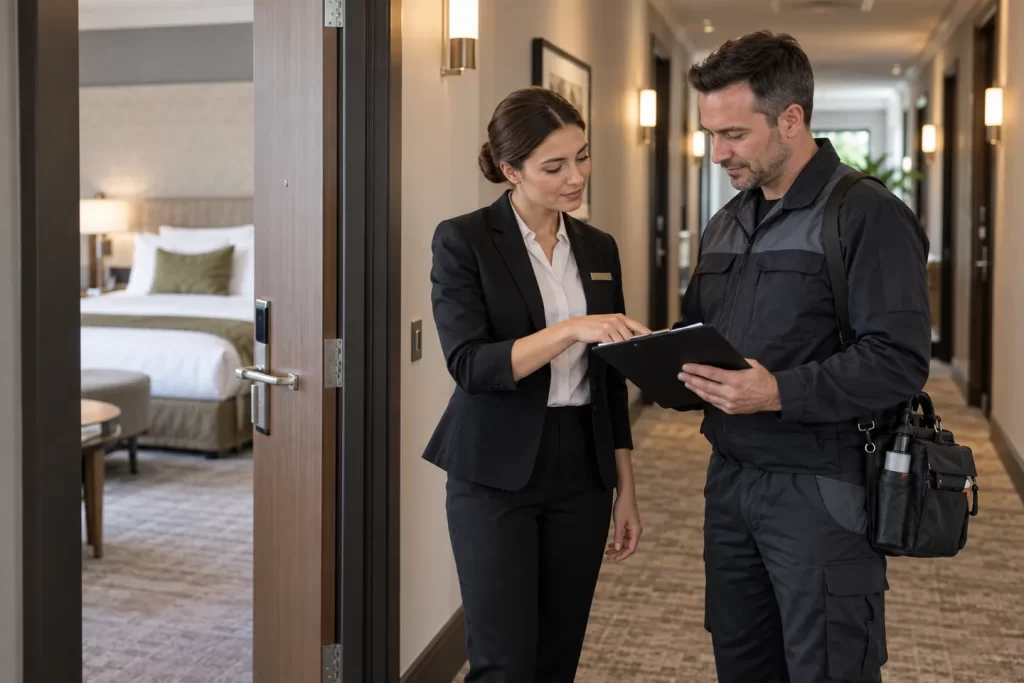
A guest report of possible bed bugs needs a prompt, discreet and evidence-led response. The manager's first job is to listen, record what the guest observed and arrange a professional inspection. Avoid arguing from the absence of visible insects or promising a cause before the evidence is checked. Bed bugs can arrive in luggage or belongings, and a report does not establish that a guest, staff member or particular room introduced them.
The next steps should protect guests, staff and the integrity of the inspection. Hold the reported room out of service while the evidence is assessed, avoid moving suspect bedding or furniture into corridors, and brief only the team members who need to act. A written record of the report, room access, inspection findings and decisions makes it easier to respond consistently if another report follows.
Take the report seriously and gather details
Thank the guest, ask where and when the insect or mark was seen, and whether they have a photograph or specimen. Record their description in neutral language. Do not tell them that bites prove bed bugs; skin reactions vary and other causes are common. If the guest has a live insect, ask them to contain it safely rather than crush it, and arrange for identification by a qualified pest professional.
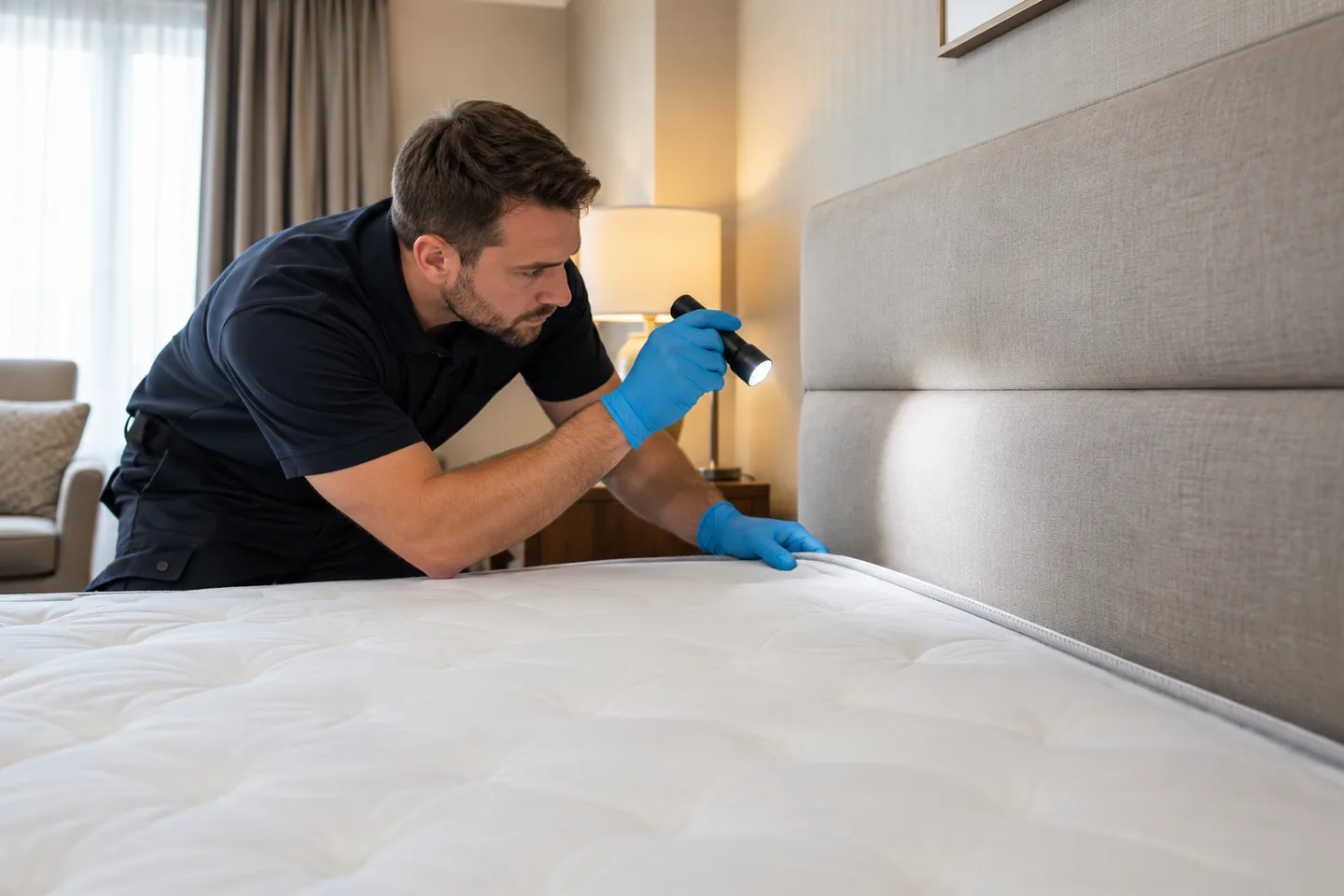
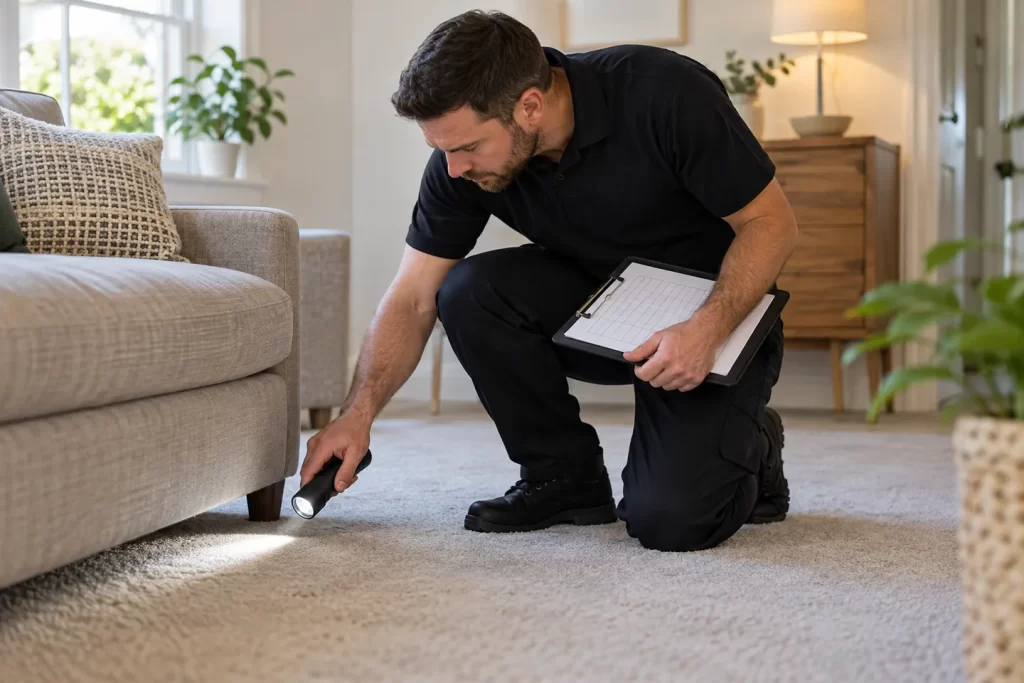
Make a note of the room, bed, nearby furniture and any luggage or belongings moved. Ask whether activity was seen in another room, but do not turn a possibility into a conclusion. A professional bed bug inspection should check the relevant sleeping area, mattress seams, frame joints, headboard and nearby seating. The inspector may recommend checking an adjacent room or connected area if the evidence gives a reason.
Respond to the guest in a calm, factual way. Explain that the room will be inspected and that you will provide an update through the hotel's normal contact route. Follow the business's customer-care policy for room changes or other remedies. Do not speculate publicly about the source or identify another guest. A discreet response is more respectful and avoids spreading unverified claims.
Control access and preserve evidence
Mark the room as unavailable while inspection and any necessary work are arranged. Tell reception and housekeeping how to prevent accidental re-entry or cleaning before the inspection. Avoid stripping the bed, vacuuming or applying a spray unless the professional advises it; these actions can remove or disturb evidence. Photograph the room condition and record who accessed it after the report.
If a guest has departed, secure any left belongings through the hotel's usual lost-property process. Do not mix them with linen or move them into another guest room. If an item may be relevant, consult the pest professional about safe containment and communication with its owner. The hotel should follow its privacy and property-handling policies, and should not discard possessions without authorisation.
Housekeeping staff may be the first to spot evidence during routine work. Provide a simple route for them to report an insect, cast skin or suspicious spotting without blame. Give staff enough information to recognise what they should report, but avoid asking them to identify an insect beyond their training. Preserve a specimen or photograph for professional review.
Arrange a professional inspection
Give the technician the room number, layout, report timeline and any available photographs. Explain whether rooms share a wall or service route, and whether furniture has been moved. Ask which rooms the inspection will cover, what evidence was found, and whether any access restrictions remain. If the reported room is clear on a visual check, ask whether monitoring or a return inspection is warranted based on the original evidence.
Avoid assuming that adjoining rooms need treatment without inspection. A connected room may merit a check if the findings are close to a shared boundary or a guest has moved belongings between rooms. The professional should explain the reasoning and document each room inspected. This balanced approach limits unnecessary disruption while taking potential connections seriously.
Keep an incident log that records dates, rooms, findings, staff actions and the professional's recommendations. Include negative inspections, but describe them accurately: “no evidence found during inspection” is different from proof that no bed bug could be present. Record rooms that could not be checked and the plan to access them later.
Decide on treatment and room closure
Ask the provider to recommend a method based on the inspection, room construction, furniture and operational needs. Heat treatment, insecticide treatment or a combination may be suitable in different circumstances. The choice should not be based only on a promise of rapid turnaround. Confirm what preparation is required, which furniture and belongings are included, what is excluded and how long the room must remain closed.
For professional heat treatment, ask how the provider will manage airflow and monitor selected locations, including dense or shielded areas. The site's heat monitoring service describes sensor measurement during heat work. Confirm whether the treatment record identifies room scope, readings or limitations, and the provider's instructions for reoccupation. Heat has no residual effect, so monitoring and sensible procedures for luggage and incoming items remain relevant after the room reopens.
For insecticide treatment, ask which authorised products are proposed, where they will be applied, and what the label requires for ventilation and re-entry. Give staff and contractors those instructions in writing. Do not have housekeeping add a general-purpose spray or wash treated surfaces before the provider says it is appropriate. Products should be used by trained personnel according to their label and the agreed plan.
Confirm the closure process with reception, reservations and housekeeping. Avoid assigning the room to a guest until the pest professional has confirmed that the work is complete and explained when re-entry is allowed. Check that all required follow-up visits or monitoring steps are scheduled. Reopening should follow the treatment plan rather than an operational guess based on how long the room has been empty.
The hotel's commercial heat treatment service is a starting point for discussing a property-specific response. Ask whether the quote includes inspection, out-of-hours access, preparation guidance, treatment documentation and follow-up. If a provider proposes treating several rooms, ask what evidence supports that scope.
Manage linen, luggage and shared routes
Keep suspect linen contained during handling. Housekeeping should not carry loose bedding through guest corridors or place it in a shared trolley with clean items. Follow the provider's instructions for bagging and laundering, and use the hotel's clean and soiled linen procedures. Keep the affected room's items separate until their status is known.
If luggage or personal belongings were in the room, do not take them to another guest room or staff area without advice. The guest should receive clear, respectful instructions about any inspection or handling of their property. The hotel's clothing and luggage heat-treatment service may be relevant for certain items, but suitability depends on materials and the provider's assessment. Never place a guest's possessions into treatment without permission.
Review how used mattresses and furniture are removed if replacement is recommended. Wrap and label items according to professional guidance so they are not reused. Do not leave them in a loading bay or corridor where another person may take them. Keep records of disposal and any replacement so the room's history is clear.
Communicate with guests and staff
Agree on one person to respond to the guest and one internal point of contact for staff. Use a short, factual update that says the report is under professional assessment and the room is being held while checks are completed. Avoid discussing details in public areas. Staff should know what to do if they find evidence and whom to call, without being asked to reassure guests beyond what has been confirmed.
If other guests need to be contacted, follow the hotel's policy and obtain appropriate advice. Share factual information and practical instructions; do not speculate about a source. Keep records of any room move, property handling or other assistance given. Consistent communication reduces confusion and helps managers respond if more than one report arises.
Follow up before returning the room to service
After treatment, obtain the written handover. Confirm the rooms addressed, any exclusions, re-entry timing, recommended checks and who will carry them out. Keep the record with the incident log. If the provider recommends monitoring, assign a staff member to check and report the devices as directed without moving them or disturbing the room.
If another insect is reported, contain it for identification and note the room, date and exact location. Compare the finding with the original treatment record and any movement of luggage, linen or furniture. A later sighting might indicate a missed harbourage, an untreated item or a new introduction; it does not establish which explanation applies. Contact the provider under the follow-up plan before applying additional products or moving items.
Once the professional confirms that the room may return to use, brief housekeeping on any remaining instructions and make sure the room is clean, guest-ready and accessible for any follow-up inspection. Review the incident afterwards: Was the report route clear? Was access controlled? Did staff know how to contain linen? Did the treatment record explain exclusions and next steps? Use the answers to improve the hotel's response process.
A good hotel response is prompt without being alarmist, discreet without dismissing the guest and documented from report to re-opening. Confirm the evidence, protect the room while it is inspected, coordinate treatment with qualified professionals and communicate clearly. That gives managers a defensible, practical path through a stressful report while keeping guest dignity and staff safety in view.
Leave a Reply
You must be logged in to post a comment.